ABIOTIC FACTORS INFLUENCING MANTANGAN (Merremia peltata) INVASION IN BUKIT BARISAN SELATAN NATIONAL PARK

Downloads
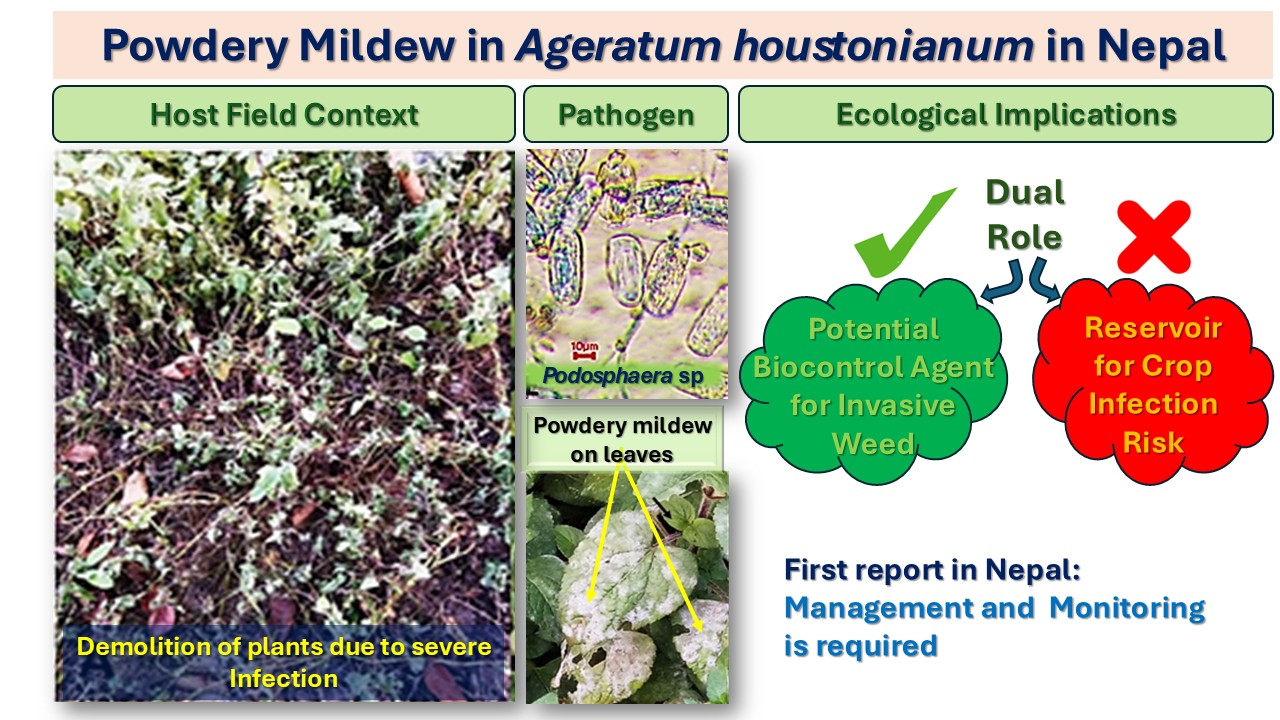
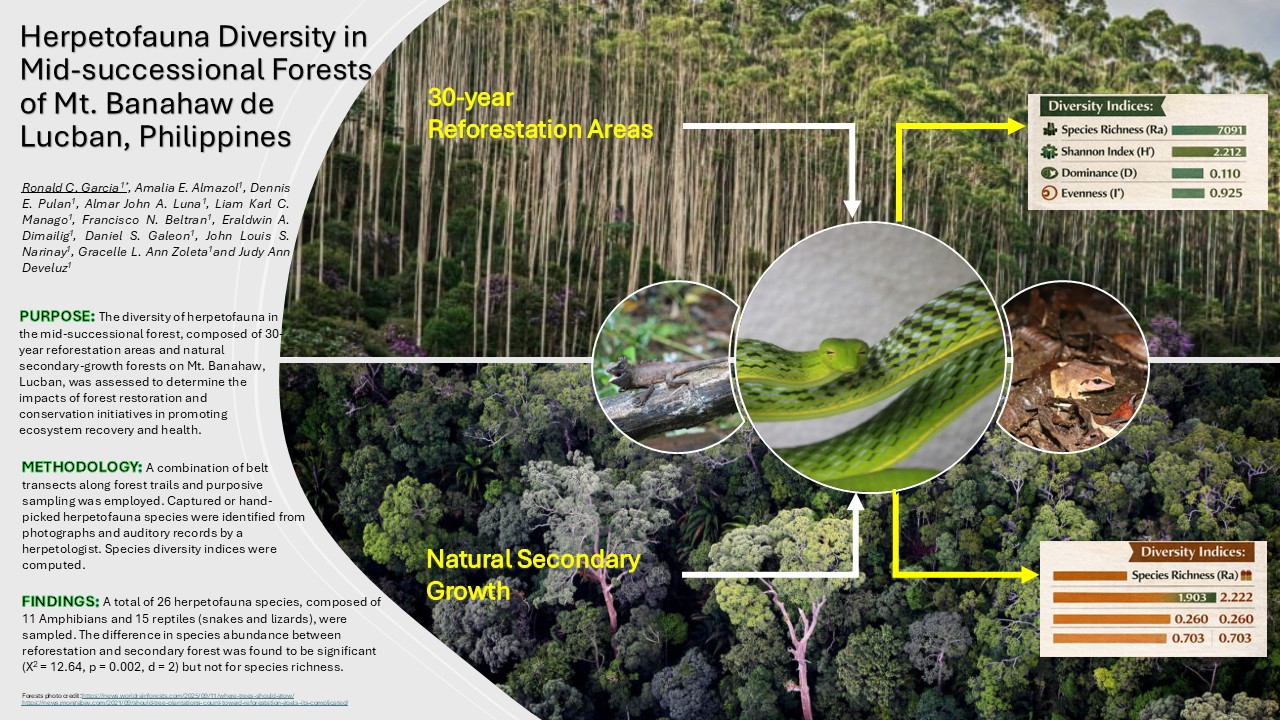
Some areas in Bukit Barisan Selatan National Park have serious environmental problems related to the invasion of Merremia peltata (Family: Convolvulaceae). This study investigated abiotic factors influencing the invasion. The research compared abiotic conditions in three forest locations with different invasion levels: severe, moderate, and mild. Measured abiotic factors included percentage of tree canopy cover, microclimate variables (temperature and humidity), elevation above sea level, and the physical and chemical properties of the soil surface. In this study, canopy cover was categorized as an abiotic factor because it affects the amount of light reaching the forest floor. A post-hoc Duncan's Multiple Range Test (DMRT) was performed to determine significant differences (p < 0.05) among abiotic variables. Additionally, correlation analysis and multiple linear regression were conducted to evaluate the relationships between abiotic factors and the level of M. peltata invasion. Multiple regression analysis showed that canopy cover significantly (p < 0.05) affected the invasion. Based on the generated model, a 1% increase in canopy cover would decrease the M. peltata invasion by approximately 2.8%. Soil nutrient analysis through multiple linear regression revealed that the C/N ratio, and concentrations of P₂O₅, Ca, Mg, and Na significantly (p < 0.05) influenced invasion level. An increase in C/N ratio and concentrations of P₂O₅ and Ca were correlated with a reduction in invasion, whereas increases in Mg and Na concentrations were associated with higher invasion levels. Overall, the invasion of Merremia peltata in Bukit Barisan Selatan National Park was influenced by an open forest canopy and was associated with high concentrations of Na and Mg in the soil of invaded areas.
Agustina L. 2004. Dasar-dasar Nutrisi Tanaman. Jakarta (ID): PT Rineka Cipta.
Crozier CR, Heiniger RW. 1998. Soil Facts: Soil Sampling for Precision Farming Systems. North Carolina (USA): North Carolina State University.
Fosberg FR, Sachet MH. 1977. Flora of Micronesia, part 3, Convolvulaceae. Contributii Botanice 36:1-34.
Gaveau DLA, Wandono H, Setiabudi F. 2007. Three decades of deforestation in southwest Sumatera: Have protected areas halted forest loss and logging, and promoted re-growth. Biol Conserv 134:495-504.
Hamim. 2008. Jakarta (ID): Universitas Fisiologi Tumbuhan Terbuka.
Hanafiah KA. 2007. Dasar-dasar Ilmu Tanah. Jakarta (ID): PT Raja Grafindo Persada.
Hardjowigeno S. 2010. Akademika Ilmu Tanah. Jakarta (ID): Pressindo.
Huang W, Pohjonen V, Johansson S, Nashanda M, Katigula MIL, Luukkanen O. 2003. Species diversity, forest structure and species composition in Tanzania tropical forest. For Ecol Manage 173:11-24.
Irianto R, Tjitrosoedirdjo S. 2010. Invasi (L.) Merremia peltata Merr., Convolvulaceae di Taman Nasional Bukit Barisan Selatan, Indonesia. J Gulma dan Tumbuhan Invasi Tropika 1:65-70.
Kirkham WS. 2005. Valuing invasives: Understanding the Merremia peltata invasion in post-colonial Samoa. Dissertation. Austin (USA): The University of Texas at Austin.
Master J, Tjitrosoedirdjo SS, Qayim I, Tjitrosoedirdjo S. 2013. Ecological impact of (L.) Merremia peltata Merr. invasion on plant diversity at Bukit Barisan Selatan National Park. Biotropia 20(1):29-37.
Meyer JY. 2000. Preliminary review of the invasive plants in the Pacific islands. In: Sherley G, editor. Invasive Species in the Pacific: A Technical Review and Draft Regional Strategy. Samoa (WS): South Pacific Regional Environment Programme. p 85-114.
Munawar A. 2011. Kesuburan Tanah dan Nutrisi Tanaman. Bogor (ID): IPB Press.
National Invasive Species Council. 2006. Invasive Species Definition Clarification and Guidance White Paper. https://www.invasivespeciesinfo.gov/docs/council/isacdef.pdf
(accessed October 20, 2014).
Ooststroom van SJ, Hoogland RD. 1953. Convolvulaceae. Flora Malesiana I 4:452-3.
Paynter Q, Harman H, Waipara N. 2006. Prospects for biological control of Merremia peltata. New Zealand: Conservation International.
Pyšek P, Richardson DM. 2010. Invasive species, environmental change and management and health. Ann Rev Environ Resour 35:25-55.
Pengembara T, Master J, Yulianty, Rustiati EL, Subiakto A. 2014. Laju pertumbuhan antangan (Merremia peltata L. Merr.) melalui regenerasi vegetatif. Proceedings of Seminar Nasional Pengembangan Teknologi Pertanian. Lampung (ID): Politeknik Negeri Unila.
Prasetyo A, Hikmat A, Prasetyo LB. 2011. Pendugaan perubahan cadangan karbon di Tambling Wildlife Conservation Taman Nasional Bukit Barisan Selatan. Media Konservasi 16:87-91.
Sasaki S, Mori T. 1981. Growth responses of Dipterocarp seedlings to light. Malaysian Forester 44:319-45.
Stone BC. 1970. The flora of Guam. Micronesica 6:1-659.
Sutcliffe JF, Baker DA. 1975. Plant and Mineral Salts. London (UK): Edward Arnold Publishing.
Theoharides KA, Dukes JF. 2007. Plant invasion across space and time: Factors affecting non-indigenous species success during four stages of invasion. J New Phytol 176:256-73.
Wildlife Conservation Society – Indonesia Program (WCS-IP). 2001. Taman Nasional Bukit Barisan Selatan dalam ruang dan waktu. Bogor (ID): Research Report PHKA/WCS-IP.
Copyright (c) 2017 BIOTROPIA - The Southeast Asian Journal of Tropical Biology

This work is licensed under a Creative Commons Attribution-NonCommercial-NoDerivatives 4.0 International License.
Authors who publish with this journal agree with the following terms:
- Authors retain copyright and grant the journal right of first publication, with the work 1 year after publication simultaneously licensed under a Creative Commons attribution-noncommerical-noderivates 4.0 International License that allows others to share, copy and redistribute the work in any medium or format, but only where the use is for non-commercial purposes and an acknowledgement of the work's authorship and initial publication in this journal is mentioned.
- Authors are able to enter into separate, additional contractual arrangements for the non-exclusive distribution of the journal's published version of the work (e.g., post it to an institutional repository or publish it in a book), with an acknowledgement of its initial publication in this journal.
- Authors are permitted and encouraged to post their work online (e.g., in institutional repositories or on their website) prior to and during the submission process, as it can lead to productive exchanges, as well as earlier and greater citation of published work (See The Effect of Open Access).