
A Native Plant Offers Hope for Cleaner Water
Keywords:
freshwater ecosystem, limnocharis flavaAbstract
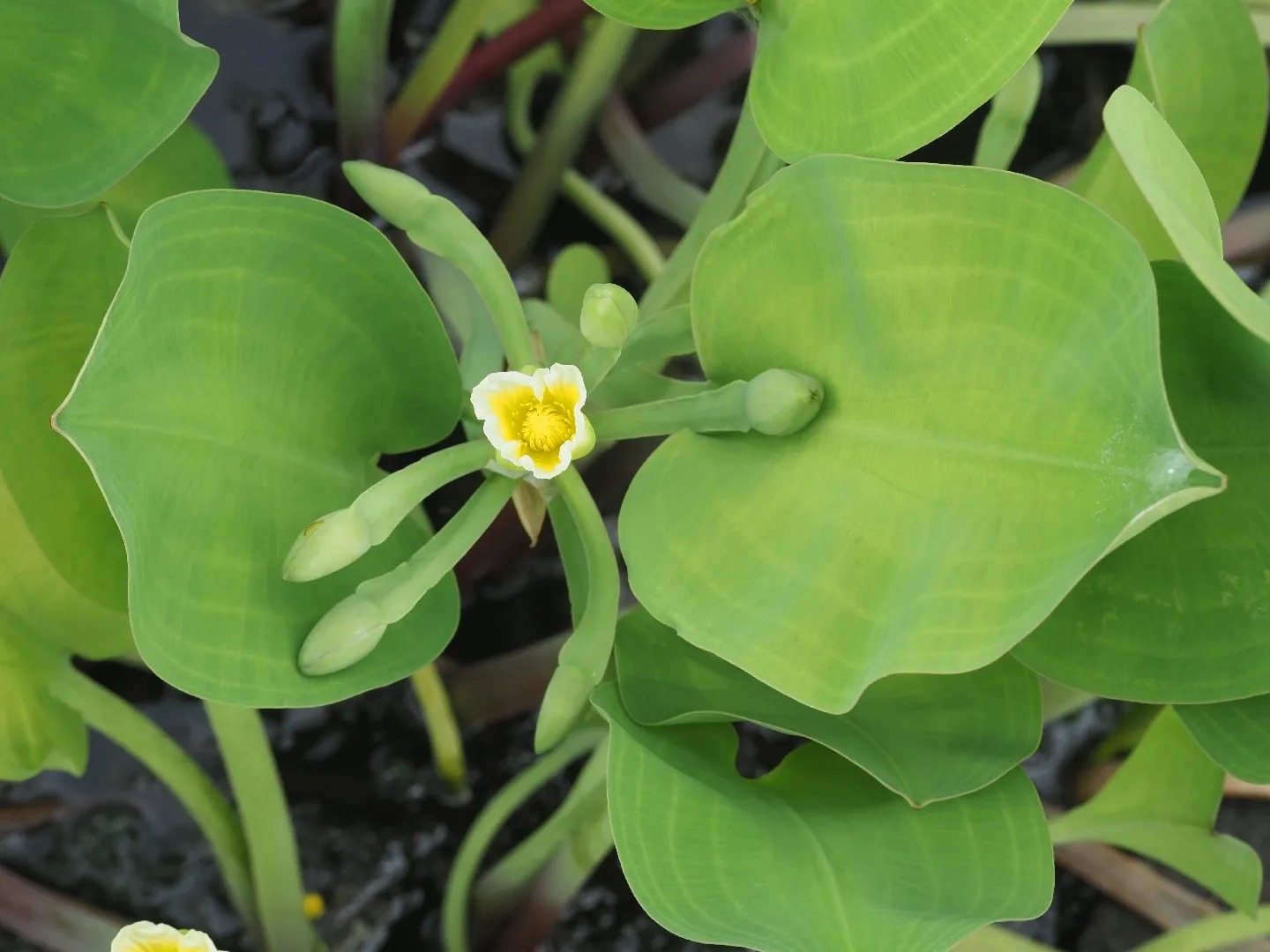
Freshwater ecosystems around the world are under increasing pressure from pollution, climate change, and urban development. Finding affordable and environmentally friendly ways to treat polluted water is more important than ever. A recent study has turned to nature for help; specifically, to Limnocharis flava (yellow velvetleaf), a common aquatic plant native to Malaysia.
We tested this plant’s natural ability to clean water by placing it in samples from a detention pond at Politeknik Sultan Idris Shah. Over the course of nine days, Limnocharis flava caused changes in key water quality indicators, including chemical oxygen demand (COD), turbidity, pH, total suspended solids (TSS), and dissolved oxygen (DO).
The results were promising. Limnocharis flava noticeably improved water quality, showing that this humble plant could be a powerful ally in low-cost, sustainable water treatment efforts; especially intropical regions where it already thrives. Interesting results, indeed. Let’s dwell further!
References
Anand, S., Bharti, S. K., Dviwedi, N., Barman, S. C. & Kumar N. (2017). Macrophytes for the reclamation of degraded water bodies with potential for bioenergy production. In: Bauddh, K., Singh, B., Korstad, J. (Editors), Phytoremediation potential for bioenergy plants. p. 333-51. Singapore (SG): Springer. DOI: 10.1007/978-981-10-3084-0_13
APHA (2012). Standard Methods for the Examination of Water and Wastewater (22nd Edition). Washington DC (US): American Public Health Association.
Araoye, P. A. (2009). The seasonal variation of pH and dissolved oxygen (DO2) concentration in Asa Lake Ilorin, Nigeria. International Journal of Physical Sciences, 4(5), 271-74.
Bahri, A. (2012). Integrated urban water management. GWP Technical Background Papers, No. 16. Global Water Partnership.
Bhattacharya, S., Gupta, A. B., Gupta, A., & Pandey, A., (2018). Introduction to water remediation: Importance and methods. In: Bhattacharya,
S., Gupta, A. B., Gupta, A., & Pandey A. (Editors), Water Remediation. Singapore (SG): Springer. p. 3-8. DOI: 10.1007/978-981-107551-3
[DOE Malaysia] Department of Environment of Malaysia (2009). Malaysia Environmental Quality (Sewage) Regulations 2009. Department of Environment, Ministry of Natural Resources and Environment.
Kulkarni, S. J. (2016). A review on research and studies on dissolved oxygen and its affecting factors. International Journal of Research & Review, 3(5), 62-5.
Mustafa, H. M., & Hayder, G. (2020). Recent studies on applications of aquatic weed plants in phytoremediation of wastewater: A review
article. Ain Shams Engineering Journal, 12(1). DOI: 10.1016/j.asej.2020.05.009
Rachmadiarti, F. (2012). Resistance of Yellow Velvetleaf (Limnocharis flava (L.) Buch.) exposed to lead. Journal of Applied Environmental and Biological Sciences, 2(10), 519-23.
Sharma, P. & Gupta, S. (2014). Study of amount of oxygen (BOD, DO, COD) in water and their effect on fishes. American International Journal of Research in Formal, Applied & Natural Sciences, 5(1), 29-34.
Udeh, N. U., & Momoh, Y. (2013). Bioremediation of crude oil contaminated soil using water hyacinth (Eichhornia crassipes). Advances in Applied Science Research, 4(3), 362-69.
WHO (2011). Guidelines for Drinking-water Quality (4th ed.). Geneva (CH): World Health Organization.
Downloads
Published
Issue
Section
License
Copyright (c) 2025 Tuan Noor Rafidah Binti Tuan Hassan

This work is licensed under a Creative Commons Attribution-NonCommercial-NoDerivatives 4.0 International License.
Authors who publish with this journal agree with the following terms:
- Authors retain copyright and grant the journal right of first publication, with the work 1 year after publication simultaneously licensed under a Creative Commons attribution-noncommerical-noderivates 4.0 International License that allows others to share, copy and redistribute the work in any medium or format, but only where the use is for non-commercial purposes and an acknowledgement of the work's authorship and initial publication in this journal is mentioned.
- Authors are able to enter into separate, additional contractual arrangements for the non-exclusive distribution of the journal's published version of the work (e.g., post it to an institutional repository or publish it in a book), with an acknowledgement of its initial publication in this journal.
- Authors are permitted and encouraged to post their work online (e.g., in institutional repositories or on their website) prior to and during the submission process, as it can lead to productive exchanges, as well as earlier and greater citation of published work (See The Effect of Open Access).