
Waste Not, Grow A Lot:
Coffee Grounds and Sustainable Farming
Keywords:
coffe, scgsAbstract
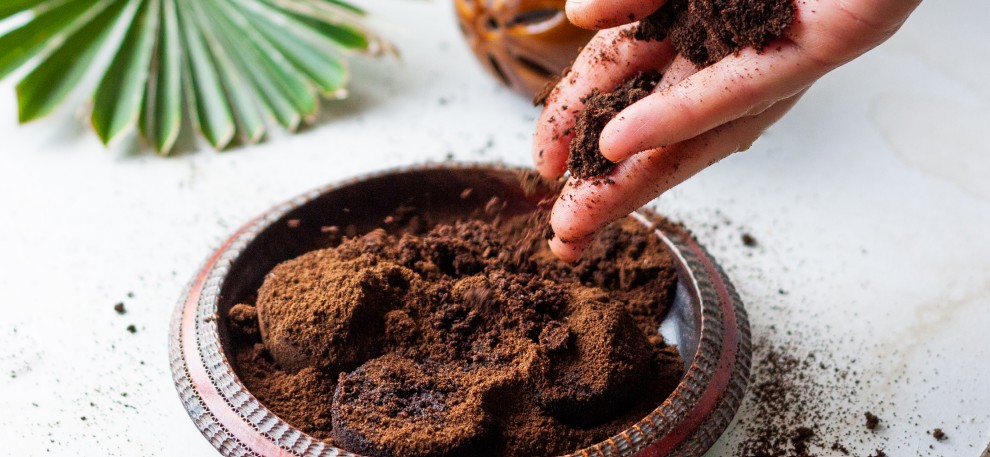
Coffee is a daily favorite beverage for many Filipinos, but once the brew is done, the leftover grounds—known as spent coffee grounds (SCGs)—are usually tossed out. What most people don’t realize is that these leftover grounds are packed with nutrients that can actually benefit our soil and boost plant growth. We tested discarded Robusta SCGs, both in their raw and burnt forms. It turned out that the SCGs could be used as organic fertilizers for tomato plants. How so?
References
Cervera‐Mata, A., Molinero‐García, A., Martín García, J. M., & Delgado, G. (2022). Sequential effects of spent coffee grounds on soil physical properties. Soil Use and Management, 39(1), 286-97. DOI: 10.1111/sum.12853
Cervera-Mata, A., Mondini, C., Fernández-Arteaga, A., Sinicco, T., & Delgado, G. (2023). Influence of the application of charred and uncharred spent coffee grounds on soil Carbon and Nitrogen cycles. Archives of Agronomy and Soil Science, 69(14), 3235-51. DOI: 10.1080/03650340.2023.2214079
Cruz, R., Mendes, E., Torrinha, Á., Morais, S., Pereira, J. A., Baptista, P., & Casal, S. (2014). Revalorization of spent coffee residues by a direct agronomic approach. Food Research International, 73, 190-96. DOI: 10.1016/j.foodres.2014.11.018
De Bomfim, A. S. C., De Oliveira, D. M., Walling, E., Babin, A., Hersant, G., Vaneeckhaute, C., Dumont, M., & Rodrigue, D. (2022). Spent coffee grounds characterization and reuse in composting and soil Amendment. Waste, 1(1), 2-20. DOI: 10.3390/waste1010002
Francisco, J. M. S., Labajo, J. R. N., & Ebuña, R. M. (2022). Soil quality assessment on coffee (Coffea spp.) farms in Pigtauranan, Bukidnon, Philippines. International Journal of Tropical Drylands, 6(2). DOI: 10.13057/tropdrylands/t060202
Hardgrove, S. J., & Livesley, S. J. (2016). Applying spent coffee grounds directly to urban agriculture soils greatly reduces plant growth. Urban Forestry & Urban Greening, 18, 1-8. DOI: 10.1016/j.ufug.2016.02.015
Hechmi, S., Guizani, M., Kallel, A., Zoghlami, R. I., Zrig, E. B., Louati, Z., Jedidi, N., & Trabelsi, I. (2023). Impact of raw and pre-treated spent coffee grounds on soil properties and plant growth: a mini-review. Clean Technologies and Environmental Policy, 25(9), 2831-43. DOI:10.1007/s10098-023-02544-w
Horgan, F. G., Floyd, D., Mundaca, E. A., & Crisol Martínez, E. (2023). Spent coffee grounds applied as a top-dressing or incorporated into the soil can improve plant growth while reducing slug herbivory. Agriculture, 13(2), 257. DOI: 10.3390/agriculture13020257
Hou, Y., Hu, X., Yan, W., Zhang, S., & Niu, L. (2013). Effect of organic fertilizers used in sandy soil on the growth of tomatoes. Agricultural Sciences, 04(05), 31-4. DOI: 10.4236/as.2013.45b006
Jeníček, L., Tunklová, B., Malaťák, J., Neškudla, M., & Velebil, J. (2022). Use of spent coffee ground as an alternative fuel and possible soil amendment. Materials, 15(19), 6722. DOI: 10.3390/ma15196722
Johnson, K., Liu, Y., & Lu, M. (2022). A review of recent advances in spent coffee grounds upcycle technologies and practices. Frontiers in Chemical Engineering, 4. DOI: 10.3389/fceng.2022.838605
Khan, M. O., Klamerus-Iwan, A., Kupka, D., & Słowik Opoka, E. (2023). Short-term impact of different doses of spent coffee grounds, salt, and sand on soil chemical and hydrological properties in an urban soil. Environmental Science and Pollution Research, 30(36), 86218-31. DOI: 10.1007/s11356-023-28386-z
Kim, H., Cho, S., Jacobs, D. R., & Park, K. (2014). Instant coffee consumption may be associated with higher risk of metabolic syndrome in Korean adults. Diabetes Research and Clinical Practice, 106(1), 14553. DOI: 10.1016/j.diabres.2014.07.007
Mojeremane, W. S. (2015). Effect of Different Application Rates of Organic Fertilizer on Growth, Development and Yield of Rape (Brassica napus L.). International Journal of Innovative Research in Science Engineering and Technology, 4(12), 11680-88. DOI: 10.15680/ijirset.2015.0412004
Vela-Cano, M., Cervera-Mata, A., Purswani, J., Pozo, C., Delgado, G., & González-López, J. (2019). Bacterial community structure of two Mediterranean agricultural soils amended with spent coffee grounds. Applied Soil Ecology, 137, 12-20. DOI: 10.1016/j.apsoil.2019.01.006
Wu, J. S., & Nelson, P. E. (2023). Tomato products. In: Smith DS (Editor). Processing vegetables. Chapter 14. eBook. New York (US): Routledge. p. 389-415). DOI: 10.1201/9780203741863-16
Downloads
Published
Issue
Section
License
Copyright (c) 2025 Jehan Grace M. Lachica, Merhama T. Salic, Shannel S. Marabong, Almerah A. Mala-amama, Jehanne A. Campong, Shaihanie M. Dimangadap

This work is licensed under a Creative Commons Attribution-NonCommercial-NoDerivatives 4.0 International License.
Authors who publish with this journal agree with the following terms:
- Authors retain copyright and grant the journal right of first publication, with the work 1 year after publication simultaneously licensed under a Creative Commons attribution-noncommerical-noderivates 4.0 International License that allows others to share, copy and redistribute the work in any medium or format, but only where the use is for non-commercial purposes and an acknowledgement of the work's authorship and initial publication in this journal is mentioned.
- Authors are able to enter into separate, additional contractual arrangements for the non-exclusive distribution of the journal's published version of the work (e.g., post it to an institutional repository or publish it in a book), with an acknowledgement of its initial publication in this journal.
- Authors are permitted and encouraged to post their work online (e.g., in institutional repositories or on their website) prior to and during the submission process, as it can lead to productive exchanges, as well as earlier and greater citation of published work (See The Effect of Open Access).