
Bringing the Sun to the Fields:
Reflections from Egypt’s Shift to Solar Farming
Keywords:
solar farmingAbstract
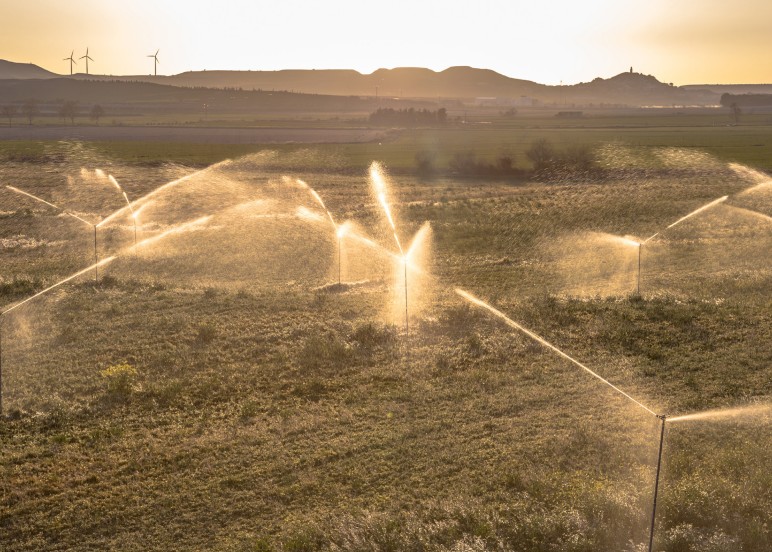
In response to the growing challenges of diesel powered irrigation, Egypt’s El Beheira Governorate has embraced solar-powered systems to support more sustainable agricultural practices. This article reflects on Egypt’s transition, focusing on the environmental, economic, and social impacts of solar irrigation. With notable improvements in water efficiency, reduced pollution, and better rural livelihoods, this case study highlights solar energy’s potential as a catalyst for greener farming.
References
Ashraf, M., Fouad, M. M., & Shihata, L. A. (2019). A solar-powered irrigation system for conserving water and energy consumption
in Egypt. Journal of Clean Energy Technologies, 7(6), 81-5. DOI: 10.18178/JOCET.2019.7.6.514
Balasubramanya, S., Garrick, D., Brozović, N., Ringler, C., Hope, L., et al. (2024). Risks from solar powered groundwater irrigation: Emissions
reductions may not meet expectations, and groundwater use will likely increase. Science, 383(6680), 256- 8. DOI: 10.1126/science.adi9497
Closas, A., & Rap, E. (2017). Solar-based groundwater pumping for irrigation: Sustainability, policies, and limitations. Energy Policy, 104, 33-7.
[FAO] Food and Agriculture Organization. (2018). Solar Powered Water Lifting For Irrigation In The Nile Delta. [Internet]. Available from: https://openknowledge.fao.org/server/api/core/bitstreams/4b1a1483-7af5-4b8a-8f5cdb5495d49f31/content
Gorjian, S., Minaei, S., MalehMirchegini, L., Trommsdorff, M., & Shamshiri, R. R. (2020). Applications of solar PV systems
in agricultural automation and robotics. In: Gorjian S. & Shukla A. (Editors.), Photovoltaic Solar Energy Conversion: Technology, Applications and Environmental Impacts. Chapter 7. Cambridge (US): Academic Press. p. 191-235. DOI: 10.1016/B978-0-12-8196106.00007-7
Guno, C. S., & Agaton, C. B. (2022). Socio-economic and environmental analyses of solar irrigation systems for sustainable agricultural production. Sustainability, 14(11), 6834.
Kabeyi, M. J. B., & Olanrewaju, O. A. (2021). Dual cycle cogeneration plant for an operating diesel powerplant. DOI: 10.46254/an11.20210200
Karnib, A., Elbendary, N., Abouelhassan, W., & Dawoud, M. A. (2024). Sustainability assessment of solar‐powered drip irrigation for sugarcane in Egypt: A water–energy food–ecosystem nexus perspective. World Water Policy 11(2), 393-409. DOI: 10.1002/wwp2.12247
Mallan, S., Karthick, K., Cheran, B., & Karthickram, S. (2021). Smart solar powered agricultural fertilizer sprayer. IOP Conference Series: Materials Science and Engineering, 1084(1), 012072. DOI: 10.1088/1757899X/1084/1/012072
Maka, A. O. M., & Alabid, J. M. (2022). Solar energy technology and its roles in sustainable development. Clean Energy, 6, 476-83. DOI: 10.1093/ce/zkac023
Ullah, I., Khan, N., Dai, Y., & Hamza, A. (2023). Does solar-powered irrigation system usage increase the technical efficiency of crop production? Energies, 16(18), 6641.
Salah, S. I., Eltaweel, M., & Abeykoon, C. (2022). Towards a sustainable energy future for Egypt: A systematic review of renewable energy sources, technologies, challenges, and recommendations. Cleaner Engineering and Technology, 8, 100497. DOI: 10.1016/j.clet.2022.100497
Senapati, A. K., & Dash, S. P. (2014). Thermo-Electric Generator in Turbocharged Diesel Engine - A Review. [Internet]. Available from: http://ijiset.com/v1s3/IJISET_ V1_I3_47.pdf
Downloads
Published
Issue
Section
License
Copyright (c) 2025 Siti Norzaemah Binti Mohd Rashid, Nur Azemah Binti Aminludin

This work is licensed under a Creative Commons Attribution-NonCommercial-NoDerivatives 4.0 International License.
Authors who publish with this journal agree with the following terms:
- Authors retain copyright and grant the journal right of first publication, with the work 1 year after publication simultaneously licensed under a Creative Commons attribution-noncommerical-noderivates 4.0 International License that allows others to share, copy and redistribute the work in any medium or format, but only where the use is for non-commercial purposes and an acknowledgement of the work's authorship and initial publication in this journal is mentioned.
- Authors are able to enter into separate, additional contractual arrangements for the non-exclusive distribution of the journal's published version of the work (e.g., post it to an institutional repository or publish it in a book), with an acknowledgement of its initial publication in this journal.
- Authors are permitted and encouraged to post their work online (e.g., in institutional repositories or on their website) prior to and during the submission process, as it can lead to productive exchanges, as well as earlier and greater citation of published work (See The Effect of Open Access).