The SPATIAL DISTRIBUTION PATTERNS OF BENTHIC MACROALGAE ALONG UJUNG GENTENG COAST, SUKABUMI, WEST JAVA

ARTICLE HIGLIGHTS
- The study in Ujung Genteng coast presents clear evidence of moderate macroalgae diversities and community structure linked to environmental parameters and substrate type
- The biological indices scores illustrated a spatial distribution pattern of macroalgae assemblages
- Understanding these ecological dynamics of macroalgae is crucial for both conservation and sustainable seaweed cultivation.
ABSTRACT
The study of benthic macroalgae in Ujung Genteng aimed to describe the spatial distribution pattern of benthic macroalgae based on various parameters that support their growth and influence the health status of the marine ecosystem. The study was conducted from May to December 2023. The observation sites were selected using a purposive sampling method across three coastal areas, chosen based on the physical landscape structure and distinct substrate types. The line transect quadrat method was used for data collection. The study identified 41 species of benthic macroalgae from 28 genera and 19 families. The bubble green algae Boergesenia forbesii emerged as the dominant species, accounting for 16.8% of the assemblages, although this difference was not statistically significant. The distribution pattern of macroalgae showed noticeable spatial variation, with the East Zone, located in the eastern part of the coastal area, considered the most favourable habitat, harbouring 32 species with 312 individuals. The health status of the marine ecosystem in Ujung Genteng was relatively good, indicated by moderate Diversity Index (H’) values around 2.52 to 2.70, high Evenness Index (E) values (0.73 to 0.82), and low Dominance Index (D) values (0.09 to 0.11). The measured abiotic factors also fell within ranges that support the growth of benthic macroalgae.
Keywords: benthic macroalgae, spatial, distribution patterns, Ujung Genteng
INTRODUCTION
Indonesia’s marine ecosystems support a rich and diverse assemblage of benthic macroalgae species (seaweeds), with at least 325 documented species, including 103 Chlorophyceae (green algae), 167 Rhodophyceae (red algae), and 55 Phaeophyceae (brown algae) (Current biodiversity status, 2024). This high biodiversity is influenced by multiple environmental factors, including nutrient availability, grazing pressure, competition, physical tolerance, light intensity, water circulation, and habitat type. Scientific research on Indonesian macroalgae began with the Siboga Expedition (1899 – 1900), which documented more than 700 macroalgal species in Indonesian waters (Weber-van Bosse 1928 in (Tampubolon et al., 2013). Subsequent studies included the Danish Expedition to Kei Island (1992), the Snellius-II Expedition (1984 – 1985), and the Bugenesia Program (1980 –1988).
Benthic macroalgae are autotrophic organisms that attach to the seafloor or substrates such as rocks, sand, and coral reefs. These organisms provide substantial ecological and economical benefits. Species such as Ulva sp., Enteromorpha sp., and Caulerpa sp. are commonly consumed as food, whereas Eucheuma sp., Gracilaria sp., Gelidium sp., Boergesenia forbesii, and Sargassum sp. are utilized not only as food but also as raw materials for pharmaceutical, cosmetic, and paper industries (Tampubolon et al., 2013); (Rumengan et al., 2014); (Melati, 2021). Ecologically, benthic macroalgae serve as habitats and food sources for diverse marine organisms, including crustaceans, molluscs, echinoderms, fish, and microalgae. Their complex morphology also contributes to wave attenuation and coastal protection.
Macroalgal presence is widely recognized as an indicator of marine ecosystem health, as many marine communities depend on macroalgae for food and shelter. The distribution, diversity, and abundance of macroalgae are influenced by environmental factors such as temperature, light availability, salinity, nutrient concentration, current velocity, tidal exposure, and depth, which collectively regulate photosynthetic capacity and growth (Karleskin et al., 2010). Macroalgal species exhibit substrate-specific preferences, and substrate types plays a critical role in shaping community structure and spatial distribution. Initial colonization often occurs through random settlement during propagule stage, whereas subsequent survival and growth are governed by biological interactions and abiotic conditions (Ko et al., 2024). In intertidal ecosystems, substrates such as rock, sand, mud, coral reefs, and artificial structures strongly influence macroalgal growth, distribution, and ecological interactions, thereby affecting overall ecosystems health (Imchen, 2015).
Benthic macroalgae are distributed across diverse coastal regions of Indonesia, including the Ujung Genteng coastal area in Sukabumi District, West Java Province. However, studies describing macroalgal diversity and spatial distribution in this region remain limited, despite their importance for sustainable coastal and macroalgal resource management. The Ujung Genteng coastal ecosystem remains relatively natural and includes seaweed beds, seagrass meadows, coral reefs, and mangrove forests, with substrates composed of sand, mud, coral fragments, coral crevices, and rock. The surrounding coral reef ecosystem is classified as fringing reef and is generally degraded, with coral cover below 10% (Erlania et al., 2015). Ujung Genteng Beach is part of the Ciletuh Palabuhanratu Geopark, a National Geopark known for its green turtle conservation area and high tourism activity. Tourism development may cause pressure on this sensitive ecosystem, highlighting the need for sustainable management to protect macroalgal communities and the broader marine environment. Therefore, this study aimed to analyse the community structure of benthic macroalgae and evaluate the influence of local environmental parameters on their distribution patterns. Understanding these relationships is crucial for studying intertidal ecological dynamics and supporting effective and sustainable coastal management strategies in Ujung Genteng waters.
MATERIALS AND METHODS
Study Area
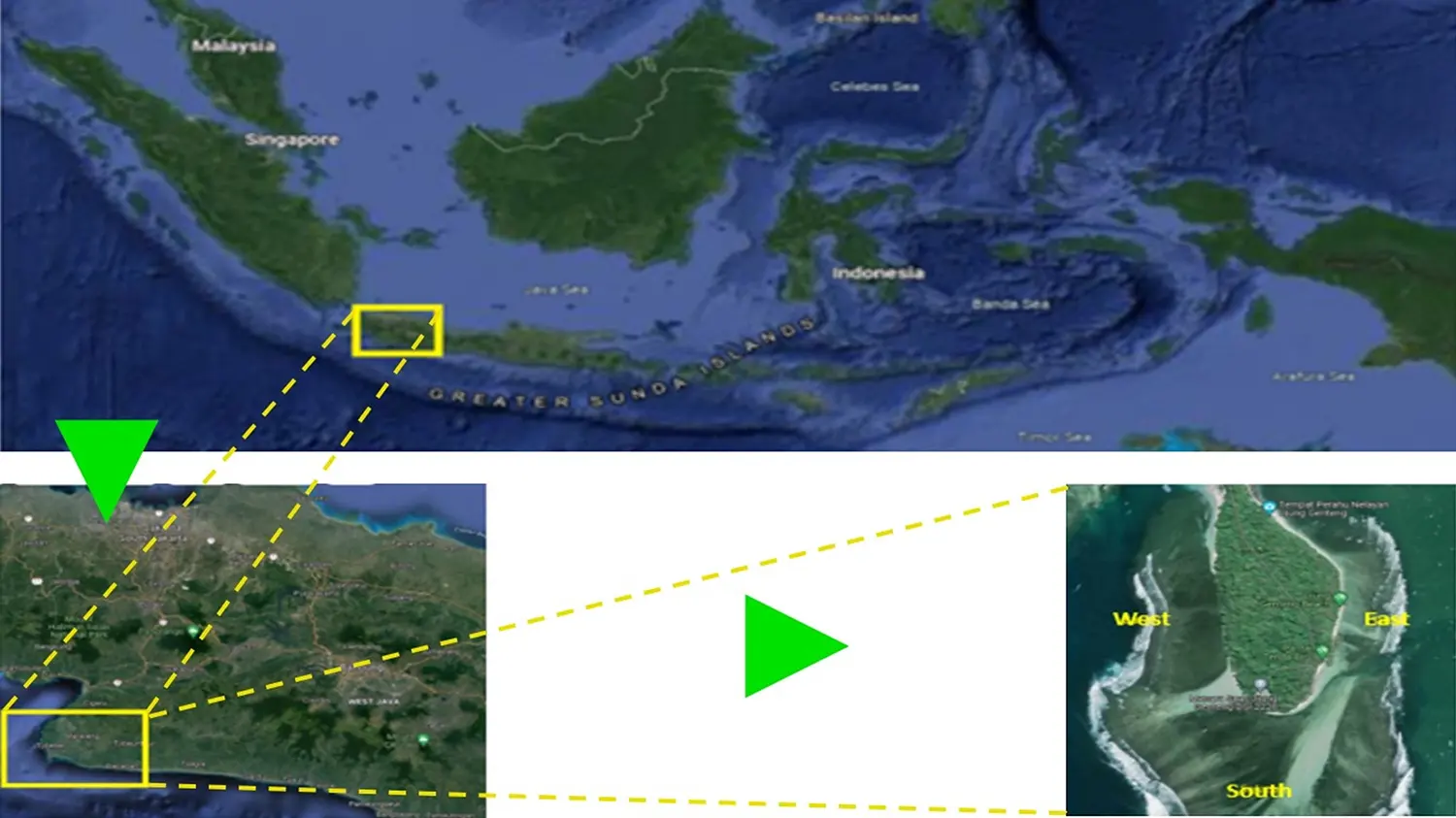
This study was conducted from May to December 2023 in the Ujung Genteng Coastal Area (7°22’54.2’’ S; 106°24’25.2’’ E), a popular local tourist destination. Data were collected using the line transect-quadrat method (English et al., 1994). Observation sites were determined using a purposive sampling method covering three coastal zones, based on the physical landscape structure and distinct substrate types (Zebua, 2017); (Aprilia et al., 2023), i.e., the West Zone (the western part of the coast), the South Zone (the southern part), and the East Zone (the eastern part) Figure. 1.
Figure 1.Location of the study and sampling sites along the coastline of Ujung Genteng
Sample Collection and Identification
Biotic and abiotic data were collected at the designated zones/stations (West, South, and East) following the procedure suggested by (Handayani et al., 2020). In each zone, five haphazardly placed 100-meter transect lines were established perpendicular to the coastline Figure. 2. Along each transect, five quadrats (size of 1 m x 1 m each) were positioned at regular 20 m intervals to quantify macroalgal cover and species composition (Ariani & LOA, 2017). A total of 25 macroalgal samples were collected from each zone.
Figure 2.Systematic sampling design illustrating 1 m x 1 m quadrat plots in each zone, with five replicate measurements along each transect line.
Macroalgal samples were collected from each quadrat along the transect lines during low tide using photographic and destructive sampling techniques (Nurmiyati, 2013); (Piazzi et al., 2019). The photographic method was used to document dominant taxa and morphological groups, while the destructive method is widely recognized as appropriate for assessing assemblage structure, biodiversity, and biomass (Piazzi et al., 2019). Both approaches are considered suitable and cost- effective for monitoring macroalgal assemblages and conducting environmental impact assessments (Cecchi et al., 2014). During sampling, macroalgal assemblages were photographed for documentation, and then carefully removed from the substrate using a sharp knife to ensure collection of the complete assemblage, including the holdfast. Samples were carefully placed into labeled, airtight plastic bags without compression and preserved in 70% ethanol prior to transport to the laboratory for further processing and analysis.
In the laboratory, macroalgal samples were identified to species level based on morphological characteristics of the thallus, including overall form, size, color variation, branching pattern, growth form, texture, holdfast type, and reproductive structures. Identification was conducted using standard and credible taxonomic references, including (Coppejans et al., 2009); (Sukiman, 2011); (Al-Yamani et al., 2014), and (Handayani et al., 2014).
Abiotic parameters such as substrate type, temperature, current velocity, water clarity, pH, and salinity were measured in situ(Sukiman, 2011). Substrate type was visually assessed and documented directly. Water temperature was measured using a thermometer, current velocity was assessed with a current drogue, water clarity was determined using a Secchi disk, pH was measured with a pH meter, and salinity was gauged using a salinity meter.
Data Analysis
The data collected during the study were analyzed using descriptive statistics to describe, illustrate, and summarize the data. It was expected that a specific pattern might emerge in tables and graphs, describing the macroalgal distribution in Ujung Genteng. The spatial distribution of macroalgae was analyzed using one-way ANOVA in SPSS version 16.0 to investigate significant differences in distribution patterns and community structure among the three coastal zones. The ecological functioning of macroalgae communities was assessed using several biological indices proposed by Indarjani and (Indarjani & Nurhayati, 2022), including Shannon-Wiener Index (H’) for measuring taxa diversity, the Evenness Index (E) to analyze the distribution of taxa within the community, and the Simpson Dominance Index (D) to identify dominant taxa associated with the assemblages.
RESULTS AND DISCUSSION
Characteristics of the Ujung Genteng Intertidal Zone
Ujung Genteng coastal area (7°22’54.2’’ S; 106°24’25.2’’ E) is relatively protected from wave breaks with a wide intertidal area reaching up to about 150 m toward the center and a depth of up to 85 cm. The area features a diverse range of habitats, including seagrass meadow, edge-of-the- sea coral beds, and coral flats in the mid-intertidal area near the wave break zone, where macroalgae were abundant. The coast is characterized by diurnal tides, with two high tides and two low tides each day. Variations of land use in Ujung Genteng ranging from plantations and agriculture, fishery ports, shrimp farms, tourism areas, and conservation areas. Anthropological activities around this coastal area highly affect the macroalgal communities.
For benthic organisms, substrate types greatly influence the presence of macroalgae. The West Zone is dominated by sand and seagrass meadow, with some coral, while the South Zone has substrate type consisting of sand, seagrass meadow, and reef crevices. The East Zone has a substrate characteristic dominated by sand, coral, and a little seagrass. This finding aligns with other research (Johan et al., 2015); (Effendi et al., 2024), which showed that the substrate types influence the structural community of macroalgae assemblages.
Environmental Analysis
Diverse marine environmental conditions significantly influence the composition of macroalgae in eachzone. Toexplore this connection, measuring key factors such as temperature, pH, current velocity, water clarity, salinity, and substrate types was crucial. Comprehensive details regarding the environmental parameters are presented in Table 1.
| Abiotic factors | West zone | South zone | East zone |
|---|---|---|---|
| pH | 7.9 – 8.37 | 7.75 – 8.6 | 7.99 – 8.69 |
| Temperature (°C) | 28.6 – 30.4 | 28.8 – 30.0 | 30.4 – 32.8 |
| Salinity (ppt) | 20.0 – 28.8 | 31 – 38.2 | 37.3 – 39.5 |
| Current (cm/second) | 9.1 – 25 | 7.7 – 20 | 9.1 – 12.5 |
| Clarity | 100% | 100% | 100% |
| Substrate type | Sand, sea grass, coral fragments | Sand, sea grass, reef crevices | Sand, coral fragments and reef crevices |
Generally, environmental conditions along the Ujung Genteng Coast support the growth rates and community composition of benthic macroalgae. pH ranged from 7.90 to 8.69 is ideal, as most benthic macroalgae can thrive at pH 6.6 to 9.9 (Ulfah et al., 2017). pH influences the metabolic and respiratory processes of macroalgae existence of organisms by disrupting metabolic and respiratory (Kartikasari et al. 2025). Additionally, water temperatures at all observation sites ranged from 28.1 °C to 32.8 °C, which was within the normal range. Temperature affects the photosynthesis process of benthic macroalgae growth. (Arfah & Simon, 2016) suggested that the optimal temperature for macroalgae growth in tropical waters was between 15 °C and 30 °C, with a growth threshold at 34.5 °C.
Salinity along the Ujung Genteng Coast varied from 20.0 to 39.5 ppt, falling within the optimum range for benthic macroalgae. Salinity influences metabolic process and reproductive capacity, which in turn determines their distribution and abundance in the intertidal zone (Larsen & Say-Jensen, 2006). Luning (1990), as cited in (Arfah & Simon, 2016), indicated that many species of benthic macroalgae can thrive across a broader salinity range. This was supported by (Palalo, 2013), who observed that macroalgae grow in waters with salinity levels from 13 to 37 ppt. Variation in salinity across the three coastal zones of Ujung Genteng waters may be attributed to differences in depth during measurement, as salt concentration tends to be higher at lower depths (Yulianda, 2009). The current research reported that salinity levels in two different observed zones along Ujung Genteng waters were 34 and 35 ppt (Effendi et al., 2024).
Abiotic factor potentially detrimental to macroalgae growth is current velocity, which influences the distribution of nutrients necessary for photosynthesis. In this study, current velocity ranged from 7.7 cm/s to 25 cm/s, considered ideal for macroalgae growth. Current velocity above 40 cm/s may damage cultivation structures and break macroalgal assemblages (Marianingsih et al., 2013).
Sunlight availability is essential for photosynthesis. Water depth and clarity influence light penetration, determining which species can thrive. Our study found that water transparency at the three coastal zones was 100% at depths of 5 – 70 cm, indicating that macroalgae can grow optimally since sunlight can reach the bottom. Previous research reported that the depth for photosynthetic activity in macroalgae ranges from 0.6 to 6.5 meters or more (Arfah & Simon, 2016).
Variation of substrate types was observed across the three coastal zones of Ujung Genteng waters. The substrates primarily consisted of sand, coral fragments, reef crevices and seagrass. Different macroalgae possess varying attachment mechanisms. Rocky substrates support diverse communities, while seagrass can trap nutrients while limiting the growth of macroalgae that require full sunlight (Han et al., 2014). In contrast, sandy substrates, which are often unstable, may restrict macroalgal attachment; however, some opportunistic species can thrive in nutrient-rich sandy environments (Ko et al., 2024).
Benthic Macroalgae Compositions
Variation of types, species, and forms of macroalgae reflects the rich diversity of macroalgae in Ujung Genteng coastal waters Table 2 &3. Benthic macroalgae collected during the study in Ujung Genteng comprised three divisions (Rhodophyta, Chlorophyta, and Phaeophyta), 19 families, 28 genera, and 41 species, totalling 1,909 individuals. This number was relatively comparable to a previous study in Ujung Genteng conducted by (Johan et al., 2015), who found 24 genera, 34 species from Rhodophyta, Chlorophyta and Phaeophyta, and the current study (Effendi et al., 2024), which reported 19 genera, 23 species, and 3,884 individuals of macroalgae assemblages in Ujung Genteng waters.
| No | Division | Spesies West Zone | West Zone | South Zone | East Zone | Total Abundance |
|---|---|---|---|---|---|---|
| 1 | Chlorophyta | Boergesinia forbesii 83 | 83 | 99 | 130 | 312 |
| 2 | Chlorophyta | Boodlea sp. 3 | 3 | 5 | 0 | 8 |
| 3 | Chlorophyta | Caulerpa peltata 1 | 1 | 0 | 0 | 1 |
| 4 | Chlorophyta | Chaetomorpha crassa 13 | 13 | 67 | 43 | 123 |
| 5 | Chlorophyta | Cladhopora sp. 10 | 10 | 0 | 1 | 11 |
| 6 | Chlorophyta | Dictyospheria carnevosa 3 | 3 | 5 | 1 | 9 |
| 7 | Chlorophyta | Enteromorpha intestinalis 9 | 9 | 4 | 6 | 19 |
| 8 | Chlorophyta | Halimeda gracillis 9 | 9 | 1 | 6 | 16 |
| 9 | Chlorophyta | Ulva latuca 0 | 0 | 0 | 8 | 8 |
| 10 | Chlorophyta | Ulva reticulata 17 | 17 | 25 | 15 | 57 |
| 11 | Chlorophyta | Valonia fastigiata 1 | 1 | 2 | 19 | 22 |
| 12 | Chlorophyta | Valonia ventricossa 4 | 4 | 0 | 0 | 4 |
| 13 | Chlorophyta | Valoniopsis pachinema 6 | 6 | 4 | 11 | 21 |
| 14 | Phaeophyta | Hydroclatus clathratus 2 | 2 | 0 | 2 | 4 |
| 15 | Phaeophyta | Padina australis 3 | 3 | 62 | 151 | 216 |
| 16 | Phaeophyta | Sargassum binderi 0 | 0 | 4 | 0 | 4 |
| 17 | Phaeophyta | Sargassum duplicatum 0 | 0 | 1 | 2 | 3 |
| 18 | Phaeophyta | Sargassum sp. 0 | 0 | 6 | 2 | 8 |
| 19 | Phaeophyta | Tubinaria ornata 0 | 0 | 0 | 3 | 3 |
| 20 | Rhodophyta | Acanthophora muscoides 46 | 46 | 57 | 102 | 205 |
| 21 | Rhofophyta | Acanthophora spicifera 1 | 1 | 38 | 15 | 54 |
| 22 | Rhodophyta | Amphiroa anceps 0 | 0 | 0 | 1 | 1 |
| 23 | Rhodophyta | Amphiroa fragilissima 16 | 16 | 22 | 5 | 43 |
| 24 | Rhodophyta | Ceramium sp. 0 | 0 | 1 | 0 | 1 |
| 25 | Rhodophyta | Cheilosporum acutibolum 1 | 1 | 0 | 0 | 1 |
| 26 | Rhodophyta | Condrus crispus 0 | 0 | 2 | 1 | 3 |
| 27 | Rhodophyta | Euchema spinosum 7 | 7 | 11 | 0 | 18 |
| 28 | Rhodophyta | Gelidiella acerosa 2 | 2 | 3 | 5 | 10 |
| 29 | Rhodophyta | Glacilaria arcuata 15 | 15 | 19 | 74 | 108 |
| 30 | Rhodophyta | Glacilaria coronopifolia 75 | 75 | 34 | 110 | 219 |
| 31 | Rhodophyta | Glacilaria corticata 0 | 0 | 2 | 0 | 2 |
| 32 | Rhodophyta | Glacilaria salicornia 57 | 57 | 23 | 91 | 171 |
| 33 | Rhodophyta | Glacilaria verrucosa 0 | 0 | 0 | 1 | 1 |
| 34 | Rhodophyta | Halymenia sp. 0 | 0 | 0 | 1 | 1 |
| 35 | Rhodophyta | Hypnea asperi 10 | 10 | 31 | 20 | 61 |
| 36 | Rhodophyta | Hypnea cerviconis 0 | 0 | 8 | 25 | 33 |
| 37 | Rhodophyta | Hypnea spinella 9 | 9 | 39 | 53 | 101 |
| 38 | Rhodophyta | Kappaphycus sp. 0 | 0 | 0 | 1 | 1 |
| 39 | Rhodophyta | Laurencia papilosa 11 | 11 | 2 | 7 | 20 |
| 40 | Rhodophyta | Laurencia sp. 1 | 1 | 2 | 0 | 3 |
| 41 | Rhodophyta | Peyssonnelia sp. 0 | 0 | 0 | 3 | 3 |
| Total Abundance | 1,909 | |||||
| No | Species | Description |
|---|---|---|
| 1. |
Boergesinia forbesii (Chlorophyta) Image |
The thallus is round and resembles a fluid-filled sac, featuring a wider tip that narrows toward the base. Its surface is smooth, transparent, and green. It is unbranched and forms clumps with holdfast rhizoids, growing up to 5 cm tall. The thallus has a gelatinous texture. It is typically found in seagrass meadows, coral reefs, and sandy environments, attaching to dead coral, rocks, and various types of algae (Handayani et al. 2020). |
| 2. |
Gracilaria coronopifolia (Rhodophyta) Image |
The thallus is cylindrical, fleshy, and smooth, displaying colors ranging from brownish-green to reddish-brown or yellowish-brown (blonde). It adheres to the substrate with small discs and can grow either upright or flat, forming clusters or spreading out. The branching pattern is dichotomous, alternate, and irregular. The upper part of the clump is typically dense, featuring pointed thallus tips of varying lengths. The thallus has a cartilaginous texture and can grow up to 20 cm long. It is commonly found in seagrass meadows, flooded coral reefs, protected coral flats, and breakwaters, attaching to sandy substrates, coral flats, coral rubble, mollusc shells, sponges, or as an epiphyte on seagrass (Sukiman 2011; Handayani et al. 2014) |
| 3. |
Padina australis (Phaeophyta) Image |
The thallus has a fan shape, is flat and thin, with a smooth, unbranched edge. It appears blond brown with white stripes on its surface. It grows upright in clusters, often curling into a funnel shape. The thallus measures 2 – 7 cm in height and 3 – 8 cm in width. It adheres to the substrate using holdfasts shaped like rhizoids and typically grows attached to coral, coral debris, and sand, often found in coral crevices (Johan et al. 2015; Handayani et al. 2020) |
Variations of macroalgae organisms were presumably due to the cover area of sampling sites, the plot site, and time. Macroalgae assemblages collected in Ujung Genteng waters were still considerably higher than in other places in Indonesian waters. A study in Ambon Bay, Moluccan waters, identified 21 species of macroalgae, comprising 10 species of Rhodophyta, six species of Chlorophyta, and five species of Phaeophyta (Litaay, 2014). In addition, a study in Batu Putih National Park, Belitong Island, identified 18 species, comprising 15 families, across three divisions (Rhodophyta, Chlorophyta, and Phaeophyta) (Langoy et al., 2012). (Meriam et al., 2016) observed macroalgae assemblages in Mantehage Island waters, North Sulawesi, which consisted of green algae (Chlorophyta) comprised 3 orders, 6 families, 11 genera, and 23 species, while brown algae (Phaeophyta) included 3 orders, 3 families, 5 genera, and 5 species. Red algae (Rhodophyta) had 4 orders, 8 families, 10 genera and 16 species. The difference in the number of species was due to varying local natural conditions and environmental factors, which influence the presence of macroalgae in a specific location.
Rhodophyta division was found to be more diverse than Chlorophyta and Phaeophyta. The Rhodophyta Division (red algae), considered having the highest diversity, consisted of 22 species across 13 genera and 10 families and contributed 56% to the macroalgae assemblages, which were dominated by Gracilaria coronopifolia. In comparison, the Chlorophyta (green algae) comprised 13 species, distributed across 11 genera and six (6) families and made up 32% of the assemblages, which were dominated by Boergesinia forbesii. The division with the lowest diversity was Phaeophytan (brown algae), with 6 species from 4 genera and 3 families and dominated by Padina australis.
These findings align with research conducted by (Johan et al., 2015), which identified 15 species of Rhodophyta, 14 species of Chlorophyta, and 5 species of Phaeophyta in the waters of Ujung Genteng beach.(Mudrikah et al., 2024) noted that the significant diversity of Rhodophyta may be attributed to its effective sexual and asexual reproduction methods, which facilitate rapid growth and reproduction. Additionally, its adaptability to different environments allows it to flourish in both intertidal zones and deep-sea regions.
Conversely, B. forbesii from Chlorophyta was observed as the dominant species, with 312 individuals, or 16.8% of the total macroalgae found in this area. This situation was comparable with a previous study in Ujung genteng that Chlorophyta had the highest coverage (46.40%) compared with Rhodophyta and Phaephyta (Johan et al., 2015) and a similar situation with the current study (Effendi et al., 2024). This species is commonly found in intertidal areas where fluctuating environmental conditions are often occur. Besides, this algae species typically attaches to hard substrates like crevices, fragmented dead coral, rock and even other algae (Guiry et al., 2014) which was also observed in this study.
In the intertidal zone, Chlorophyta plays a crucial role in aquatic ecosystems as primary producers in the food chain, with their growth heavily reliant on high levels of sunlight. Besides this, greean algae was able to grow in various types of substrate, as observed in Ujung Genteng waters.
This study observed that the East Zone exhibited the highest relative abundance of macroalgae, which contributed 48% of the total abundance, followed by the South Zone with 30% and the West Zone was the site with the lowest one and contributed only 22% of the total individuals collected during the study.
Spatial Distribution of Macroalgae
The distribution pattern of macroalgae contains data regarding the presence of species and the interaction among individulas of the same species or between different species within their habitat. Studies investigated how various factors, such as environmental conditions, influence the distribution and diversity of macroalgae. As benthic organisms, the substrate characteristics play a crucial role in shaping the composition and distribution of macroalgae by affecting their ability to attach, grow, and compete, which in turn determines the marine ecosystem dynamics and biodiversity. (Ariani & LOA, 2017) observed that the variation of macroalgae composition was due to the type of holdfast and substrate suitability.
In the case of the Ujung Genteng areas, the spatial distribution of macroalgae was represented by the zoning division, specifically the West Zone, South Zone, and East Zone Figure. 3.
Figure 3.Mean abundance and species richness of macroalgae on three coastal zones of Ujung Genteng Notes: Different letters (a and b) signify a significant difference in the ANOVA test result (P < 0.05).
The East Zone exhibited a significantly different pattern of community structures compared to the other two zones Figure. 3 and was primarily characterized by a substrate dominated by coral and reef crevices. Substrates in the West Zone and South Zone mainly consisted of sand and seagrass beds. These findings align with the study of (Kadi, 2006), who noted that substrate structures have a significant influence on the diversity of macroalgae species. In coral-dominated areas, a greater variety of macroalgae was observed, including tubular and filamentous macroalgae of various shapes and larger sizes (Palalo, 2013). Additionally, our study identified species such as B. forbesii, G. coronopifolia and P. australis, which were found to be common across all three zones. These species are well- adapted to rock and coral substrates through disc-shaped holdfasts that securely attach to hard surfaces, allowing them to withstand waves and ocean currents, and tolerate drought during low tide (Palalo, 2013); (Johan et al., 2015);(Arfah & Simon, 2016).
Given the abundance of these macroalgal species, bioprospecting of these common species in Ujung Genteng warrants consideration. Boergesinia forbesi contains bioactive compounds such as steroids, flavonoids, phenolics, and saponins with antioxidant properties, indicating potential applications in medical and pharmaceutical fields (Gazali et al. 2023 in (Effendi et al., 2024). Gracilaria coronopifolia, a widely utilized seaweed in Indonesia, has potential as an alternative food resource, including gelatin production, and exhibits antiviral, antifungal, and antibacterial activities (Indarjani & Nurhayati, 2022); Li et al. 2019 in (Effendi et al., 2024). Padina australis contain alkaloids, flavonoids, saponins, tannins with antioxidant, antimicrobial, and antifungal properties (Rachmawati et al. 2021b in (Effendi et al., 2024). Acantophora muscioides exhibits promising bioactive potential for pharmaceutical applications (Sunarpi et al., 2018).
Community Structure of Macro Algae Assemblages
The community structure of macroalgae assemblages was analysed using biological indices. to examine patterns of biodiversity, community dynamics, and ecological relationships in Ujung Genteng coastal waters Figure. 4.
Figure 4.Mean of biotic indices values (H’, E and D) of macroalgae assemblages in three coastal zones of Ujung Genteng
Biological indices reveal significant spatial variations in the macroalgal community structures along the Ujung Genteng coastal area, particularly in terms of species diversity and species dominance. The diversity index (H’) was classified as moderate, with average values ranging from 2.5 to 2.70, indicating that the communities were relatively stable and could maintain disturbances within the habitat. The East Zone had the highest diversity index value (H’ = 2.7), which was significantly different from the other two zones, while the West Zone had the lowest value (H’= 2.52). Environmental conditions and the suitability of a habitat influence macroalgal growth, as evidenced by the high diversity index (H’). The type of substrate in the East Zone, which was dominated by coral fragments and coral crevices, created a heterogeneity of species composition. A stable substrate of coral fragments, rocks, and sand supported the growth and species diversity of benthic macroalgae compared to places with a substrate consisting of sand and mud, which created an unstable substrate (Imchen, 2015), such as in the West Zone.
The distribution pattern of macroalgae explains information about the existence of species and relationships between the same species or between species and their habitat. The Evenness Index (E) within the three coastal zones showed no difference; the scores were categorized as high and ranged from 0.73 to 0.82, indicating that the distribution of individuals across species in the macroalgal community within the habitat was balanced. (Mudrikah et al., 2024) also found a similar pattern at Sarangan Beach, where macroalgae assemblages were characterised through a more balanced distribution of individuals of macroalgae and a few dominant species within the communities.
The dominance index (D) is an important ecological index used to assess the structure of macroalgae communities. The Dominance Index (D) measures the concentration and distribution of dominant species. A higher index value indicates that dominance is concentrated in a single species, while a lower value suggests that multiple species share dominance.(Indarjani & Nurhayati, 2022). The West Zone had the highest value (D = 0.17) and a significant difference from the other two zones, while the East Zone had the lowest value (D = 0.09) Figure. 4, indicating that there was a concentration of certain species at each observation point on the western part of the coast.
Our study showed that locations with a high diversity index (H’) likely to have a low dominance index (D). Conversely, stations with a low diversity index (H’) have a high dominance index (D). The East Zone had the highest average diversity index (H’) and the lowest average dominance index (D). This indicates that species diversity at each observation point was accompanied by a relatively even distribution of individuals of each species. In addition, the environmental conditions and substrate types at this location were relatively suitable for the growth of various macroalgae species. Conversely, the West Zone had the lowest average diversity index (H’) and the highest average dominance index (D). This was due to the substrate types dominated by seagrasses, sand and less fragmented corals. Additionally, environmental factors such as relatively strong current velocity, significantly influence the development of macroalgae assemblages, causing the survival of only a few macroalgae species.
CONCLUSION
Benthic macroalgal communities in the Ujung Genteng coastal ecosystem exhibited clear spatial variation and moderate ecosystem health. A total of 41 species from 28 genera and 19 families were recorded across the divisions Rhodophyta, Chlorophyta, and Phaeophyta, with environmental conditions in the intertidal zone generally favorable for macroalgal growth. Community structure differed among zones, with the East Zone providing the most suitable habitat due to favorable substrate composition, whereas seagrass presence likely constrained macroalgal development in some areas. Moderate diversity (H′= 2.52 – 2.70), high evenness (E = 0.75 – 0.89), and low dominance (D = 0.09 – 0.11) indicated a relatively stable assemblage without pronounced species dominance. These findings highlight the importance of environmental parameters in shaping macroalgal distribution and underscore the need for continued monitoring and sustainable management, particularly in light of increasing tourism pressure.
References
- Al-Yamani Faiza Y., P Igor, Al-ghunaim Aws, M Tatiana. Kuwait Institute for Scientific Research: Kuwait City (KW; 2014.
- Aprilia D.H., Santanumurti M.B., Jamal M.T., Masithah E.D., Suciyono S.. Diversity, abundance, and distribution of macroalgae in coastal ecotourism areas: A case study at Baluran National Park, Situbondo, Indonesia. Pertanika. 2023; 46(1):197-212. DOI
- Arfah H., Simon I.P.. Kualitas air dan komunitas makroalga di Perairan Pantai Jikumerasa, Pulau Buru [Water quality and macroalgae communities in Jikumersa Waters, Buru Island. Jurnal Ilmiah Platax. 2016; 4(2):109-119. DOI
- Ariani Nurgayah W., LOA Afu. Komposisi dan distribusi makroalga berdasarkan tipe substrat di Perairan Desa Lalowaru Kecamatan Moramo Utara [Composition and distribution of macroalgae based on substrate types in Lalowaru Village, North Moramo District. Jurnal Sapa Laut. 2017; 2(1):25-30.
- Current biodiversity status, distribution, and prospects of seaweed in Indonesia: A systematic review. Helyon. 2024; 10(10)DOI
- Cecchi E., Gennaro P., Piazzi L., Ricevuto E., Serena F.. Development of a new biotic index for ecological status assessment of Italian coastal waters based on coralligenous macroalgal assemblages. Euro J Phycol. 2014; 49(3):298-312. DOI
- Coppejans E., Leliaert F., Dargent O., Gunasekara R., Clerck O.. Belgian National Focal Point to the Global Taxonomy Initiative: Brussels (BE; 2009.
- Effendi A.N., Fadhillah H.S., Khairunisah S.D., de’Ornay A.R.N., Sari B.A., Handayani S.. Comprehensive inventory and medicinal potential of macroalgae in Cibuaya Beach Coastal Ecosystem, Ujung Genteng. Sukabumi J Trop Biodiv. 2024; 4(2):1-13. DOI
- English S., Wilkinson C., Baker V.. Australian Institute of Marine Science Publication: Queensland (AU; 1994.
- Erlania E., R. Nyoman, Joni H., Ofri J.. Kondisi rumput laut alam di Perairan Pantai Ujung Genteng, Sukabumi dan Labuhanbua, Sumbawa: Potensi karbon biru dan pengembangan budidaya [Seaweeds condition in Ujung Genteng Coastal Waters, Sukabumi and Labuhanbua, Sumbawa: Blue carbon potential and cultivation development. Jurnal Riset Akuakultur. 2015; 10(2):293-304. DOI
- Guiry M.D., Guiry G.M., Morisson L., Rindi F.. AlgaeBase: An Online Resources for Algae. Algologie. 2014; 35(2):105-115. DOI
- Handayani S., Tatang M.S., Endarti Dian Rakyat: Jakarta (ID; 2014.
- Handayani S., Utomo C., Nuraidaha Pramuliati, I Fahreza, A.. Identification of macroalgae species in Sindangkerta Beach, Tasikmalaya District: An effort to explore the biodiversity of indigenous species. J Trop Biodiv. 2020; 1(1):1-14. DOI
- Han Q., Dongyan L., Heu Z.. Macroalgae blooms and their effects on seagrass ecosystems. Ocean Coast Res. 2014; 13:791-798. DOI
- Imchen T.. Substrate deposit effect on the characteristic of an intertidal macroalgae. Indian J Geomar Sci. 2015; 44(3):333-338.
- Indarjani R., Nurhayati S.. Macrozoobenthic community structure in seaweed culture ponds in Muara Gembong Estuary, Bekasi, West Java Province, Indonesia. Biotropia. 2022; 29(2):134-141. DOI
- Johan O.E., Erlania E., Nyoman I.R.. Hubungan substrat dasar perairan dengan kehadiaran rumput laut alam di Perairan Ujung Genteng, Sukabumi, Jawa Barat [The relationship between substrate of aquatic base and the presence of natural seaweed in the waters of Ujung Genteng, Sukabumi, West Java. Jurnal Riset Akuakultur. 2015; 10(4):609-618. DOI
- Kadi A.. Struktur komunitas makro algae di Pulau Pengelap, Dedap, Abang Besar dan Abang Kecil [Macroalgae community structures in Pangelap Island, Dedap, Abang Besar and Abang Kecil. J Mar Sci. 2006; 11(4):234-240.
- Karleskin G., Richard T., James W.S.. Brooks/Cole: Boston (US; 2010.
- Ko Y.W., Yang K.M., Choi H.G.. Substrate preferences and interspecific affinities of Antarctic. 2024.
- macroalgae: Insights from Maxwell Bay, King George Island. Diversity J. 6(628)DOI
- Langoy M.L., Saroyo D., Deidy Farham N.J., YK Syamsul, B.H.. Deskripsi alga makro di Taman Wisata Alam Batuputih, Kota Bitung [Description of macro algae in Batuputih Nature Tourism Park, Bitung City. Jurnal Ilmiah Sains. 2012; 11(2):219-224. DOI
- Larsen A., Say-Jensen K.. Salt tolerance and distribution of estuarine benthic macroalgae in the Kattegat–Baltic Sea area. Phycologia. 2006; 45(1):13-23.
- Litaay C.. Distribution and diversity of macroalgae communities in Ambon Bay. Jurnal Ilmu dan Teknologi Kelautan Tropis. 2014; 6(1)DOI
- Marianingsih P., Evi A., Teguh S.. Semirata Proceeding FMIPA Universitas Lampung. 2013:219-225.
- Melati P.. Uji aktivitas antioksidan, sitotoksisitas, dan GC-Ms ekstrak metanol alga hijau Boergesinia forbesii (Harvey) Feldmann dari Pantai Panjang Bengkulu [Antioxidant activity, cytotoxicity, and GC-Ms test of methanol extract of green algae Boergesinia forbesii (Harvey) Feldmann from Panjang Beach, Bengkulu. Jurnal Pengelolaan Laboratorium Sains dan Teknologi. 2021; 1(1):10-24. DOI
- Meriam W.P.M., Rene C.K., Lawrence J.L.. Provinsi Sulawasi Utara [Macroalgae inventory in the coastal waters of Mantehage Island, Wori District, North Minahasa Regency, North Sulawesi Province]. Jurnal Ilmiah Platax 4(2):84-108. 2016. DOI
- Mudrikah S., Utami L.W., Oktavia R., Deska Sayidinar A., A.. Proceeding 8th ICBS. DOI : 10.1051/bioconf/20249404010. 2024.
- Nurmiyati. Keragaman, distribusi dan nilai penting makro alga Di Pantai Sepanjang Gunung Kidul [Diversity, distribution, and importance of macroalgae on the Coast Along Gunung Kidul. Bioedukasi. 2013; 6(1):12-21.
- Palalo A.. Distribusi makroalga pada ekosistem lamun dan terumbu karang di Pulau Bonebatang, Kecamatan Ujung Tanah, Kelurahan Barrang Lompo, Makassar [Distribution of macroalgae in seagrass and coral reef ecosystems on Bonebatang Island, Ujung Tanah District. 2013.
- Piazzi F., Atzori N.C., Cinti M.F., Frau F., Ceccherelli G.. Monitoring non-indigenous macroalgae in a Mediterranean MPA: Lessons from a short-temporal variability of pristine habitats invasion. J Ocean Coast Manage. 2019; 207:23-35. DOI
- Rumengan A.P., Desy A.M., Billy J.K., Rene C.K.. Kajian anti piretik dan anti oksidan dari ekstrak alga hijau Boergesinia forbesii [Antipyretic and antioxidant study of green algae extract Boergesinia forbesii. Jurnal LPPM Bidang Sains dan Teknologi. 2014; 1(1):23-29.
- Sukiman. Biodiversitas dan potensi ganggang merah (Rhodophyta) di Perairan Pantai Jawa Barat [Biodiversity and potential of red algae (Rhodophyta) in the coastal waters of West Java. 2011.
- Sunarpi H., Prasedya E.S., Ariyana M., Kobayashi D., Akihiro H.. Cytotoxicity and antiproliferative activity of Indonesian red algae Acanthophora muscoides crude ethanol extracts. J Biol Sci. 2018; 18:425-433. DOI
- Tait L.W., Hawes I., Schiel D.R.. Shining light on benthic macroalgae: Mechanisms of complementarity in layered macroalgal assemblages. PLoSOne. 2014; 9(12)DOI
- Tampubolon Agralin, SG Grevo, B Wagey. Biodiversity of macroalgae in the lagoon of Pasige Island, Tagulandang Subdistrict, Sitaro District [Biodiversitas alga makro di Lagun Pulau Pasige, Kecamatan Tagulandang, Kabupaten Sitaro. Jurnal Pesisir dan Laut Tropis. 2013; 2(1):35-43. DOI
- Ulfah S., Elita A., Muslich H.. Struktur komunitas makroalga ekosistem terumbu karang perairan pantai air Berundangan Kabupaten Aceh Selatan [The community structure of macroalgae in coral reef ecosystem of the coastal waters of South Aceh Regency. National Biotik Proceedings of National Seminar Biotik. 2017;237-244.
- Yulianda F.. Universitas Terbuka: Jakarta (ID; 2009.
- Zebua N.R.. Keanekaragaman makroalga di Pesisir Pantai Kecamatan Lahewa, Kabupaten Nias Utara [Macroalgae diversity on the coast of Lahewa District, North Nias Regency. 2017.
Al-Yamani, Faiza Y, Igor P, Aws Al-ghunaim, Tatiana M. 2014. Field Guide of Marine Macroalgae (Chlorophyta, Rhodophyta, Phaeophyceae) of Kuwait. Kuwait City (KW): Kuwait Institute for Scientific Research.
Aprilia DH, Santanumurti MB, Jamal MT, Masithah ED, Suciyono S. 2023. Diversity, abundance, and distribution of macroalgae in coastal ecotourism areas: A case study at Baluran National Park, Situbondo, Indonesia. Pertanika 46(1):197–212. DOI: 10.47836/pjtas.46.1.11 DOI: https://doi.org/10.47836/pjtas.46.1.11
Arfah H, Simon IP. 2016. Kualitas air dan komunitas makroalga di Perairan Pantai Jikumerasa, Pulau Buru [Water quality and macroalgae communities in Jikumersa Waters, Buru Island]. Jurnal Ilmiah Platax 4(2):109-119 DOI: 10.35800/jip.4.2.2016.14132 DOI: https://doi.org/10.35800/jip.4.2.2016.14132
Ariani, Nurgayah W, Afu LOA. 2017. Komposisi dan distribusi makroalga berdasarkan tipe substrat di Perairan Desa Lalowaru Kecamatan Moramo Utara [Composition and distribution of macroalgae based on substrate types in Lalowaru Village, North Moramo District]. Jurnal Sapa Laut 2(1):25-30.
Basyuni M, Puspita M, Rahmania R, Albasi H, Pratama I, Purbani D, …, Kajita T. 2024. Current biodiversity status, distribution, and prospects of seaweed in Indonesia: A systematic review. Helyon 10(10):e31073. DOI: 10.1016/j.heliyon.2024.e31073 DOI: https://doi.org/10.1016/j.heliyon.2024.e31073
Cecchi E, Gennaro P, Piazzi L, Ricevuto E, Serena F. 2014. Development of a new biotic index for ecological status assessment of Italian coastal waters based on coralligenous macroalgal assemblages. Euro J Phycol 49(3):298–312. DOI: 10.1080/09670262.2014.918657 DOI: https://doi.org/10.1080/09670262.2014.918657
Coppejans E, Leliaert F, Dargent O, Gunasekara R, De Clerck O. 2009. Sri Lankan seaweeds: Methodologies and field guide to the dominant species. In: Samyn Y, VandenSpiegel D, Degreef J (Editors). Vol. 6. Brussels (BE): Belgian National Focal Point to the Global Taxonomy Initiative.
Effendi AN, Fadhillah HS, Khairunisah SD, de’Ornay ARN, Sari BA, Handayani, S. 2024. Comprehensive inventory and medicinal potential of macroalgae in Cibuaya Beach Coastal Ecosystem, Ujung Genteng, Sukabumi J Trop Biodiv 4(2):1-13. DOI: 10.59689/bio.v4i2.217 DOI: https://doi.org/10.59689/bio.v4i2.217
English S, Wilkinson C, Baker V. 1994. Survey Manual for Tropical Marine Resources. Queensland (AU): Australian Institute of Marine Science Publication.
Erlania E, Nyoman R., Joni H, Ofri J. 2015. Kondisi rumput laut alam di Perairan Pantai Ujung Genteng, Sukabumi dan Labuhanbua, Sumbawa: Potensi karbon biru dan pengembangan budidaya [Seaweeds condition in Ujung Genteng Coastal Waters, Sukabumi and Labuhanbua, Sumbawa: Blue carbon potential and cultivation development]. Jurnal Riset Akuakultur 10(2):293-304. DOI: 10.15578/jra.10.2.2015.293-304 DOI: https://doi.org/10.15578/jra.10.2.2015.293-304
Guiry MD, Guiry GM, Morisson L, Rindi, F. 2014. AlgaeBase: An Online Resources for Algae. Algologie 35(2):105-115. DOI: 10.7872/crya.v35.iss2.2014.105 DOI: https://doi.org/10.7872/crya.v35.iss2.2014.105
Handayani S, Tatang MS, Endarti SR. 2014. Pengenalan Makroalga Indonesia [Introduction to Macroalgae in Indonesia]. Jakarta (ID): Dian Rakyat.
Handayani S, Utomo C, Nuraidaha, Pramuliati I, Fahreza A. 2020. Identification of macroalgae species in Sindangkerta Beach, Tasikmalaya District: An effort to explore the biodiversity of indigenous species. J Trop Biodiv 1(1):1-14. DOI: 10.59689/bio.v1i1
Han Q, Dongyan L, Heu Z. 2014. Macroalgae blooms and their effects on seagrass ecosystems. Ocean Coast Res 13:791–798. DOI: 10.1007/s11802-014-2471-2 DOI: https://doi.org/10.1007/s11802-014-2471-2
Imchen T. 2015. Substrate deposit effect on the characteristic of an intertidal macroalgae. Indian J Geomar Sci 44(3):333-338.
Indarjani R, Nurhayati S. 2022. Macrozoobenthic community structure in seaweed culture ponds in Muara Gembong Estuary, Bekasi, West Java Province, Indonesia. Biotropia 29(2):134–141. DOI: 10.11598/btb.2022.29.2.1664 DOI: https://doi.org/10.11598/btb.2022.29.2.1664
Johan OE, Erlania E, Nyoman IR. 2015. Hubungan substrat dasar perairan dengan kehadiaran rumput laut alam di Perairan Ujung Genteng, Sukabumi, Jawa Barat [The relationship between substrate of aquatic base and the presence of natural seaweed in the waters of Ujung Genteng, Sukabumi, West Java]. Jurnal Riset Akuakultur 10(4):609–618. DOI: 10.15578/jra.10.4.2015.609-618 DOI: https://doi.org/10.15578/jra.10.4.2015.609-618
Kadi A. 2006. Struktur komunitas makro algae di Pulau Pengelap, Dedap, Abang Besar dan Abang Kecil [Macroalgae community structures in Pangelap Island, Dedap, Abang Besar and Abang Kecil]. J Mar Sci 11(4):234–240.
Karleskin G, Richard T, James WS. 2010. Introduction to Marine Biology. Third Edition. Boston (US): Brooks/Cole.
Ko YW, Yang, KM, Choi, HG. 2024. Substrate preferences and interspecific affinities of Antarctic
macroalgae: Insights from Maxwell Bay, King George Island. Diversity J 6:628. DOI: 10.3390/d16100628 DOI: https://doi.org/10.3390/d16100628
Langoy ML, Saroyo D, Farham NJ. Deidy YK, Syamsul BH. 2012. Deskripsi alga makro di Taman Wisata Alam Batuputih, Kota Bitung [Description of macro algae in Batuputih Nature Tourism Park, Bitung City]. Jurnal Ilmiah Sains 11(2):219-224. DOI: 10.35799/jis.11.2.2011.210 DOI: https://doi.org/10.35799/jis.11.2.2011.210
Larsen A, Say-Jensen K. 2006. Salt tolerance and distribution of estuarine benthic macroalgae in the Kattegat–Baltic Sea area. Phycologia 45 (1):13–23. DOI :10.2216/03-99.1 DOI: https://doi.org/10.2216/03-99.1
Litaay C. 2014. Distribution and diversity of macroalgae communities in Ambon Bay. Jurnal Ilmu dan Teknologi Kelautan Tropis 6(1). DOI: 10.28930/jitkt.v6i1.8636 DOI: https://doi.org/10.28930/jitkt.v6i1.8636
Marianingsih P, Evi A, Teguh S. 2013. Inventarisasi dan identifikasi makroalga di Perairan Pulau Untung Jawa [Inventory and identification of macroalgae in the waters of Untung Jawa Island]. Semirata Proceeding FMIPA Universitas Lampung. p.219–225.
Melati P. 2021. Uji aktivitas antioksidan, sitotoksisitas, dan GC-Ms ekstrak metanol alga hijau Boergesinia forbesii (Harvey) Feldmann dari Pantai Panjang Bengkulu [Antioxidant activity, cytotoxicity, and GC-Ms test of methanol extract of green algae Boergesinia forbesii (Harvey) Feldmann from Panjang Beach, Bengkulu]. Jurnal Pengelolaan Laboratorium Sains dan Teknologi 1(1):10–24. DOI: 10.33369/labsaintek.v1i1.15432 DOI: https://doi.org/10.33369/labsaintek.v1i1.15432
Meriam WPM, Rene CK, Lawrence JL. 2016. Inventarisasi makroalga di perairan pesisir Pulau Mantehage Kecamatan Wori, Kabupaten Minahasa Utara, Provinsi Sulawasi Utara [Macroalgae inventory in the coastal waters of Mantehage Island, Wori District, North Minahasa Regency, North Sulawesi Province]. Jurnal Ilmiah Platax 4(2):84-108. DOI: 10.35800/jip.4.2.2016.14077 DOI: https://doi.org/10.35800/jip.4.2.2016.14077
Mudrikah S, Utami LW, Oktavia R, Sayidinar A. Deska A. 2024. Macroalgal community structure and composition in the intertidal zone of Sarangan Beach, Gunungkidul, Indonesia. Proceeding 8th ICBS. DOI : 10.1051/bioconf/20249404010 DOI: https://doi.org/10.1051/bioconf/20249404010
Nurmiyati. 2013. Keragaman, distribusi dan nilai penting makro alga Di Pantai Sepanjang Gunung Kidul [Diversity, distribution, and importance of macroalgae on the Coast Along Gunung Kidul]. Bioedukasi 6(1):12-21.
Palalo A. 2013. Distribusi makroalga pada ekosistem lamun dan terumbu karang di Pulau Bonebatang, Kecamatan Ujung Tanah, Kelurahan Barrang Lompo, Makassar [Distribution of macroalgae in seagrass and coral reef ecosystems on Bonebatang Island, Ujung Tanah District, Barrang Lompo Village, Makassar]. [Thesis]. Makassar (ID): Marine Science Department, Universitas Hasanuddin Makasar.
Piazzi F, Atzori NC, Cinti MF, Frau F, Ceccherelli, G. 2019. Monitoring non-indigenous macroalgae in a Mediterranean MPA: Lessons from a short-temporal variability of pristine habitats invasion. J Ocean Coast Manage 207:23–35. DOI: 10.1016/j.ocecoaman.2021.105608 DOI: https://doi.org/10.1016/j.ocecoaman.2021.105608
Rumengan AP, Desy AM, Billy JK, Rene CK. 2014. Kajian anti piretik dan anti oksidan dari ekstrak alga hijau Boergesinia forbesii [Antipyretic and antioxidant study of green algae extract Boergesinia forbesii]. Jurnal LPPM Bidang Sains dan Teknologi 1(1):23-29.
Sukiman. 2011. Biodiversitas dan potensi ganggang merah (Rhodophyta) di Perairan Pantai Jawa Barat [Biodiversity and potential of red algae (Rhodophyta) in the coastal waters of West Java]. [Thesis]. Bogor (ID): Department of Biology, Faculty of Mathematics and Natural Sciences, IPB University.
Sunarpi H, Prasedya ES, Ariyana M, Kobayashi D, Akihiro H, 2018. Cytotoxicity and antiproliferative activity of Indonesian red algae Acanthophora muscoides crude ethanol extracts. J Biol Sci 18:425-433. DOI: 10.3923/jbs.2018.425.433 DOI: https://doi.org/10.3923/jbs.2018.425.433
Tait LW, Hawes I, Schiel DR. 2014. Shining light on benthic macroalgae: Mechanisms of complementarity in layered macroalgal assemblages. PLoSOne 9(12):e114146. DOI: 10.1371/journal.pone.0114146 DOI: https://doi.org/10.1371/journal.pone.0114146
Tampubolon, Agralin, Grevo SG, Wagey B. 2013. Biodiversity of macroalgae in the lagoon of Pasige Island, Tagulandang Subdistrict, Sitaro District [Biodiversitas alga makro di Lagun Pulau Pasige, Kecamatan Tagulandang, Kabupaten Sitaro]. Jurnal Pesisir dan Laut Tropis 2(1):35–43. DOI: 10.35800/jplt.1.2.2013.2122 DOI: https://doi.org/10.35800/jplt.1.2.2013.2122
Ulfah S, Elita A, Muslich, H. 2017. Struktur komunitas makroalga ekosistem terumbu karang perairan pantai air Berundangan Kabupaten Aceh Selatan [The community structure of macroalgae in coral reef ecosystem of the coastal waters of South Aceh Regency]. National Biotik Proceedings of National Seminar Biotik, p. 237–244.
Yulianda F. 2009. Pengantar Lingkungan Laut [Introduction to Marine Environment]. Jakarta (ID): Universitas Terbuka.
Zebua NR. 2017. Keanekaragaman makroalga di Pesisir Pantai Kecamatan Lahewa, Kabupaten Nias Utara [Macroalgae diversity on the coast of Lahewa District, North Nias Regency]. [Thesis]. Medan (ID): Department of Biology, Universitas Sumatera Utara.
Copyright (c) 2025 Raden Indarjani, Muhamad Rizky, Miftahul Jannah

This work is licensed under a Creative Commons Attribution-NonCommercial-NoDerivatives 4.0 International License.
Authors who publish with this journal agree with the following terms:
- Authors retain copyright and grant the journal right of first publication, with the work 1 year after publication simultaneously licensed under a Creative Commons attribution-noncommerical-noderivates 4.0 International License that allows others to share, copy and redistribute the work in any medium or format, but only where the use is for non-commercial purposes and an acknowledgement of the work's authorship and initial publication in this journal is mentioned.
- Authors are able to enter into separate, additional contractual arrangements for the non-exclusive distribution of the journal's published version of the work (e.g., post it to an institutional repository or publish it in a book), with an acknowledgement of its initial publication in this journal.
- Authors are permitted and encouraged to post their work online (e.g., in institutional repositories or on their website) prior to and during the submission process, as it can lead to productive exchanges, as well as earlier and greater citation of published work (See The Effect of Open Access).