A COMPREHENSIVE REVIEW ON THE THERAPEUTIC EFFICACY OF CURCUMIN AND ITS NANOFORMULATIONS
Bioactive role of curcumin in diseases prevention

HIGHLIGHTS
- Curcumin shows strong anti-inflammatory, antioxidant, and anticancer effects.
- Nanoformulations improve curcumin’s stability, absorption, and effectiveness.
- Curcumin nanoparticles may protect against cancer, heart, and brain disorders.
- More clinical studies are needed to confirm curcumin’s full therapeutic potential.
ABSTRACT
Researchers have recently focused on the bioactive components present in natural products. Over the past two decades, curcumin, the active compound derived from the Curcuma longa plant, has been extensively investigated due to its therapeutic potential as an anti-inflammatory, antioxidant, and anticancer agent. This review article aims to present the potential and therapeutic activities of curcumin based on its medicinal significance and targeted pathways. Its antibacterial, neuroprotective, antioxidant, and anticancer properties are discussed in relation to the biological activities of curcumin. Despite the promising findings, sufficient evidence supporting the adjunctive use of C. longa and curcumin-based nanoparticles for the treatment of various inflammatory and infectious disorders is still lacking. Several nanoformulations have been developed, and their effectiveness has been demonstrated in preclinical studies; however, further validation through human clinical trials is required before their application in medicine can be established. In this context, the current review provides an overview of curcumin nanoformulations that may serve as effective alternatives for targeted therapies in the management of various human disorders. According to the reported literature, nano-gels, nanoemulsions, and nano-creams loaded with curcumin nanoparticles have been proposed for the management of several diseases. The information presented in this review has been compiled from approximately 300 preclinical and clinical research papers and review articles. Further studies should focus on optimizing the stability of nanoformulations, improving clinical translation, and enhancing the therapeutic efficacy of curcumin nanoparticles in order to evaluate their potential as candidates for novel drug development in the treatment of various diseases.
INTRODUCTION
Due to its numerous therapeutic and medicinal applications, Curcuma longa is widely recognized not only in Asia but also globally. Curcumin, the active compound of C. longa, has been increasingly valued based on various reported studies and clinical trials for its role in managing a wide range of disorders, including diabetes, obesity, bacterial and protozoal infections, and wound healing (Priyadarsini, 2014). It has been reported that several strategies have been employed to enhance the pharmacological activity and therapeutic potential of this compound (Fuloria et al., 2022).
The genus Curcuma, which has long been utilized for medicinal purposes, comprises approximately 133 species worldwide. Commonly recognized species of this genus include Curcuma longa (Haridra), Curcuma zanthorrhiza Roxb., and Curcuma zedoaria Rosc. (Zedoary). The species C. longa, a common tall perennial herb belonging to the family Zingiberaceae (ginger family), is predominantly cultivated in tropical climates across Asia (Martino RMC et al., 2017). The well-established medicinal benefits of C. longa have been extensively documented in Ayurveda, where it is described in the works of Dashemani as Kusthagna(anti-dermatosis) and Visaghna (anti-poisonous) (Adamczak et al., 2020); (Marchiani et al., 2014).
Curcumin, a polyphenol extracted from the turmeric plant (Curcuma longa), has been extensively investigated for its wide range of pharmacological properties, including anti-ulcer, antioxidant, anti-tumor, anti-inflammatory, and anticancer activities (MdR et al., 2024). Curcumin’s anticancer potential has been attributed to its ability to regulate various immune modulators, such as cytokines and reactive oxygen species (ROS) (Zoi et al., 2021). Nanotechnology-based approaches have been proposed to overcome the limitations associated with conventional curcumin formulations and to facilitate its transition from laboratory research to clinical applications. Several reputable studies have demonstrated that curcumin-loaded nanoformulations, including nanomedicine-based drug delivery systems, can maximize therapeutic benefits by enhancing pharmacokinetics and bioavailability (Chopra et al., 2021).
Multiple types of curcumin-based nanoformulations have been reported, each with distinct clinical relevance, as they provide controlled drug release and strong biocompatibility. However, certain limitations remain. For example, polymeric nanoparticles, such as those derived from PLGA, may exhibit initial burst release problems. Liposomes, which mimic cell membranes and enhance curcumin absorption, face challenges related to stability and encapsulation efficiency. Solid lipid nanoparticles are considered highly safe and stable but have a relatively limited drug-loading capacity. Nanomicelles, characterized by their small size and enhanced solubility, are ideal for systemic distribution; however, their stability under physiological conditions can be inconsistent (Kang et al., 2018).
Key formulation parameters, including biodistribution patterns, cytotoxicity in both cancerous and normal cells, and drug release profiles at physiological pH, have been proposed to guide the development of optimized curcumin-based nanocarriers. Advancements in this area are expected to bridge significant translational gaps in curcumin nanomedicine and contribute substantially to targeted cancer therapy. These innovations are anticipated to improve clinical outcomes and provide more effective cancer treatments. Furthermore, nano-curcumin supplementation has been reported to reduce cardiovascular disease risk by improving lipid profiles and lowering inflammatory markers, as demonstrated in a systematic clinical review (Lin et al., 2020). Preclinical studies also suggest that curcumin nanoparticles may offer neuroprotective effects in neurodegenerative disorders, such as Parkinson’s and Alzheimer’s diseases, by reducing oxidative stress and preventing protein aggregation (Kumararaja et al., 2023). In addition, curcumin-loaded nanoparticles have shown enhanced tumor suppression and reduced metastasis in models of nasopharyngeal and hepatic cancers (Xue et al., 2018).
Research is still ongoing to improve the safety, stability, and therapeutic efficacy of these formulations. This review highlights the pharmacological activities of curcumin and provides a comprehensive overview of recent advancements in C. longa research, with particular emphasis on the development of nano-carriers to enhance curcumin bioavailability and address existing challenges in drug delivery.
The purpose of this review paper is to provide researchers with easy and quick access to information regarding previously reported and utilized phytochemicals. A comprehensive literature search was conducted using search engines such as Google Scholar, Scopus, ProQuest, and Moleculesto compile this review on the phytochemistry and pharmacological applications of curcumin. This review is intended to address existing research gaps and to highlight areas where new strategies need to be developed. Furthermore, the article presents an extensive overview of numerous curcumin-based nanoformulations, both individually and in combination, according to their potential health benefits, mechanisms of action, and targeted pathways in the treatment of various diseases.
REVIEW
Therapeutic Applications
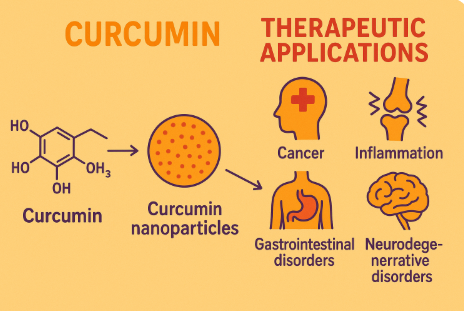
It has been observed that curcumin can modulate a wide range of molecular targets that are associated with the underlying causes of numerous human disorders. Figure 1 illustrates the therapeutic potential of curcumin across major categories of medical illnesses. The multifaceted properties of curcumin are emphasized, underscoring its relevance in the treatment and prevention of various diseases. Curcuma longa Linnaeus, commonly known as turmeric (Family: Zingiberaceae; Genus: Curcuma; Species: longa) within the Plantae kingdom and the Magnoliophyta division (Rai et al., 2015), has been widely studied for its medicinal value. Curcumin, the principal bioactive compound of Curcuma longa, has been reported to possess diverse therapeutic applications, ranging from the treatment of cancer to the management of coughs and colds (Mundekkad & Cho, 2023). Studies on curcumin-based formulations Table 1 have demonstrated that Curcuma longa exhibits multiple pharmacological benefits and exerts significant anticancer activities against various cell lines.
Anticancer Potential
Curcumin has been reported to produce significant outcomes, including an increased percentage of drug sensitivity, in overcoming medication resistance frequently observed in breast, ovarian, lung, and other cancer types (Amaroli et al., 2024). In breast cancer cell lines, the overexpression of flap endonuclease 1 (FEN1) has been associated with increased resistance to the chemotherapeutic drug cisplatin. It has been discovered that curcumin enhances the sensitivity of breast cancer cells to cisplatin through the downregulation of FEN1 expression in vitro (Zou et al., 2018). Apoptosis was also observed in MCF-7 and MCF-7-DDP cells treated with curcumin. In cells exposed to 2 μg/mL cisplatin combined with 20 μmol/L curcumin, a significantly higher degree of apoptosis was recorded in the combination treatment group compared to cisplatin treatment alone (P < 0.05). These findings suggest that the combined use of cisplatin and curcumin may enhance the susceptibility of breast cancer cells to cisplatin (Ke et al., 2014). Similarly, it has been demonstrated that curcumin, when used together with cisplatin, can overcome cisplatin resistance in lung cancer by promoting apoptosis and inhibiting cell proliferation (Priyadarsini, 2014).
Figure 1.Health benefits and therapeutic applications of curcumin
| Curcumin formulation |
Cell Line/animal model/cancer |
Significance | Reference |
|---|---|---|---|
| Curcumin linked HSA NPs | A549 cells |
Improved cellular uptake enhanced the cytotoxicity |
(Das et al., 2019) |
| Curcumin-dextran NP | Caco-2 cells |
Better stability and antioxidant activity of curcumin |
(Fan et al., 2018) |
| CUR-loaded silk NPs | Rats model |
Longer the plasma circulation time |
|
SSPS-NPs |
HCT116 and MCF-7 cells | Progress in the anti-proliferative activity | (Pan et al., 2018) |
| CUR-Loaded Nano gels |
HeLa cells in clinical trial |
Enhanced therapeutic efficacy | (Tran et al., 2019) |
| Cur- NLCs | Mouse model | Reducing the pro-inflammatory cytokines | |
| Curcumin-zein/rhamnolipid complex |
In vitro simulated gastrointestinal tract |
Protect hydrophobic bioactive compounds |
(Xue et al., 2018) |
|
Curcumin-loaded BSA NPs |
Pre-clinical Murine melanoma model |
Increase in the survival rate and minimization in tumor size |
(de et al., 2018) |
| Curcumin in combination with gemcitabine |
Pancreatic cancer model |
Curcumin dose (8 g/day) was detected as above the extreme tolerated dose |
|
|
Curcumin extract formulation |
Multiple myeloma animal model |
Reduced levels of urinary N- telopeptide and Bone turnover Marker |
(Golombick et al., 2009) |
With an IC₅₀ at the micromolar level, it was observed that curcumin significantly suppressed the proliferation of several cancer cell lines, including T47D, MCF7, and MDA-MB-231 (p < 0.001). These findings indicate that curcumin possesses strong anticancer properties. Cell cycle arrest at the G2/M phase was reported following curcumin treatment, as determined through a comprehensive investigation of its mechanism of action (Shan et al., 2018). Among the numerous biological effects of curcumin, its ability to stimulate the production of phase II and antioxidant enzymes through Nrf2-dependent pathways has been highlighted. Due to its rapid metabolism and low bioavailability, curcumin has been extensively investigated in several clinical trials (Deck et al., 2018).
The outcomes were found to demonstrate modest hemolytic and cytotoxic activities against eukaryotic cells, along with enhanced antibacterial and anticancer properties (Adahoun et al., 2017). It was also discovered that neither the extract nor the synthetically prepared gold nanoparticles (GNPs) exhibited any cytotoxic effects on the HeLa or L929 cell lines (Das et al., 2024).
According to a study, in both scratch and Transwell migration tests, the curcuzederone molecule, a phytocompound of C. longa, was found to significantly inhibit the migration of MDA-MB-231 cells (P < 0.05) and reduce cancer cell proliferation (Al-Amin et al., 2021). Based on these reported studies, curcumin is believed to exhibit anticancer properties through multiple mechanisms, including anti-angiogenic effects, induction of apoptosis, disruption of tumor cells, and prevention of tumor invasion into healthy tissues.
Antioxidant Potential
By improving mitochondrial function, reducing reactive oxygen species (ROS), and modulating antioxidant enzyme activity, curcumin has been shown to alleviate conditions associated with oxidative stress and mitochondrial dysfunction (Roohi et al., 2017). Recent studies have demonstrated that disorders related to mitochondrial dysfunction and oxidative stress can be mitigated by curcumin. It has been indicated that curcumin may provide therapeutic benefits for certain metabolic disorders(Sathyabhama et al., 2022). At low and intermediate doses, curcumin has been reported to decrease ROS either by upregulating Nrf2 protein levels or by enhancing the activities of SOD, CAT, and GSH-Px. The resulting increase in cellular capacity to eliminate ROS contributes to the preservation of oxidative stress resistance, potentially reducing apoptosis and improving cell survivability (Lin et al., 2020). In clinical models of neuroinflammation, diabetes, and cardiovascular disease, curcumin has been observed to significantly lower oxidative stress enzymes and ROS levels by directly scavenging free radicals and enhancing endogenous antioxidant defenses (Karamalakova et al., 2019).
In untrained, healthy men, oxidative damage is caused by sudden, intense exercise. Oral administration of curcumin for one week has been shown to reduce lipid peroxidation and potentially enhance the intracellular antioxidant system (Roohi et al., 2017). Antioxidant activity in the study was assessed using the 1,1-diphenyl-2-picrylhydrazyl (DPPH) free radical–scavenging assay. The ethanolic extract of Chittagong’s mura was found to contain the highest concentrations of ascorbic acid (0.09 mg/100 g), polyphenols (16.07%), and flavonoids (9.66%) (Tanvir et al., 2017).
Several strategies can be employed to achieve this goal, in addition to using micelles for targeting curcumin to mitochondria. For instance, the introduction of various nanocarriers and the development of curcumin derivatives that specifically target mitochondria have been explored (Hu et al., 2024). The growth of stomach tumor cells has been inhibited by curcumin micelles both in vivo and in vitro. This effect is believed to involve increased reactive oxygen species (ROS) production, disruption of redox homeostasis, and modulation of mitochondrial bioenergetics (Lin et al., 2020). Numerous studies have reported reductions in various inflammatory indicators, and the anti-inflammatory and antioxidant properties of curcumin are considered to mediate its beneficial effects on stress markers, inflammatory markers, ulcers, and osteoarthritis.
Anti-Ulcer Potential
Curcumin has been proposed as a potential protective agent against inflammatory diseases, including cancer and ulcers. These biological effects are attributed to its antioxidant, antimicrobial, and anti-inflammatory properties. Based on the literature, it can be concluded that gastrointestinal ulcers are prevented by curcumin, and that the compound represents a unique therapeutic option for ulcer treatment (Yadav et al., 2013).
When compared to the control groups, the growth and colony formation of gastric tumor cells were dramatically reduced by curcumin micelles, and apoptosis was induced (Panda et al., 2017). n the repair of indomethacin-induced gastric ulcers (GU), an oral administration of a chitosan-curcumin mixture was found to be more effective than curcumin, chitosan, or lansoprazole, a conventional antiulcer drug (Kuadkaew et al., 2021). n a separate study, no acute toxicity was observed in rats treated with a metal-curcumin complex (MCC). The results indicated that MCC acted as a more efficient scavenger than curcumin. At an oral dose of 100 mg/kg, gastro-protective efficacy against ethanol-induced ulcers in rats was demonstrated by MCC (Joshi et al., 2023). Further investigation revealed that curcumin micelles affected mitochondrial proteins in gastric tumor cells, altering mitochondrial function and influencing mitochondrial bioenergetics (Panda et al., 2017).
Hepatoprotective Potential
The antioxidant properties of curcumin are believed to prevent CCl₄-induced secondary hepatic cytochrome P450 (CYP) damage. It has been reported that curcumin functions as an antioxidant and inhibits NF-κB activation, thereby preventing liver injury caused by CCl₄ (Perrone et al., 2015). Except at a concentration of 5 g/kg/day, no significant changes in hepatic cytochrome P450 levels or activity were observed following curcumin administration, according to a previous study (Sugiyama et al., 2006). In contrast, the activity of these isoenzymes, particularly cytochrome P450 2E1 (CYP2E1), was significantly reduced (P < 0.05) by CCl₄, resulting in elevated free radical production. Pretreatment with curcumin at a dose of 0.5 g/kg/day markedly inhibited the effects of CCl₄. Liver protection was conferred by Curcuma longa L. (CLL) extract, which also significantly decreased plasma bilirubin (BL), gamma-glutamyl transpeptidase (GGT), and lipid peroxidation levels. Consequently, the CLL extract may be utilized as an antioxidant in the treatment of chronic hepatotoxicity (Karamalakova et al., 2019). Furthermore, compared to free curcumin (100 mg/kg), silymarin (25 mg/kg), and self-recovery groups, curcumin-loaded solid lipid nanoparticles (C-SLNs) at 12.5 mg/kg significantly (P < 0.001) reduced histological alterations and oxidative stress (Xu et al., 2020).
Hepatotoxicity was evidenced by histological alterations in the liver induced by arsenic, which also elevated serum aspartate and alanine aminotransferase activities. In the liver, arsenic decreased the activities of glutathione reductase, catalase, and glutathione peroxidase, while increasing lipid peroxidation and depleting reduced glutathione. The effects of arsenic were mitigated by curcumin and its nanoparticle-encapsulated form (CUR-NP) in a preclinical trial, with the amelioration being more pronounced in the CUR-NP treatment. These findings indicate that curcumin administered in nano-encapsulated form produces greater protective effects than free curcumin (Lin et al., 2020). With stronger protective benefits demonstrated by CUR-NP, hepatotoxicity can be substantially reduced through restoration of antioxidant enzyme activity, reduction of lipid peroxidation, and improvement of liver histology. The bioactive potential of curcumin in preventing hepatotoxicity may be further elucidated through carefully designed clinical trials (Perrone et al., 2015). Moreover, in the context of ulcer and cancer treatment, such trials could provide critical insights into the optimal therapeutic use of curcumin, ultimately enhancing patient outcomes and overall well-being.
Anti-Coagulant Therapeutic Activity
Blood coagulation occurs within arteries under various conditions, which can disrupt blood flow or cause internal bleeding that may occasionally be fatal. Therefore, anticoagulants are typically administered to prevent blood clotting in such situations. Additionally, inflammation has been shown to increase the risk of blood coagulation by activating molecules that promote clot formation (Chopra et al., 2021). In clinical trials, curcumin’s anticoagulant activity was demonstrated by comparing thromboplastin time and thrombin time analyses with control blood samples, revealing that curcumin prolongs blood clotting times. Both curcumin and its derivative, bisdemethoxycurcumin, were found to significantly extend prothrombin time and activated partial thromboplastin time while inhibiting the activities of activated factor X and thrombin (Sirisidthi et al., 2016).
Similarly, the anticoagulant effect of curcumin has been investigated, revealing that the presence of its hydrophobic groups contributes to a reduction in clotting time in both prothrombin time (PT) and activated partial thromboplastin time (APTT) assays. The ortho-methoxy group, also present in curcumin, has been shown to enhance its anticoagulant activity. Furthermore, a decrease in white blood cell (WBC) count was observed, which consequently reduced platelet aggregation and inhibited the formation of fibrin deposits in the kidneys. Therefore, curcumin, when combined with nanotechnology, is considered a potential anticoagulant and preventive agent for thrombotic disorders (Keihanian et al., 2018).
Neuroprotective Potential
It has been suggested that effective prophylaxis is highly desirable, as neuroprotective strategies are most effective when applied prior to the onset of damage (Nebrisi, 2021). Among its pleiotropic actions, curcumin exhibits anti-inflammatory properties, a favorable safety profile, and potential neuroprotective efficacy (Cole et al., 2007). The pharmaco-therapeutic potential of curcumin in cerebral ischemia, including its molecular mechanisms of neuroprotection, has been reviewed in animal models, and it has been observed that curcumin represents a promising therapeutic candidate for cerebral ischemia, demonstrating significant improvements in biochemical parameters (Lalita & Bhakta, 2021).
Gold nanoparticles functionalized with curcumin have been shown to effectively interact with amyloid proteins and peptides, inhibit amyloid fibrillation, and disintegrate amyloid fibrils by acting as synthetic molecular chaperones (Yallapu et al., 2015). The desolvation technique was successfully employed to produce curcumin-loaded α-lactalbumin (α-LA) nanoparticles, targeting a particle size range of 100 - 150 nm. The resulting formulation, α-LA-Curcumin, has been demonstrated to provide protection against permethrin-induced neurotoxicity. Upon application of α-LA-Curcumin, the generation of ROS induced by permethrin was reduced, thereby mitigating cellular damage (Paulpandi et al., 2023). NF-κB mRNA expression was significantly downregulated following administration of caffeine-mediated nano-curcumin (N-CUR), while TNF-α and IL-6 levels, as well as SOD activity, were significantly improved. N-CUR has been reported to exert mild to moderate beneficial effects on caffeine-induced inflammatory responses, oxidative stress, and apoptosis in the brain (Morsy et al., 2024). The neuroprotective effects of curcumin are believed to be mediated through multiple mechanisms, including modulation of oxidative stress, excitotoxicity, neuroplasticity, hypothalamic-pituitary-adrenal axis imbalances, and neurotransmitter levels (Nebrisi, 2021).
Therapeutic Efficacy Against Stroke
The effectiveness of the curcumin formulation was evaluated using assessments of grip strength, locomotor activity, and brain chemistry (Yallapu et al., 2015). Improvements in outcomes following brain injury have been reported to be potentially mediated by curcumin through the regulation of Th17 cell development. Twenty-four hours after the onset of stroke, T cells, which play a detrimental role in the ischemic response, were observed to infiltrate the region of ischemic damage. The endogenous apoptosis pathway was shown to be directly influenced by the p53 signaling pathway through interactions with multi-domain members of the Bcl-2 family (Du et al., 2023)(Marques et al., 2020).
In a study, therapeutic potential in cerebral stroke was demonstrated by the epigenetic agent curcumin, which was delivered via 200 nm-sized exosomes. Behavioral, oxidative stress, and physiological parameters were effectively reduced by curcumin, indicating its protective effects against cerebral ischemic insult (Yallapu et al., 2015). Although curcumin has shown promise in animal stroke models, the mechanisms by which it influences microglial polarization and promotes long-term stroke recovery remain unclear. It was observed that, three days after dMCAO, cerebral ischemic damage was markedly reduced following curcumin post-treatment (Liu et al., 2017).
Antitumor Potential
Lysosomes represent a significant class of membrane-bound organelles within the intracellular membrane system. They are involved in immunological modulation, cellular metabolism, and programmed cell death, among other biological processes that influence tumor development and progression. Lysosomal activity has been shown to be modulated by curcumin, thereby affecting drug resistance, immune function, invasion, metastasis, and tumor proliferation (Zeng et al., 2020). Tumor growth can be effectively inhibited by curcumin. The transcription of ribosomal DNA (rDNA) into ribosomal RNA (rRNA), which promotes cell growth and proliferation, is regulated upstream by mTORC1. Curcumin has been demonstrated to inactivate mTORC1 through the suppression of mTOR lysosomal localization(Xu et al., 2020).
The encapsulation of curcumin in Eudragit S100 polymer nanoparticles has been shown to influence cellular uptake and to enhance anti-cancer potential two-fold in the HT-29 human colorectal cell line. Innovative formulations have enabled a multi-theranostic strategy, incorporating both therapeutic and imaging functions (Yallapu et al., 2015). Furthermore, chemo-resistance in tumor cells has been demonstrated to be re-sensitized by curcuminoids through the downregulation of Bcl-2 and DNA repair enzymes (Lin et al., 2020). Additionally, further efforts should be devoted to the development of multimodal anticancer therapy strategies in future research by combining standard chemotherapy regimens with curcumin derivatives, analogs, and nano-formulations (Mohamadian et al., 2022).
Antimicrobial Potential
The synthesis, characterization, and application of curcumin-capped magnetic nanoparticles have been investigated. It has been demonstrated that the interaction between curcumin and magnetic nanoparticles, which occurs through the carbonyl groups of the polyphenol structure, alters the structural, photochemical, and magnetic properties of the polyphenols using various analytical methods. This novel material has been shown to possess the potential to photo-inactivate Gram-positive bacteria, including Staphylococcus aureus (Cañon-Ibarra et al., 2023).
Compared to Escherichia coli and Bacillus cereus, a greater antibacterial activity in vitro has been exhibited by curcumin nanoparticles (curcumin-NPs) against Staphylococcus aureus. Pathogens in chicken fingers were successfully suppressed by curcumin-NPs during storage for up to 27 days. After storage, reductions in total volatile basic nitrogen (TVB-N) levels were observed in chicken samples treated with curcumin-NPs. The bioactive properties, antioxidant capacity, antibacterial activity, and chemical indicators of these experiments validated the efficacy of nano-curcumin at a dose of 10 μg/g (Morsy et al., 2023). Overall, nanotechnology has been shown to enhance material efficacy and address issues associated with the use of natural additives in the meat industry, which could otherwise alter the sensory qualities of meat products. Consequently, improvements in the microbiological quality of poultry meat, including extended shelf life and reduced lipid oxidation, have been demonstrated by curcumin-NPs (Morsy et al., 2023). Although the signaling pathways utilized by curcumin nanoformulations to treat human diseases are well characterized, appropriate human dosage evaluations remain unavailable and should be prioritized. The therapeutic efficacy of curcumin-containing nanocomposites has been shown to surpass that of nanocurcumin or free curcumin (Chopra et al., 2021). Numerous conceptual preclinical studies have been published; however, these findings should be verified through higher-level animal studies or clinical trials.
CONCLUSION
Curcumin and its nanoparticle-based formulations exhibit significant therapeutic potential, with demonstrated effects on anticoagulation, fibrinolysis, oxidative stress, antimicrobial activity, and cancer treatment. The molecular mechanisms underlying these effects have been identified, and further research is required to advance curcumin’s development as a clinically effective therapeutic agent.
References
- Adahoun M.A., Al-Akhras M.-A.H., Jaafar M.S., Bououdina M.. Enhanced anti-cancer and antimicrobial activities of curcumin nanoparticles. Artif Cells Nanomed Biotechnol. 2017; 45(1):98-107. DOI
- Adamczak A., Ożarowski M., Karpiński T.M.. Curcumin, a natural antimicrobial agent with strain- specific activity. Pharmaceuticals. 2020; 13(7)DOI
- Al-Amin M., Eltayeb N.M., Khairuddean M., Salhimi S.M.. Bioactive chemical constituents from Curcuma caesia Roxb. rhizomes and inhibitory effect of curcuzederone on the migration of triple- negative breast cancer cell line MDA-MB-231. Nat Prod Res. 2021; 35(18):3166-70. DOI
- Amaroli A., Panfoli I., Bozzo M., Ferrando S., Candiani S., Ravera S.. The bright side of curcumin: A narrative review of its therapeutic potential in cancer management. Cancers. 2024; 16(14):2566-80. DOI
- de Camargo L.E.A., D Brustolin Ludwig, TT Tominaga, B Carletto, GM Favero, RM Mainardes, NM Khalil. Bovine serum albumin nanoparticles improve the antitumour activity of curcumin in a murine melanoma model. J Microencapsul. 2018; 35(5):467-74. DOI
- Cañon-Ibarra A.F., Sanchez L.T., Rosales Rivera A., Blach D., Villa C.C.. Curcumin capped magnetic nanoparticles. Synthesis, characterization and photoinactivation activity against S. aureus. Results Chem. 2023; 5(100908)DOI
- Chopra H., Dey P.S., Das D., Bhattacharya T., Shah M., Mubin S., Alamri B.M.. Curcumin nanoparticles as promising therapeutic agents for drug targets. Molecules. 2021; 26(16)DOI
- Cole G.M., Teter B., Frautschy S.A.. Neuroprotective effects of curcumin. Adv Exp Med Biol. 2007; 595:197-212. DOI
- Das A.K., Borah M., Kalita J.J., Bora U.. Cytotoxic potential of Curcuma caesia rhizome extract and derived gold nanoparticles in targeting breast cancer cell lines. Sci Rep. 2024; 14(1)DOI
- Das R.P., Gandhi Singh, BG Kunwar, A Kumar, NN Priyadarsini, K.I.. Preparation of albumin nanoparticles: Optimum size for cellular uptake of entrapped drug (Curcumin. Colloids and Surfaces A: Physicochemical and Engineering Aspects. 2019; 567:86-95. DOI
- Deck L.M., Hunsaker L.A., Vander Jagt T.A., Whalen L.J., Royer R.E., Vander Jagt D.L.. Activation of anti-oxidant Nrf2 signaling by enone analogues of curcumin. Eur J Med Chem. 2018; 143:854-65. DOI
- Martino RMCA Bisi, A Rampa, S Gobbi, F Belluti. Recent progress on curcumin-based therapeutics: A patent review. Expert Opinion on Therapeutic Patents. 2017; 27(8):953-65. DOI
- Du X., Amin N., Xu L., Botchway B.O.A., Zhang B., Fang M.. Front Pharmacol 14. 2023. DOI
- Fan Y., Yi J., Zhang Y., Yokoyama W.. Fabrication of curcumin-loaded bovine serum albumin (BSA)- dextran nanoparticles and the cellular antioxidant activity. Food Chem. 2018; 239:1210-18. DOI
- Fuloria S., Mehta J., Chandel A., Sekar M., Rani N.N.I.M., Begum M.Y., Fuloria N.K.. A comprehensive review on the therapeutic potential of Curcuma longa Linn. in relation to its major active constituent curcumin. Front Pharmacol. 2022; 13(820806)DOI
- Golombick T., Diamond T.H., Badmaev V., Manoharan A., Ramakrishna R.. The potential role of curcumin in patients with monoclonal gammopathy of undefined significance—Its effect on paraproteinemia and the urinary n-telopeptide of type I collagen bone turnover marker. Clin Cancer Res. 2009; 15(18):5917-22. DOI
- Hu Y., Cheng L., Du S., Wang K., Liu S.. Antioxidant curcumin induces oxidative stress to kill tumor cells (Review. Oncol Lett. 2024; 27(2):1-12. DOI
- MdR Islam, A Rauf, S Akash, SI Trisha, AH Nasim, M Akter, M Thiruvengadam. Targeted therapies of curcumin focus on its therapeutic benefits in cancers and human health: Molecular signaling pathway-based approaches and future perspectives. Biomed Pharmacother. 2024; 170(116034)DOI
- Jianbing W., Jing W., Jue Z., Zhaozou Z., lK David, Gang L., Xiaqoin W.. Oral delivery of curcumin using silk nano- and microparticles. ACS Biomater Sci Eng. 2018; 4(11):3885-94. DOI
- Joshi A., Lehene S., Lasnapure B., Pawar S., Kandipati D., Panchal P.. Investigation of antioxidant, anti-ulcer, and analgesic potential of a metal-curcumin complex. Naunyn-Schmiedeberg’s Arch Pharmacol. 2023; 396(5):1043-52. DOI
- Kanai M., Yoshimura K., Asada M., Imaizumi A., Suzuki C., Matsumoto S., Aggrawal B.B.. A phase I/II study of gemcitabine-based chemotherapy plus curcumin for patients with gemcitabine- resistant pancreatic cancer. Cancer Chemother Pharmacol. 2011; 68(1)
- Kang N.-W., Kim M.-H., Sohn S.-Y., Kim K.-T., Park J.-H., Lee S.-Y., Kim D.-D.. Curcumin-loaded lipid-hybridized cellulose nanofiber film ameliorates imiquimod-induced psoriasis-like dermatitis in mice. Biomaterials. 2018; 182:245-58. DOI
- Karamalakova Y.D., Nikolova G.D., Georgiev T.K., Gadjeva V.G., Tolekova A.N.. Hepatoprotective properties of Curcuma longa L. extract in bleomycin-induced chronic hepatotoxicity. Drug Discov Ther. 2019; 13(1):9-16. DOI
- Ke C.-S., Liu H.-S., Yen C.-H., Huang G.-C., Cheng H.-C., Huang C.-Y.F., Su C.-L.. Curcumin-induced Aurora-A suppression not only causes mitotic defect and cell cycle arrest but also alters chemosensitivity to anticancer drugs. J Nutr Biochem. 2014; 25(5):526-39. DOI
- Keihanian F., Saeidinia A., Bagheri R.K., Johnston T.P., Sahebkar A.. Curcumin, hemostasis, thrombosis, and coagulation. J Cell Physiol. 2018; 233(6):4497-4511. DOI
- Kuadkaew S., Ungphaiboon S., Phdoongsombut N., Kaewsuwan S., Mahattanadul S.. Efficacy of a chitosan-curcumin mixture in treating indomethacininduced acute gastric ulcer in rats. Curr Pharm Biotechnol. 2021; 22(14):1919-31. DOI
- Kumararaja G., Mahendran B., Chelliah S., Ramasamy T.. Nano formulation approaches for curcumin delivery- A review. J Drug Deliv Sci Technol. 2023; 82(2):104-14.
- Lalita S., Bhakta P.G.. Neuroprotective effects of curcumin in cerebral ischemia: Cellular and molecular mechanisms. ACS Chem Neurosci. 2021; 12(14):2562-72. DOI
- Lin X., Wang L., Zhao L., Zhu Z., Chen T.Z., Chen S., Chen T.. Curcumin micelles suppress gastric tumor cell growth by upregulating ROS generation, disrupting redox equilibrium and affecting mitochondrial bioenergetics. Food Funct. 2020; 11(5):4146-59. DOI
- Liu Z., Ran Y., Huang S., Wen S., Zhang W., Liu X., Hu X.. Front Aging Neurosci 9. 2017. DOI
- Marchiani A., Rozzo C., Fadda A., Delogu G., Ruzza P.. Curcumin and curcumin-like molecules: from spice to drugs. Curr Med Chem. 2014; 21(2):204-22.
- Marques M.S., Cordeiro M.F., Marinho M.A.G., Vian C.O., Vaz G.R., Alves B.S., Horn A.P.. Curcumin- loaded nanoemulsion improves haemorrhagic stroke recovery in wistar rats. Brain Res. 2020; 1746(147007)DOI
- Mohamadian M., Ahmadi S.S., Bahrami A., Ferns G.A.. Review on the therapeutic potential of curcumin and its derivatives on glioma biology. Neurochem Res. 2022; 47(10):2936-53. DOI
- Morsy M.K., Al-Dalain S.Y., Haddad M.A., Diab M., Abd-Elaaty E.M., Abdeen A., Elsabagh R.. Front Sustain Food System 7. 2023. DOI
- Morsy M.M., Ahmed R.G., Abdel-Gabbar M.. Nano-curcumin improves caffeine-induced cerebral alterations in male Wistar rats by modifying oxidative stress, inflammation, and COX-2/NF- κB/Nrf2 signaling. Beni-Suef Univ J Basic Appl Sci. 2024; 93(13)
- Mundekkad D., Cho W.C.. Applications of curcumin and its nanoforms in the treatment of cancer. Pharmaceutics. 2023; 15(9)DOI
- Nebrisi E.E.. Neuroprotective activities of curcumin in Parkinson’s disease: A review of the literature. Int J Mol Sci. 2021; 22(20)DOI
- Panda A.K., Chakraborty D., Sarkar I., Khan T., Sa G.. New insights into therapeutic activity and anticancer properties of curcumin. J Exp Pharmacol. 2017; 9:31-45. DOI
- Pan K., Chen H., Baek S.J., Zhong Q.. Self-assembled curcumin-soluble soybean polysaccharide nanoparticles: Physicochemical properties and in vitro anti-proliferation activity against cancer cells. Food Chem. 2018; 246:82-9. DOI
- Paulpandi M., Rajaganesh R., Kavithaa K., Kalaiarasi G., Arul N.. Curcumin-loaded a-lactalbumin nanoparticles neuroprotective effects against permethrine-induced neurotoxicity. Inorg Chem Commun. 2023; 158(111586)DOI
- Perrone D., Ardito F., Giannatempo G., Dioguardi M., Troiano G., Lo Russo L., Lo Muzio L.. Biological and therapeutic activities, and anticancer properties of curcumin (Review. Exp Ther Med. 2015; 10(5):1615-23. DOI
- Priyadarsini K.I.. The chemistry of curcumin: From extraction to therapeutic agent. Molecules. 2014; 19(12):20091-112. DOI
- Rai M., Pandit R., Gaikwad S., Yadav A., Gade A.. Potential applications of curcumin and curcumin nanoparticles: From traditional therapeutics to modern nanomedicine. Nanotechnol Rev. 2015; 4(2)DOI
- Roohi B.N., Moradlou A.N., Bolboli L.. Influence of curcumin supplementation on exercise-induced oxidative stress. Asian J Sports Med. 2017; 8(1)DOI
- Sathyabhama M., Priya Dharshini L.C., Karthikeyan A., Kalaiselvi S., Min T.. The credible role of curcumin in oxidative stress-mediated mitochondrial dysfunction in mammals. Biomolecules. 2022; 12(10)DOI
- Shan H., Yingchun X., Liwei M., Liming H., He S.. Curcumin inhibits proliferation and promotes apoptosis of breast cancer cells. Exp Ther Med. 2018; 16(2):1266-72. DOI
- Sirisidthi K., Kosai P., Jiraungkoorskul K., Jiraungkoorskul W.. Antithrombotic activity of turmeric (Curcuma longa): A review. Indian J Agric Res. 2016; 50(2):101-6. DOI
- Sugiyama T., Nagata J., Yamagishi A., Endoh K., Saito M., Yamada K., Umegaki K.. Selective protection of curcumin against carbon tetrachloride-induced inactivation of hepatic cytochrome P450 isozymes in rats. Life Sci. 2006; 78(19):2188-93. DOI
- Tanvir E.M., MdS Hossen, MdF Hossain, Afroz R., Gan S.H., MdI Khalil, Karim N.. Antioxidant properties of popular turmeric (Curcuma longa) varieties from Bangladesh. J Food Qual. 2017; 2017(1)DOI
- Tran D.-H.N., Nguyen T.H., Vo T.N.N., Pham L.P.T., Vo D.M.H., Nguyen C.K., Nguyen D.H.. Self- assembled poly(ethylene glycol) methyl ether-grafted gelatin nanogels for efficient delivery of curcumin in cancer treatment. J Appl Polym Sci. 2019; 136(20)DOI
- Xu Y., Wu Y., Wang L., Qian C., Wang Q., Wan W.. Identification of curcumin as a novel natural inhibitor of rDNA transcription. Cell Cycle. 2020; 19(23):3362-74. DOI
- Xue J., Zhang Y., Huang G., Liu J., Slavin M., Yu L.. Zein-caseinate composite nanoparticles for bioactive delivery using curcumin as a probe compound. Food Hydrocoll. 2018; 83:25-35. DOI
- Yadav S.K., Sah A.K., Jha R.K., Sah P., Shah D.K.. Turmeric (curcumin) remedies gastroprotective action. Pharmacogn Rev. 2013; 7(13):1041030973-7847112843.
- Yallapu M.M., Nagesh P.K.B., Jaggi M., Chauhan S.C.. Therapeutic applications of curcumin nanoformulations. AAPS J. 2015; 17(6):1341-56. DOI
- Zeng C., Fan D., Xu Y., Li X., Yuan J., Yang Q., Wang S.. Curcumol enhances the sensitivity of doxorubicin in triple-negative breast cancer via regulating the miR-181b-2-3p-ABCC3 axis. Biochem Pharmacol. 2020; 174(113795)DOI
- Zoi V., Galani V., Lianos G.D., Voulgaris S., Kyritsis A.P., Alexiou G.A.. The role of curcumin in cancer treatment. Biomedicines. 2021; 9(9)DOI
- Zou J., Zhu L., Jiang X., Yang Wang, Yue Wang, Wang X., Chen B.. Curcumin increases breast cancer cell sensitivity to cisplatin by decreasing FEN1 expression. Oncotarget. 2018; 9(13):11268-78. DOI
Adahoun MA, Al-Akhras M-AH, Jaafar MS, Bououdina M. 2017. Enhanced anti-cancer and antimicrobial activities of curcumin nanoparticles. Artif Cells Nanomed Biotechnol 45(1):98–107. DOI: 10.3109/21691401.2015.1129628 DOI: https://doi.org/10.3109/21691401.2015.1129628
Adamczak A, Ożarowski M, Karpiński TM. 2020. Curcumin, a natural antimicrobial agent with strain-specific activity. Pharmaceuticals 13(7):153. DOI: 10.3390/ph13070153 DOI: https://doi.org/10.3390/ph13070153
Al-Amin M, Eltayeb NM, Khairuddean M, Salhimi SM. 2021. Bioactive chemical constituents from Curcuma caesia Roxb. rhizomes and inhibitory effect of curcuzederone on the migration of triple-negative breast cancer cell line MDA-MB-231. Nat Prod Res 35(18):3166-70. DOI: 10.1080/14786419.2019.1690489 DOI: https://doi.org/10.1080/14786419.2019.1690489
Amaroli A, Panfoli I, Bozzo M, Ferrando S, Candiani S, Ravera S. 2024. The bright side of curcumin: A narrative review of its therapeutic potential in cancer management. Cancers. 16(14): 2566-80. DOI: 10.3390/cancers16142580 DOI: https://doi.org/10.3390/cancers16142580
Camargo LEA de, Brustolin Ludwig D, Tominaga TT, Carletto B, Favero GM, Mainardes RM, Khalil NM. 2018. Bovine serum albumin nanoparticles improve the antitumour activity of curcumin in a murine melanoma model. J Microencapsul 35(5):467-74. DOI: 10.1080/02652048.2018.1526340 DOI: https://doi.org/10.1080/02652048.2018.1526340
Cañon-Ibarra AF, Sanchez LT, Rosales Rivera A, Blach D, Villa CC. 2023. Curcumin capped magnetic nanoparticles. Synthesis, characterization and photoinactivation activity against S. aureus. Results Chem 5:100908. DOI: 10.1016/j.rechem.2023.100908 DOI: https://doi.org/10.1016/j.rechem.2023.100908
Chopra H, Dey PS, Das D, Bhattacharya T, Shah M, Mubin S, …, Alamri BM. 2021. Curcumin nanoparticles as promising therapeutic agents for drug targets. Molecules 26(16):4998. DOI: 10.3390/molecules26164998 DOI: https://doi.org/10.3390/molecules26164998
Cole GM, Teter B, Frautschy SA. 2007. Neuroprotective effects of curcumin. Adv Exp Med Biol. 595:197-212. DOI: 10.1007/978-0-387-46401-5_8 DOI: https://doi.org/10.1007/978-0-387-46401-5_8
Das AK, Borah M, Kalita JJ, Bora U. 2024. Cytotoxic potential of Curcuma caesia rhizome extract and derived gold nanoparticles in targeting breast cancer cell lines. Sci Rep 14(1):17223. DOI: 10.1038/s41598-024-66175-x DOI: https://doi.org/10.1038/s41598-024-66175-x
Das RP, Gandhi VV, Singh BG, Kunwar A, Kumar NN, Priyadarsini KI. 2019. Preparation of albumin nanoparticles: Optimum size for cellular uptake of entrapped drug (Curcumin). Colloids and Surfaces A: Physicochemical and Engineering Aspects. 567:86–95. DOI: 10.1016/j.colsurfa.2019.01.043 DOI: https://doi.org/10.1016/j.colsurfa.2019.01.043
Deck LM, Hunsaker LA, Vander Jagt TA, Whalen LJ, Royer RE, Vander Jagt DL. 2018. Activation of anti-oxidant Nrf2 signaling by enone analogues of curcumin. Eur J Med Chem 143:854-65. DOI: 10.1016/j.ejmech.2017.11.048 DOI: https://doi.org/10.1016/j.ejmech.2017.11.048
Di Martino RMC, Bisi A, Rampa A, Gobbi S, Belluti F. 2017. Recent progress on curcumin-based therapeutics: A patent review (2012-2016). Part II: curcumin derivatives in cancer and neurodegeneration. Expert Opinion on Therapeutic Patents 27(8):953-65. DOI: 10.1080/13543776.2017.1339793 DOI: https://doi.org/10.1080/13543776.2017.1339793
Du X, Amin N, Xu L, Botchway BOA, Zhang B, Fang M. 2023. Pharmacological intervention of curcumin via the NLRP3 inflammasome in ischemic stroke. Front Pharmacol 14. DOI: 10.3389/fphar.2023.1249644 DOI: https://doi.org/10.3389/fphar.2023.1249644
Fan Y, Yi J, Zhang Y, Yokoyama W. 2018. Fabrication of curcumin-loaded bovine serum albumin (BSA)- dextran nanoparticles and the cellular antioxidant activity. Food Chem 239:1210-18. DOI: 10.1016/j.foodchem.2017.07.075. DOI: https://doi.org/10.1016/j.foodchem.2017.07.075
Fuloria S, Mehta J, Chandel A, Sekar M, Rani NNIM, Begum MY, …, Fuloria NK. 2022. A comprehensive review on the therapeutic potential of Curcuma longa Linn. in relation to its major active constituent curcumin. Front Pharmacol 13:820806. DOI: 10.3389/fphar.2022.820806 DOI: https://doi.org/10.3389/fphar.2022.820806
Golombick T, Diamond TH, Badmaev V, Manoharan A, Ramakrishna R. 2009. The potential role of curcumin in patients with monoclonal gammopathy of undefined significance—Its effect on paraproteinemia and the urinary n-telopeptide of type I collagen bone turnover marker. Clin Cancer Res 15(18):5917-22. DOI: 10.1158/1078-0432.CCR-08-2217 DOI: https://doi.org/10.1158/1078-0432.CCR-08-2217
Hu Y, Cheng L, Du S, Wang K, Liu S. 2024. Antioxidant curcumin induces oxidative stress to kill tumor cells (Review). Oncol Lett 27(2):1-12. DOI: 10.3892/ol.2023.14200 DOI: https://doi.org/10.3892/ol.2023.14200
Islam MdR, Rauf A, Akash S, Trisha SI, Nasim AH, Akter M, …., Thiruvengadam M. 2024. Targeted therapies of curcumin focus on its therapeutic benefits in cancers and human health: Molecular signaling pathway-based approaches and future perspectives. Biomed Pharmacother 170:116034. DOI: 10.1016/j.biopha.2023.116034 DOI: https://doi.org/10.1016/j.biopha.2023.116034
Jianbing W, Jing W, Jue Z, Zhaozou Z, David lK, Gang L, Xiaqoin W. 2018. Oral delivery of curcumin using silk nano- and microparticles. ACS Biomater Sci Eng 4(11): 3885-94. DOI: 10.1021/acsbiomaterials.8b00454 DOI: https://doi.org/10.1021/acsbiomaterials.8b00454
Joshi A, Lehene S, Lasnapure B, Pawar S, Kandipati D, Panchal P. 2023. Investigation of antioxidant, anti-ulcer, and analgesic potential of a metal-curcumin complex. Naunyn-Schmiedeberg’s Arch Pharmacol 396(5):1043-52. DOI: 10.1007/s00210-022-02381-6 DOI: https://doi.org/10.1007/s00210-022-02381-6
Kanai M, Yoshimura K, Asada M, Imaizumi A, Suzuki C, Matsumoto S, …, Aggrawal BB. 2011. A phase I/II study of gemcitabine-based chemotherapy plus curcumin for patients with gemcitabine-resistant pancreatic cancer. Cancer Chemother Pharmacol 68(1):157-64. DOI: 10.1007/s00280- 010-1470-2 DOI: https://doi.org/10.1007/s00280-010-1470-2
Kang N-W, Kim M-H, Sohn S-Y, Kim K-T, Park J-H, Lee S-Y, …, Kim D-D. 2018. Curcumin-loaded lipid-hybridized cellulose nanofiber film ameliorates imiquimod-induced psoriasis-like dermatitis in mice. Biomaterials 182:245-58. DOI: 10.1016/j.biomaterials.2018.08.030 DOI: https://doi.org/10.1016/j.biomaterials.2018.08.030
Karamalakova YD, Nikolova GD, Georgiev TK, Gadjeva VG, Tolekova AN. 2019. Hepatoprotective properties of Curcuma longa L. extract in bleomycin-induced chronic hepatotoxicity. Drug Discov Ther 13(1):9-16. DOI: 10.5582/ddt.2018.01081 DOI: https://doi.org/10.5582/ddt.2018.01081
Ke C-S, Liu H-S, Yen C-H, Huang G-C, Cheng H-C, Huang C-YF, Su C-L. 2014. Curcumin-induced Aurora-A suppression not only causes mitotic defect and cell cycle arrest but also alters chemosensitivity to anticancer drugs. J Nutr Biochem. 25(5):526-39. DOI: 10.1016/j.jnutbio.2014.01.003 DOI: https://doi.org/10.1016/j.jnutbio.2014.01.003
Keihanian F, Saeidinia A, Bagheri RK, Johnston TP, Sahebkar A. 2018. Curcumin, hemostasis, thrombosis, and coagulation. J Cell Physiol 233(6):4497-4511. DOI: 10.1002/jcp.26249 DOI: https://doi.org/10.1002/jcp.26249
Kuadkaew S, Ungphaiboon S, Phdoongsombut N, Kaewsuwan S, Mahattanadul S. 2021. Efficacy of a chitosan-curcumin mixture in treating indomethacininduced acute gastric ulcer in rats. Curr Pharm Biotechnol 22(14):1919-31. DOI: 10.2174/1389201022666210127115427 DOI: https://doi.org/10.2174/1389201022666210127115427
Kumararaja G, Mahendran B, Chelliah S, Ramasamy T.2023. Nano formulation approaches for curcumin delivery- A review. J Drug Deliv Sci Technol 82(2) 104-14. DOI: https://doi.org/10.1016/j.jddst.2023.104326
Lalita S, Bhakta PG. 2021. Neuroprotective effects of curcumin in cerebral ischemia: Cellular and molecular mechanisms. ACS Chem Neurosci 12(14):2562-72. DOI: 10.1021/acschemneuro.1c00153 DOI: https://doi.org/10.1021/acschemneuro.1c00153
Lin X, Wang L, Zhao L, Zhu Z, Chen TZ, Chen S, …, Chen T. 2020. Curcumin micelles suppress gastric tumor cell growth by upregulating ROS generation, disrupting redox equilibrium and affecting mitochondrial bioenergetics. Food Funct 11(5):4146-59. DOI: 10.1039/D0FO00260G.2 DOI: https://doi.org/10.1039/D0FO00260G
Liu Z, Ran Y, Huang S, Wen S, Zhang W, Liu X, …, Hu X. 2017. Curcumin protects against ischemic stroke by titrating microglia/macrophage polarization. Front Aging Neurosci 9. DOI: 10.3389/fnagi.2017.00233 DOI: https://doi.org/10.3389/fnagi.2017.00233
Marchiani A, Rozzo C, Fadda A, Delogu G, Ruzza P. 2014. Curcumin and curcumin-like molecules: from spice to drugs. Curr Med Chem 21(2):204-22. DOI: https://doi.org/10.2174/092986732102131206115810
Marques MS, Cordeiro MF, Marinho MAG, Vian CO, Vaz GR, Alves BS, …, Horn AP. 2020. Curcumin-loaded nanoemulsion improves haemorrhagic stroke recovery in wistar rats. Brain Res 1746:147007. DOI: 10.1016/j.brainres.2020.147007 DOI: https://doi.org/10.1016/j.brainres.2020.147007
Mohamadian M, Ahmadi SS, Bahrami A, Ferns GA. 2022. Review on the therapeutic potential of curcumin and its derivatives on glioma biology. Neurochem Res 47(10):2936-53. DOI:10.1007/s11064-022-03666-1 DOI: https://doi.org/10.1007/s11064-022-03666-1
Morsy MK, Al-Dalain SY, Haddad MA, Diab M, Abd-Elaaty EM, Abdeen A, ,,,. Elsabagh R. 2023. Curcumin nanoparticles as a natural antioxidant and antimicrobial preservative against foodborne pathogens in processed chicken fingers. Front Sustain Food System 7. DOI: 10.3389/fsufs.2023.1267075 DOI: https://doi.org/10.3389/fsufs.2023.1267075
Morsy MM, Ahmed RG, Abdel-Gabbar M. 2024. Nano-curcumin improves caffeine-induced cerebral alterations in male Wistar rats by modifying oxidative stress, inflammation, and COX-2/NF-κB/Nrf2 signaling. Beni-Suef Univ J Basic Appl Sci 93(13):127-36. DOI: 10.1186/s43088-024-00526-5 DOI: https://doi.org/10.1186/s43088-024-00526-5
Mundekkad D, Cho WC. 2023. Applications of curcumin and its nanoforms in the treatment of cancer. Pharmaceutics 15(9):2223. DOI: 10.3390/pharmaceutics15092223. DOI: https://doi.org/10.3390/pharmaceutics15092223
Nebrisi EE. 2021. Neuroprotective activities of curcumin in Parkinson’s disease: A review of the literature. Int J Mol Sci 22(20):11248. DOI: 10.3390/ijms222011248 DOI: https://doi.org/10.3390/ijms222011248
Panda AK, Chakraborty D, Sarkar I, Khan T, Sa G. 2017. New insights into therapeutic activity and anticancer properties of curcumin. J Exp Pharmacol 9:31-45. DOI: 10.2147/JEP.S70568 DOI: https://doi.org/10.2147/JEP.S70568
Pan K, Chen H, Baek SJ, Zhong Q. 2018. Self-assembled curcumin-soluble soybean polysaccharide nanoparticles: Physicochemical properties and in vitro anti-proliferation activity against cancer cells. Food Chem 246:82-9. DOI: 10.1016/j.foodchem.2017.11.002 DOI: https://doi.org/10.1016/j.foodchem.2017.11.002
Paulpandi M, Rajaganesh R, Kavithaa K, Kalaiarasi G, Arul N. 2023. Curcumin-loaded a-lactalbumin nanoparticles neuroprotective effects against permethrine-induced neurotoxicity. Inorg Chem Commun 158:111586. DOI: 10.1016/j.inoche.2023.111586 DOI: https://doi.org/10.1016/j.inoche.2023.111586
Perrone D, Ardito F, Giannatempo G, Dioguardi M, Troiano G, Lo Russo L, …, Lo Muzio L. 2015. Biological and therapeutic activities, and anticancer properties of curcumin (Review). Exp Ther Med 10(5):1615-23. DOI: 10.3892/etm.2015.2749 DOI: https://doi.org/10.3892/etm.2015.2749
Priyadarsini KI. 2014. The chemistry of curcumin: From extraction to therapeutic agent. Molecules 19(12):20091-112. DOI: 10.3390/molecules191220091 DOI: https://doi.org/10.3390/molecules191220091
Rai M, Pandit R, Gaikwad S, Yadav A, Gade A. 2015. Potential applications of curcumin and curcumin nanoparticles: From traditional therapeutics to modern nanomedicine. Nanotechnol Rev 4(2):161-72. DOI: 10.1515/ntrev-2015-0001 DOI: https://doi.org/10.1515/ntrev-2015-0001
Roohi BN, Moradlou AN, Bolboli L. 2017. Influence of curcumin supplementation on exercise-induced oxidative stress. Asian J Sports Med 8(1). DOI: 10.5812/asjsm.35776 DOI: https://doi.org/10.5812/asjsm.35776
Sathyabhama M, Priya Dharshini LC, Karthikeyan A, Kalaiselvi S, Min T. 2022. The credible role of curcumin in oxidative stress-mediated mitochondrial dysfunction in mammals. Biomolecules 12(10):1405. DOI: 10.3390/biom12101405 DOI: https://doi.org/10.3390/biom12101405
Shan H, Yingchun X, Liwei M, Liming H, He S. 2018. Curcumin inhibits proliferation and promotes apoptosis of breast cancer cells. Exp Ther Med 16(2):1266-72. DOI: 10.3892/etm.2018.6345 DOI: https://doi.org/10.3892/etm.2018.6345
Sirisidthi K, Kosai P, Jiraungkoorskul K, Jiraungkoorskul W. 2016. Antithrombotic activity of turmeric (Curcuma longa): A review. Indian J Agric Res 50(2):101-6. DOI: 10.18805/ijare.v50i2.9586 DOI: https://doi.org/10.18805/ijare.v50i2.9586
Sugiyama T, Nagata J, Yamagishi A, Endoh K, Saito M, Yamada K, …, Umegaki K. 2006. Selective protection of curcumin against carbon tetrachloride-induced inactivation of hepatic cytochrome P450 isozymes in rats. Life Sci 78(19):2188-93. DOI: 10.1016/j.lfs.2005.09.025 DOI: https://doi.org/10.1016/j.lfs.2005.09.025
Tanvir EM, Hossen MdS, Hossain MdF, Afroz R, Gan SH, Khalil MdI, Karim N. 2017. Antioxidant properties of popular turmeric (Curcuma longa) varieties from Bangladesh. J Food Qual 2017:1-8. DOI: 10.1155/2017/8471785 DOI: https://doi.org/10.1155/2017/8471785
Tran D-HN, Nguyen TH, Vo TNN, Pham LPT, Vo DMH, Nguyen CK, …, Nguyen DH. 2019. Self- assembled poly(ethylene glycol) methyl ether-grafted gelatin nanogels for efficient delivery of curcumin in cancer treatment. J Appl Polym Sci 136(20):47544. DOI: 10.1002/app.47544 DOI: https://doi.org/10.1002/app.47544
Xu Y, Wu Y, Wang L, Qian C, Wang Q, Wan W. 2020. Identification of curcumin as a novel natural inhibitor of rDNA transcription. Cell Cycle 19(23):3362-74. DOI: 10.1080/15384101.2020.1843817 DOI: https://doi.org/10.1080/15384101.2020.1843817
Xue J, Zhang Y, Huang G, Liu J, Slavin M, Yu L. 2018. Zein-caseinate composite nanoparticles for bioactive delivery using curcumin as a probe compound. Food Hydrocoll 83:25-35. DOI: 10.1016/j.foodhyd.2018.04.037 DOI: https://doi.org/10.1016/j.foodhyd.2018.04.037
Yadav SK, Sah AK, Jha RK, Sah P, Shah DK. 2013. Turmeric (curcumin) remedies gastroprotective action. Pharmacogn Rev 7(13):42-6. DOI: 10.4103/0973-7847.112843 DOI: https://doi.org/10.4103/0973-7847.112843
Yallapu MM, Nagesh PKB, Jaggi M, Chauhan SC. 2015. Therapeutic applications of curcumin nanoformulations. AAPS J 17(6):1341-56. DOI: 10.1208/s12248-015-9811-z DOI: https://doi.org/10.1208/s12248-015-9811-z
Zeng C, Fan D, Xu Y, Li X, Yuan J, Yang Q, …, Wang S. 2020. Curcumol enhances the sensitivity of doxorubicin in triple-negative breast cancer via regulating the miR-181b-2-3p-ABCC3 axis. Biochem Pharmacol 174:113795. DOI: 10.1016/j.bcp.2020.113795 DOI: https://doi.org/10.1016/j.bcp.2020.113795
Zoi V, Galani V, Lianos GD, Voulgaris S, Kyritsis AP, Alexiou GA. 2021. The role of curcumin in cancer treatment. Biomedicines 9(9):1086. DOI: 10.3390/biomedicines9091086 DOI: https://doi.org/10.3390/biomedicines9091086
Zou J, Zhu L, Jiang X, Wang Yang, Wang Yue, Wang X, Chen B. 2018. Curcumin increases breast cancer cell sensitivity to cisplatin by decreasing FEN1 expression. Oncotarget 9(13):11268-78. DOI: 10.18632/oncotarget.24109 DOI: https://doi.org/10.18632/oncotarget.24109
Copyright (c) 2025 Iffat Nayila, Sumaira Sharif, muhammad sarwar, Faima atta khan, Saima Zaheer, aasma iqbal

This work is licensed under a Creative Commons Attribution-NonCommercial-NoDerivatives 4.0 International License.
Authors who publish with this journal agree with the following terms:
- Authors retain copyright and grant the journal right of first publication, with the work 1 year after publication simultaneously licensed under a Creative Commons attribution-noncommerical-noderivates 4.0 International License that allows others to share, copy and redistribute the work in any medium or format, but only where the use is for non-commercial purposes and an acknowledgement of the work's authorship and initial publication in this journal is mentioned.
- Authors are able to enter into separate, additional contractual arrangements for the non-exclusive distribution of the journal's published version of the work (e.g., post it to an institutional repository or publish it in a book), with an acknowledgement of its initial publication in this journal.
- Authors are permitted and encouraged to post their work online (e.g., in institutional repositories or on their website) prior to and during the submission process, as it can lead to productive exchanges, as well as earlier and greater citation of published work (See The Effect of Open Access).