EXISTING CONDITION OF GASTROPODS COMMUNITY IN COASTAL AREAS AFFECTED BY NICKEL OVERBURDEN IN POMALAA DISTRICT, SOUTHEAST SULAWESI PROVINCE, INDONESIA

ARTICLE HIGHLIGHT
The present investigation provides substantiated empirical evidence demonstrating that nickel extraction operations have exerted considerable detrimental effects on the ecological integrity of the Pomalaa coastal region in Southeast Sulawesi. Environmental degradation and disruption of ecological equilibrium have been observed as direct consequences of persistent overburden waste disposal. The introduction of mining overburden into the Pomalaa coastal ecosystem has resulted in the extirpation of critical gastropod taxa and significant population reductions among persisting species when compared with control sites featuring undisturbed substrate conditions. The documented diminished gastropod population densities within nickel mining-affected zones serve as biological indicators of profound environmental deterioration attributable to these industrial activities.
ABSTRACT
Pomalaa District is the largest existing nickel mining center in Southeast Sulawesi Province, Indonesia. Pollutants from various anthropogenic activities, especially nickel mining overburden, end up in the Pomalaa coastal area. This research aimed to determine the structure of the gastropods community in the impacted area and reference site. This research was carried out in the Pomalaa coastal area, Kolaka Regency, from June to October 2023. Research stations were determined using purposive sampling method and simple random sampling techniques. On-site collecting gastropods samples were carried out manually (handpicking method). Impacted area and reference site showed significant differences in the number of species (16 and 21 species), presence, and density of gastropods, even though their respective ecological index categories were relatively the same (H' = 1.92 & 2.72; R = 2.93 & 3.41; E = 0.55 & 0.78; C = 0.001 & 0.04). In the impacted area, the density of gastropods was very low (1 - 3 ind./m2), whereas at the reference site, the density reached 10 - 30 ind./m2. Gastropods inhabiting rocks or hard substrates, were relatively unaffected by the overburden, proven by stable population with a high density of 45 - 115 ind./m2. Nickel overburden input flowing to the Pomalaa coastal area greatly influenced the gastropods community in terms of species composition and density. On the other hand, the habitat (substrate) of gastropods as benthic organisms was covered and degraded by overburden piles up to 15 - 30 cm deep, which was still increasing over time. On the other hand, in the reference site area, the condition was inversely proportional.
INTRODUCTION
Grouping and classifying organisms specifically refers to the main structural forms or properties, such as dominant species, life forms (indicators), physical habitat of the community, and functional characteristics or traits. Under natural conditions, a community unit will be formed based on dynamics (anomalies) ranging from unstable to stable and constantly fluctuating depending on the quality of the influencing environment (Bantayan et al., 2023); (Bravo et al., 2021); (Ranjan & Babu, 2016); (Subagio, 2014); (Udayantha & Munasinghe, 2009). Community structure or ecological index is a concept that studies and examines in detail and systematically the composition of species and their abundance in a community (Ateş et al., 2023); (Babushkin et al., 2023); (Čejka et al., 2023); (Carobene et al., 2023); (Degamon et al., 2023); (Necker L et al., 2023); (Fitria et al., 2023); (Montesinos-Navaro et al., 2018).
There are three approaches commonly used to describe the ecological index of a community of organisms, namely species diversity, species interactions, and functional interactions (Schowalter, 2000)(Hau et al., 2021)(Kudratov et al., 2023)(Keerthana et al., 2023)(Liu et al., 2023)(Lewin et al., 2023)(Medeiros et al., 2023)(Mansingh et al., 2021)(Maria, 2020). The linkage of habitat characteristics with ecological indices (composition, size, and species diversity) is the main principle in studying community structure. Changes in habitat even on a small scale will greatly influence community structure because they affect the species level down to the individual as the smallest component that makes up the population in the community ((Putro, 2017); (Pérez-Estrada et al., 2023); (Ramón et al., 2023); (Rubal et al., 2023)).
One of the largest communities of organisms that make up bottom aquatic (benthic) ecosystems are gastropods ((Vilenica et al., 2024); (Thilakarathne et al., 2024); (Ebadzadeh et al., 2024); (Aouissi et al., 2024); (Isfaeni et al., 2024); (Ernawati et al., 2024); (Presley & Willig, 2023); (Pérez-Estrada et al., 2023); (Ramón et al., 2023); (Rubal et al., 2023); (Sun et al., 2022); (Vian et al., 2022); (Yadav et al., 2019); (Susintowati et al., 2019); (Nybakken & Bertness, 2005)). Gastropods are the largest class of the Mollusca (80%) with 100,000 living species and spread across various aquatic habitats (Mukhopadhyay et al., 2024); (Seinor et al., 2024); (Curren et al., 2024); (Hertika et al., 2024); (Prayudi et al., 2024); (Guan et al., 2023);(Guan et al., 2023); (Ruppert et al., 2004); (Bouchet et al., 2011); (Strong et al., 2008); (Davis et al., 2015).
The condition of gastropods communities in waters is greatly influenced by the quality of their living environment, especially those originating from anthropogenic activities. Disturbance or input of pollutants in any forms directly impacts the dynamics of gastropods community structure. One of the water areas inhabited by gastropods communities and disturbed by anthropogenic activities is the Pomalaa coastal area ((Purnama et al., 2024); (Purnama et al., 2024); (Purnama et al., 2024)).
Pomalaa District is administratively the largest existing nickel mining area in Southeast Sulawesi Province (Hamzah et al., 2015); (Hamzah, 2009); (Zubayr, 2009), which has been operating since 1968 until now. One of the impacts of nickel mining that has been going on continuously for a long time is the input of nickel overburden into the waters which covers the benthic zone causing the loss of gastropods community and other benthic organisms ((Timm et al., 2001); (Chakrabarty & Das, 2006)). These occurrences were found in the research conducted by Purnama et al ((Purnama et al., 2024); (Purnama et al., 2024); (Purnama et al., 2024); (Purnama et al., 2024)) in Pomalaa mangrove ecosystem, Southeast Sulawesi Province. In that research, there were 39 gastropods species with high diversity and species richness found in the area with minimal disturbance (reference site), while there were only 7 gastropods species with low diversity and species richness found in the impacted area or mangrove area which was exposed to nickel overburden. There were also evident that certain gastropods species were dominant. In other words, the impacted area has unstable ecological conditions due to disturbances originating from nickel overburden from the nickel mining activities.
Several coastal areas of Pomalaa, particularly those near nickel mining activities (impacted areas), face pollution from nickel metal which affects the water, substrates, and biota. The concentration of nickel tends to be high in aquatic substrates and fluctuates around the standard quality threshold in water and in samples of the gastropods species T. sulcata (Purnama et al. 2024a). Additionally, there are physical threats due to nickel overburden input.
Pomalaa coastal area affected by nickel overburden is Dawi-Dawi Village. The nickel overburden in Dawi-Dawi estuary flows from the upstream area where nickel is being extracted (Hamzah, 2009); (Zubayr, 2009). In contrast, Pomalaa District also has regions that remain unaffected by nickel overburden and serve as reference sites. These reference sites are untouched by the nickel overburden because the river basin does not connect to the mining areas. One of the reference sites is the coastal area of Totobo Village, which is lined with mangrove vegetation that helps protect the area from surrounding anthropogenic activities.
The Dawi-Dawi and Totobo coastal areas differ significantly in their ecological characteristics, particularly in the benthic zones and the supporting ecosystems around the areas. This includes variations in environmental disturbances caused by human activities and the corresponding gastropods communities inhabiting these areas.
Therefore, comparative study of gastropods communities inhabiting the impacted area (affected by nickel overburden) and the reference sites (not affected by nickel overburden) in Pomalaa coastal area is very important to carry out. Prior studies on this subject have never been carried out in Southeast Sulawesi Province, in particular and Indonesia, in general. This study aimed to determine the structure of gastropods communities in the impacted area and in the reference site.
MATERIALS AND METHODS
Time and Location
A comparative study of gastropods communities inhabiting the impacted area (Dawi-Dawi Village)
and the reference site (Totobo Village) in Pomalaa coastal area was carried out from July to October 2023. The determination of these two locations as research locus were based on their close distance (± 3 km) from the existing center for nickel mining exploitation in the mountainous area (upstream) and the nickel industrial area (factory) in Pomalaa. The research locations are presented in Figure 1.
Dawi-Dawi Village receives direct flow of nickel overburden from the nickel exploitation area, while Totobo Village represents an area with minimum impact from the nickel mining area. Totobo Village was chosen as the reference site because the village borders the affected Dawi-Dawi Village as a nickel overburdened area. The research took place in the coastal area of Pomalaa District, Kolaka Regency, Southeast Sulawesi Province ( Figure 2 &Figure 3).
Figure 1.Map of research locations
Figure 2.Coastal areas exposed to nickel overburden (Dawi-Dawi Village, as impacted area)
Figure 3.Coastal areas without exposure of nickel overburden (Totobo Village, as reference site)
Research Stations
Determination
Research stations and sampling points (sub- stations) were determined in detail using the purposive sampling method as well as simple and random sampling techniques to obtain adequate samples having actual conditions related to gastropods communities in the impacted areas and reference sites.
Each research station covered an area of 2,500 m², which corresponded to the area of the sampling zone. The stations were located 50 to 70 m apart from each other. The distance between the impacted area and the reference site ranged from 350 to 400 m.
The transect size used for collecting samples in the field was 1 m². The 1-m² transect was further divided into 16 smaller square transects, each measuring 25 cm², to observe small gastropods and those with infaunal tendencies. These transects were placed randomly throughout the sampling area in an alternating pattern.
Characteristics
Observed locations in this research were divided into 8 stations based on 2 categories, namely the impacted area and the reference site. These eight stations had ecological characteristics that were strongly influenced by the presence of coastal ecosystems, such as mangrove ecosystems (Table 1).
No. |
Research station |
Ecological characteristics |
Category |
Coordinate |
|---|---|---|---|---|
1 |
IS 1 |
On shore with fine sand substrate, without mangrove forest, seagrass, and coral reef |
Impacted area (affected by nickel overburden) |
4º09’57.61” S 121º36’30.21” E |
2 |
IS 2 |
On shore (breakwater area), without mangrove forest, seagrass, and coral reef |
Impacted area (affected by nickel overburden) |
4º09’58.99” S 121º36’20.53” E |
3 |
IS 3 |
On shore with sand substrate, without mangrove forest, seagrass, and coral reef |
Impacted area (affected by nickel overburden) |
4º10’10.53” S 121º36’21.34” E |
4 |
IS 4 |
Rocky shore with sand substrate, without mangrove forest, seagrass, and coral reef |
Impacted area (affected by nickel overburden) |
4º10’18.37” S 121º36’19.90” E |
5 |
RS 5 |
On shore (fine sand substrate), with mangrove forest, without seagrass and coral reef |
Reference site |
4º09’26.54” S 121º36’41.22” E |
6 |
RS 6 |
On shore (fine sand substrate), with mangrove forest, without seagrass and coral reef |
Reference site |
4º09’02.20” S 121º36’50.17” E |
7 |
RS 7 |
On shore (fine sand substrate), without mangrove forest, seagrass, and coral reef |
Reference site |
4º08’36.41” S 121º36’51.53” E |
8 |
RS 8 |
Rocky shore, without mangrove forest, seagrass, and coral reef |
Reference site |
4º08’17.29” S 121º36’55.22” E |
Sampling and Identification
Gastropods samples were collected manually using hands (handpicking). Gastropods species were identified using the latest and the most credible identification keys, namely: Worms “World Register of Marine Species” (https://www.marinespecies.org), Molluscabase (https:// www.molluscabase.org)Collection of Worldwide Seashells (Collection of worldwide seashells (idscaro.net)).
Nickel Content Analysis
Nickel content was analyzed from water, sediment, and biota (specifically, the gastropods). As much as 250 mL water sample from each station was collected and placed into sample bottles that had been rinsed with a 5% nitric acid solution.
Absorption Spectrophotometer (AAS) following the SNI 6989.18-2009 test method for water samples and the AAS flame method for sediment and biota samples (Smoley 1992; Akagi & Nishimura 1991; Pennuto et al. 2005 ).
Data Analysis
Gastropods density was calculated using the following formula (Khouw, 2016):
\documentclass{article} \usepackage{amsmath} \begin{document} \displaystyle \text{Density} = \frac{\text{Number of individuals of species } i}{\text{Total Number of observation plots}} \end{document}
Diversity of gastropods species was calculated using the Shannon-Wiener diversity index (Odum, 1993):
\documentclass{article} \usepackage{amsmath} \begin{document} \displaystyle H' = -\sum_{i=1}^{s} \left[ \left( \frac{n_i}{N} \right) \times \ln \left( \frac{n_i}{N} \right) \right] \end{document}
where:
H’ = Diversity Index
Ni = Number of individuals of the ith species
N = Total number of individuals
Diversity Index are divided into 3 criteria (Wilhm, 1975), namely:
H’ < 1.0 = Low species diversity
1.0 < H’ < 3 = Medium species diversity
H’ > 3 = High species diversity
Evenness Index was calculated using the following formula (Odum, 1993):
\documentclass{article} \usepackage{amsmath} \begin{document} \displaystyle E = \frac{H'}{\ln S} \end{document}
E = Evenness Index
H’ = Diversity Index
S = Number of species
The criteria for Evenness Index value are as follows:
E < 0.3 = Low level of species evenness
0.31 > E > 1 = Medium level of evenness
E > 1 = High level of species evenness
The Species Richness Index (Margalef Index) was calculated with the following formula (Ludwig & Reynolds, 1988):
\documentclass{article} \usepackage{amsmath} \begin{document} \displaystyle R = \frac{(S - 1)}{\ln N} \end{document}
where:
S = Number of species
N = Number of individuals
The criteria for the Species Richness Index (Margalef Index) value are as follows:
R < 2.5 = Low level of species richness
2.5 > R > 4 = Medium level of richness
R > 4 = High level of wealth type
The Dominance Index was calculated using the following formula (Odum, 1993):
\documentclass{article} \usepackage{amsmath} \begin{document} \displaystyle C = \sum \left( \frac{n_i}{N} \right)^2 \end{document}
where:
ni = Number of individuals i
N = Total number of individuals of all species
The criteria for the Dominance Index value are:
0 < C < 0.5 = No type dominates
0.5 < C < 1 = There is a dominant type
RESULTS AND DISCUSSION
Ecological index presented for gastropods community inhabiting the impacted area and the reference site were Diversity Index (H’), Species Richness Index (R), Evenness Index (E), and Dominance Index (C) (Table 2 &Table 3)
No. |
Ecological index |
Grade |
Category |
|---|---|---|---|
1 |
Diversity index (H’) |
1.92 |
Medium |
2 |
Species Richness Index (R) |
2.93 |
Medium |
3 |
Evenness index (E) |
0.55 |
Medium |
4 |
Dominance Index (C) |
0.001 |
There is no particular type that dominates |
No. |
Ecological index |
Grade |
Category |
|---|---|---|---|
1 |
Diversity index (H’) |
2.72 |
Medium |
2 |
Species Richness Index (R) |
3.41 |
Medium |
3 |
Evenness index (E) |
0.78 |
Medium |
4 |
Dominance Index (C) |
0.04 |
There is no particular type that dominates |
Ecological index for the impacted area showed values close to the low category (H’ = 1.92; R = 2.93). On the other hand, the reference site showed ecological index having values close to the high category (H’ = 2.72; R = 3.41). Nevertheless, ecological index for both the impacted area and the reference site fell in to the medium category. The Evenness Index for both the impacted area and the reference site was similar both in value and category, i.e., Eimpacted area = 0.55; Ereference site = 0.78. There were no species dominance shown in the impacted area and in the reference site (Cimpacted area = 0.001; Creference site = 0.04).
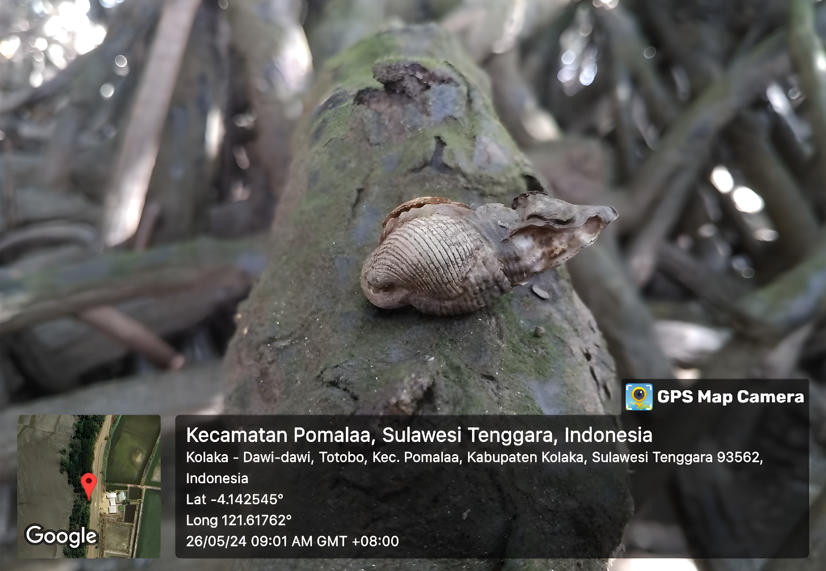
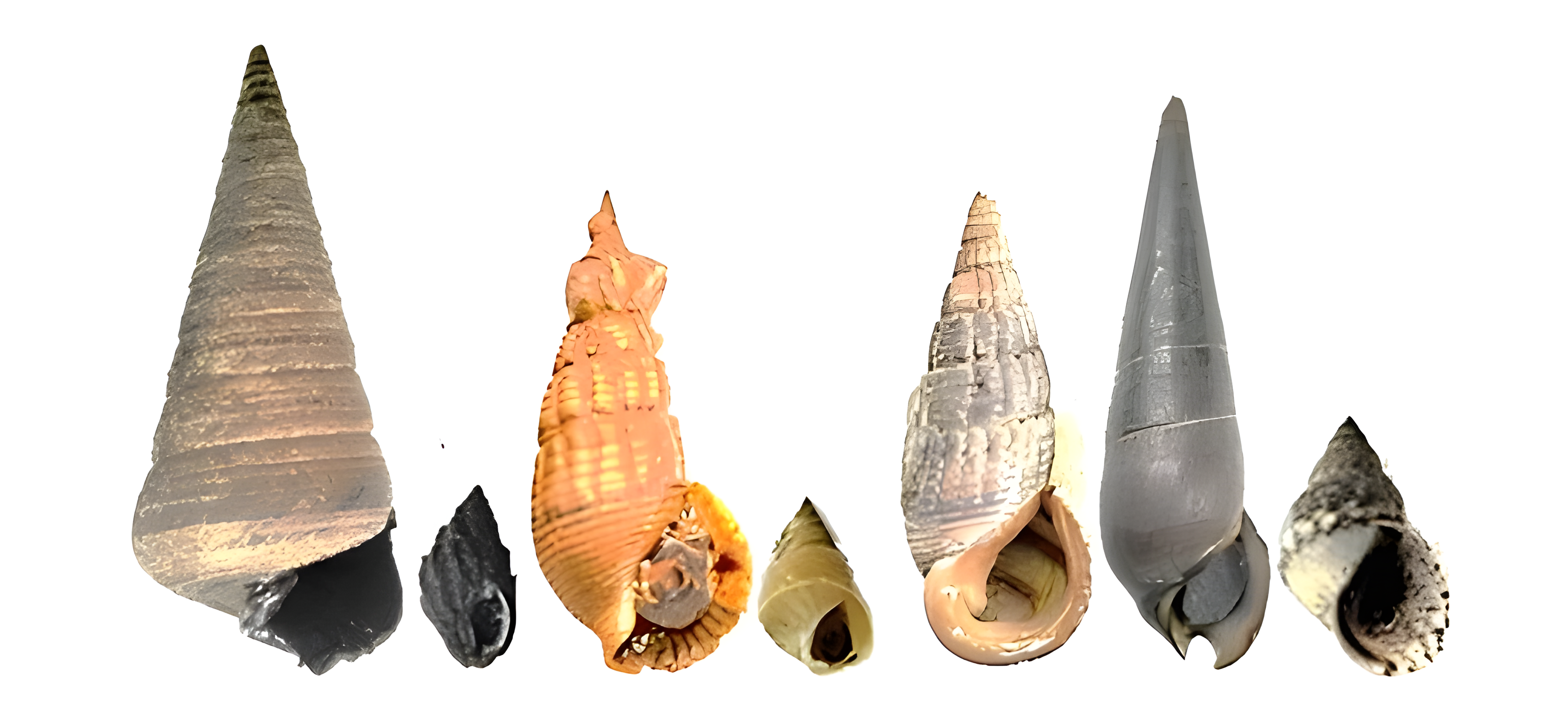
However, there are significant quantitative differences in the number of individuals contributing to these indices. Uneven distribution of individual gastropods was observed in the impacted area (area exposed to nickel overburden). This area was dominated by several species that are less affected by nickel overburden, specifically, gastropods inhabiting hard substrates and rocky habitat, such as Littoraria scabra, Littoraria undulata, Littorina littorea, and Monodonta labio (Figure 4). Meanwhile, gastropods inhabiting sandy substrates in the impacted area were found with low individual numbers, namely 1 - 3 ind./m2, such as Nassarius pullus, Polinices mamilla, and several other gastropods species. On the other hand, the representation of gastropods community within the reference site was balanced.
Ecological index in the impacted areas was influenced by a significant presence of groups of gastropods inhabiting hard substrates, along with multiple individual species coexisting in the same ecological space. This combination brought the ecological index values of the impacted areas closer to those observed at reference sites. However, there was a notable contrast in regards to the stability of gastropods community in the impacted area and in the reference site. The impacted area showed a decline of gastropods community up to only 1 to 3 individuals per m2, while the reference site exhibited relatively stable condition (Figure 5).
This finding is similar to the study results conducted by (Kaliu & Fitra, 2019) on the Pomalaa coastal area, where several areas having different habitat conditions apparently have the same ecological index category, although quantitatively the ecological index values at these stations are quite different, i.e., ranging from low values to approaching the medium to high category, but not exceeding the high ecological index value category, especially in terms of diversity and species richness. This phenomenon is caused by the presence of certain gastropods community with distinctive niches and high species abundance (dominating species), hence, their existence supports the areas and directly increases the ecological index value of certain stations having degrading environmental quality conditions.
In our study, the presence of typical rock gastropods supported the ecological interaction system in the heavily impacted shelf area. The occurrence of gastropods inhabiting rocky habitat and other hard substrates, such as concrete, was resulted from a succession process in a habitat which had artificially changed from its original state. The reference site exhibited a fairly uniform representation of individual species within the population, but it could not be characterized as diverse or rich in species. This limitation was likely due to the absence of mangrove vegetation at several sampling stations within the reference site (Figure 6).
Figure 4.Gastropods inhabiting hard substrates (rocks)
Figure 5.Comparison of the habitat of gastropods species Nassarius spp. in the impacted area (A) and the reference site (B) of the Pomalaa coastal area
Figure 6.Several sampling stations in the reference site
As a result, environmental pressures caused by anthropogenic activities, such as sedimentation, directly affected the coastal area. In contrast, other areas within the reference site, which were ecologically protected by the surrounding mangrove ecosystem, showed a significantly higher population density. The increased density was a result of nutrient supply from the mangroves, as sedimentation from land did not reach these beach areas. Instead, the sedimentation was trapped within the mangrove ecosystem. Furthermore, variations in habitat quality among stations in the reference site influenced community dynamics in coastal areas, particularly regarding the presence of certain species and the number of individual gastropods representatives. This was especially true in locations where ecological disruptions, such as pollution from nickel overburden had persisted for an extended period ((Purnama et al., 2024); (Purnama et al., 2024)).
Gastropods community has ecological value as one of the key species in aquatic ecosystems, where some of them are involved in the food chain cycle, namely as a food source for other animals. Apart from that, gastropods can also be used by humans as a source of animal protein (Cappenberg, 2006). Previous studies found that the quality of aquatic environment influences the structure of gastropods populations and communities (Yuniarti, 2012); (Hau et al., 2021); (Kudratov et al., 2023); (Keerthana et al., 2023); (Liu et al., 2023); (Lewin et al., 2023); (Medeiros et al., 2023); (Mansingh et al., 2021); (Maria, 2020).
The representation of individuals in a population is strongly influenced by differences in substrate and habitat characteristics as well as anthropogenic activities ((Hamzah, 2009); (Zubayr, 2009); (Presley & Willig, 2023); (Pérez-Estrada et al., 2023); (Ramón et al., 2023); (Rubal et al., 2023); (Sun et al., 2022); (Vian et al., 2022); (Yadav et al., 2019)). One of which is nickel content that accumulates in waters and organisms carried from or originating from nickel mining areas as nickel overburden. Table 6 presents nickel content in water, sediment/substrate, and organisms (gastropods) obtained from the research stations at the impacted and the reference sites, showing significant differences of nickel content in gastropods, water, and sediment samples in the impacted area and reference site in Pomalaa coastal waters.
Overall, nickel content in the water did not exceed the quality standard threshold (0.0022 - 0.0122 ppm), with the highest level was found in the impacted area (0.0122 ppm). In contrast, nickel content in gastropods exceeded the threshold in the impacted area (0.0702 - 0.0864 ppm). Nickel content in gastropods at the reference site (0.0026 - 0.0034 ppm) and transition site (0.0112 ppm), however, remained within the quality standard threshold. Sediment across all locations showed elevated nickel content (13.50 - 92.87 ppm), with the highest nickel content was found in the impacted area (57.81 - 92.87 ppm).
Nickel content in gastropods, water, and sediment reflected the sites’ classifications, with the impacted site having the highest concentrations due to nickel overburden and acid sludge from long-term nickel mining, in which the upstream outlet of nickel overburden also located in the impacted area. Meanwhile, the reference and transition sites received diluted input of nickel overburden from the impacted area, which influenced by tidal and wave activity. All locations shared the same ecoregion, contributing to similar hydro-oceanographic conditions.
Water color in the impacted area differed significantly from the reference and transition sites. Within the impacted area, the water color appeared to be reddish-brown (Figure 2), a typical soil color having nickel content, while within the reference site the water color was clear or translucent (Figure 3). Water analysis showed that the turbidity value in the impacted area was 500 Pt.Co indicating severe turbidity due to nickel overburden. On the other hand, turbidity value in the reference site was 60 Pt.Co, which was close to marine tourism standard of 30 Pt.Co.
Research conducted by (Zubayr, 2009) and (Hamzah, 2009) highlighted that Pomalaa coastal waters was polluted by nickel from ferronickel mining, particularly from tailings and waste rock. Tailings consist of silica and other minerals, while waste rock includes low-mineral acid mine drainage.
No. |
Location |
Nickel (Ni) content |
Threshold value of nickel content in water, sediment, and organism | ||
|---|---|---|---|---|---|
| Gastropods (ppm) | Water (ppm) | Sediment (ppm) |
|||
1 |
Impacted site 1 |
0.0702** | 0.0036ᴥ | 92.87** |
“0.05 ppm” (According to the Decree of the Minister of Environment of the Republic of Indonesia Number 51 Year 2004 concerning sea water quality standards) |
2 |
Impacted site 2 |
0.0864** | 0.0122ᴥ | 57.81** |
|
3 |
Transition site |
0.0112ᴥ |
0.0031ᴥ | 36.93** |
|
4 |
Reference site 1 |
0.0034ᴥ |
0.0023ᴥ | 18.64** |
|
5 |
Reference site 2 |
0.0026ᴥ |
0.0022ᴥ | 13.50** |
|
Up to today, there is limited research conducted on nickel content measured in organisms and sediments, making this study crucial for understanding the water current effects on the health of aquatic organisms and environment. Ecologically, the greatest impact of nickel mining overburden comes from sedimentation, leading to erosion upstream and causing shallowing process in the estuaries, resulting in the degraded gastropods habitats. The resulting loss of living space and food caused by the nickel overburden disrupts the gastropods community, potentially leading to the decline of gastropods population Wali et al. 2020; (Hamzah et al., 2015).
Nickel is one of the essential metals. However, excessive exposure to nickel can cause health issues, including systemic, immunological, neurological, and reproductive disorders, as well as developmental problems and even death. Nickel is also a carcinogenic metal which can disrupt physiological functions of an organism, resulting to the death of an organism, particularly in sessile biota like gastropods, when nickel content exceeds a certain threshold. Previous research showed that high nickel (Ni) content in sediments correlated with the disappearance of sensitive gastropods species, with only about 20% of gastropods population was able to adapt.
Results of our research provided concrete comparisons that have been empirically clarified based on density data and ecological indices of the gastropods community in the impacted area and the reference site. Nickel overburden in the impacted area was massive and caused systemic impact on the structure of the gastropods community in the waters of Pomalaa coasteal area.
The impacted area and the reference site showed very significant differences in terms of species and the number of individuals in each sampling area. This is an indication of the degradation of gastropods habitat in the Pomalaa coastal area, especially in the areas exposed to nickel overburden (the impacted area). Pollution causes the decline in abundance and biodiversity of aquatic organisms, one of which is the mollusk community (Zahidin, 2008). (Riniatsih & Kushartono, 2009) added that the diversity of gastropods species was very low in polluted waters. This statement is in line with the research results of (Nugroho et al., 2012) which stated that the waters of Genuk, Semarang, which was polluted by surrounding industrial activities, had a significant influence on the abundance
of gastropods. Furthermore, Prabuning (2010) emphasized that in the northern coastal waters of Tanjung Emas Port, Semarang, from the East Canal Flood area to the West Canal Flood area, Semarang, the waters was polluted, causing a negative influence on the life of the gastropods community in the waters.
Our study indicated that the substrate of the waters played a crucial role in the sustainability of the gastropods community. This finding was supported by the data, showing that the number of gastropods individuals in areas unaffected by nickel mining waste (the reference site) was significantly higher than in areas impacted by nickel overburden (the impacted area), which were supported by other studies.
(Munandar et al., 2016) highlighted that the abundance of macrozoobenthos, including gastropods, was influenced by habitat conditions such as bottom sediments and water quality. Gastropods distribution is affected by local environmental factors, food availability, predation, and competition, including sediment texture, temperature, salinity, pH, organic matter, and oxygen content (Ruswahyuni & Nata, 2008). Mollusks, particularly gastropods, exhibit high species diversity across marine habitats, but their survival is linked to water quality and habitat characteristics, including pollutants (Pratiwi & Ernawati, 2016).
Research conducted by (Mardatila et al., 2016) in Diatas Lake, West Sumatra Province showed a diversity index (H’) of 1.07, which was categorized as medium. The diversity index of a population is influenced by the number of species and the evenness of each species. The low diversity in the waters of Kelabat Bay was caused by uneven distribution of the gastropods found (Abdullah et al., 2021). This finding is supported by Gray (1981) in (Mardatila et al., 2016) which stated that low diversity index values at a station can be caused by an uneven number of individuals of each species.
Research carried out by (Rahmasari et al., 2015) indicated that the total abundance of mollusk species at Mertasari Beach was 124.5 ind./m², significantly higher than the 0.17 - 1.83 ind./m² found by (Pratiwi & Ernawati, 2016) in Nusa Lembongan, where low dissolved oxygen levels (2.60 - 6.90 mg/L) were a factor. In contrast, Laharjana (2016) reported an abundance at Serangan Beach of 106.6 ind./m², also higher than the finding in Nusa Lembongan, was correlated with a better oxygen level (4.16 - 5.26 mg/L). According to (Syamsurisal, 2011), higher dissolved oxygen supported greater benthic populations. The gastropods diversity index at Mertasari Beach was classified as medium, indicating a fairly balanced ecosystem (Wahyuni et al., 2015). This finding contrasts with research findings of (Wahyuni et al., 2015) in Menaming Dam, which reported a lower diversity index (0.55 - 1.05) due to several factors, such as polluted substrates and food source availability (Rachmawaty, 2011). Mertasari Beach hosts 15 mollusk families compared to 3 families found at Menaming Dam.
In their research, (Rahmasari et al., 2015) noted that gastropods diversity was influenced by the bottom substrate. Nybakken and (Nybakken & Bertness, 2005) stated that particle size of substrate affected the distribution and abundance of organisms, influenced by water retention and suitability for digging or the easiness for organisms burrowing. (Cappenberg, 2006) also found that substrate type significantly affected mollusk species, especially Gastropods. The diversity index for Gastropods varies by location, with Bengkal Beach showing the highest index at 2.4398, followed by Talang Siring Beach at 2.0988, and Jumiang Beach with the lowest at 1.6200. The ecological index conditions in several places are similar to those in this study, where ecologically, ecosystem conditions with high levels of disturbance can reduce ecological integrity, and vice versa (Rahmasari et al., 2015).
Comparisons of average gastropods species density in the impacted area and reference site in Pomalaa coastal area are presented in Figures 7 and 8.
The number of species, presence (number of individuals), and species density of gastropods in the impacted area and the reference site showed differences, although the respective ecological index categories were relatively the same (Table 2 &Table 3).
The number of species found in the impacted area were 16 species, while in the reference site there were 21 species (Table 5 & Table 6).
Figure 7.Average species density of gastropods in the impacted area
Figure 8.Average gastropods species density in the reference site
| No. | Gastropods species |
Research station of impacted area (IS) |
|||
|---|---|---|---|---|---|
| IS 1 | IS 2 | IS 3 | IS 4 | ||
| 1 | Nassarius dorsatus |
+ | - |
- |
- |
| 2 | Nassarius olivaceus | + | - |
- |
- |
| 3 | Nassarius pullus | + | - |
+ |
- |
| 4 | Polinices mamilla | - | - |
+ |
- |
| 5 | Polinices flemingianus | - | - |
+ |
- |
| 6 | Neverita didyma | - | - |
+ |
- |
| 7 | Littoraria scabra | - | + |
- |
+ |
| 8 | Littorini littorea | - | + |
- |
+ |
| 9 | Littoraria undulata | - | + |
- |
+ |
| 10 | Monodonta labio | - | + |
- |
+ |
| 11 | Drupella margariticola | - | + |
- |
- |
| 12 | Semiricinula muricoides | - | + |
- | - |
| 13 | Tenguella granulata | - | + |
- | - |
| 14 | Semiricinula fusca | - | + |
- | - |
| 15 | Nerita lineata |
- | + |
+ | + |
| 16 | Nerita undata | - | + |
+ | + |
| No. | Gastropods species |
Research station of the reference site (RS) |
|||
|---|---|---|---|---|---|
| RS 5 | RS 6 | RS 7 | RS 8 | ||
| 1 | Nassarius dorsatus |
+ |
+ | + | - |
| 2 | Nassarius olivaceus |
+ |
+ | + |
- |
| 3 | Nassarius pullus |
+ |
+ |
+ |
- |
| 4 | Nassarius (Plicarcularia) globosus |
+ |
+ |
+ |
- |
| 5 | Nassarius (Nassarius) coronatus |
+ |
+ |
+ |
- |
| 6 | Nassarius (Plicarcularia) elegantissimus |
+ |
+ |
+ |
- |
| 7 | Polinices mamilla |
+ |
+ |
+ |
- |
| 8 | Polinices flemingianus |
+ |
+ |
+ |
- |
| 9 | Neverita didyma |
+ |
+ |
+ |
- |
| 10 | Vexillum vulpecula |
+ |
+ |
+ |
- |
| 11 | Vexillum funereum |
+ |
+ |
+ |
- |
| 12 | Littoraria scabra |
- |
- |
- |
+ |
| 13 | Littorini littorea |
- |
- |
- |
+ |
| 14 | Littoraria undulata |
- |
- |
- |
+ |
| 15 | Monodonta labio |
- |
- |
- |
+ |
| 16 | Drupella margariticola |
- |
- |
- |
+ |
| 17 | Semiricinula muricoides |
- |
- |
- |
+ |
| 18 | Tenguella granulata |
- |
- |
- |
+ |
| 19 | Semiricinula fusca |
- |
- |
- |
+ |
| 20 | Nerita lineata |
- |
- |
- |
+ |
| 21 | Nerita undata |
- |
- |
- |
+ |
In the impacted area, species density was very low (1- 3 ind./m2), whereas in the reference site the density reached 10 - 30 ind./m2 (ratio = 1 : 10). Species density in the reference site was high, especially for gastropods living in hard substrates or rocky habitat which were relatively unaffected by nickel overburden even tough their surroundings were exposed to the overburden. High species density of 45 - 115 ind./m2 with stable species composition was found in gastropods community inhabiting hard substrate or rocky habitat, such as Littoraria scabra, Littorini littorea, Littoraria undulata, Monodonta labio, Drupella margariticola, Semiricinula muricoides, Tenguella granulate, Semiricinula fusca, Nerita lineata, and Nerita undata (Figure 4).
Results of our study were identical to the research resuts of Purnama et al. ((Purnama et al., 2024); (Purnama et al., 2024); (Purnama et al., 2024); (Purnama et al., 2024)) who found the same condition, where gastropods community in a mangrove area affected by overburden experienced a very drastic decrease in the number of species and individuals due to the loss of ecological space that was the niche of the mangrove gastropods community in the Pomalaa mangrove ecosystem.
Gastropods inhabiting rocky habitat have a very high density and form groups in boulders. In addition, the gastropods community is not influenced by nickel overburden because rocks, gravel, and other hard substrates are not able to capture or store sediment, hence, when high tide occurs, the sediment carried in the overburden flow will be washed away by the water flow and settle to the bottom of the water.
Rocky habitat is part of the coastal ecosystem. Interactions between gastropods species inhabiting rocky habitat or hard substrates and gastropods species living in other types of habitat in coastal areas occur in intersecting ecological spaces. Gastropods species that inhabit substrates or bottom of waters tend to use rocks as shelter from the currents and waves in coastal areas and as hiding place from predators. Apart from that, the hard substrate also becomes a feeding ground (grazing) area for gastropods because the hard substrate is overgrown with algae ((Purnama et al., 2024), (Purnama et al., 2024), (Purnama et al., 2024)).
The diversity and abundance of gastropods species are influenced by the bottom substrates of their habitats. On the south coast of Pamekasan Madura Regency, the total diversity index of gastropods is 3.0075, indicating high diversity. The most abundant species is Nassarius distortus, followed by Littoraria scabra and Nassarius leptospirus, with relative abundances of 11.21%, 9.09%, and 8.03%, respectively. Jumiang Beach has a lower diversity index of 1.6200, classified as moderate, with 8 gastropods types and 105 individuals. This beach is affected by human activities, which may impact biodiversity. The dominant species here is also Nassarius distortus. Talang Siring Beach’s diversity index is 2.0988, with 12 gastropods types and 123 individuals. The most common species is Nassarius jacksonianus. Bengkal Beach has a diversity index of 2.4398, hosting 16 gastropods types and 245 individuals. This beach benefits from a nearby mangrove ecosystem, supporting a variety of species, with Littoraria scabra and Cerithium corallium being the most dominant. Overall, environmental conditions significantly influence gastropods diversity across these locations (Kurniawan et al., 2024); (Rahmasari et al., 2015).
Jumiang Beach features a sand-type substrate, resulting in only eight types of gastropods compared to other beaches (Rahmasari et al., 2015). (Nybakken & Bertness, 2005) explained that the instability of sandy substrates limits the settlement of larger organisms. Research by (Hawari et al., 2014) indicated that gastropods at Pandan Beach also exhibit lower diversity on sandy substrates compared to muddy ones. The lack of vegetation on Jumiang Beach further reduces gastropods species, as they rely on detritus from plants (Rahmasari et al., 2015). In contrast, Talang Siring Beach, with its sandy clay substrate, supports 12 types of gastropods (Rahmasari et al., 2015). Bengkal Beach, with a clayey silt substrate, hosts 16 types of gastropods, the highest among the locations studied (Rahmasari et al., 2015). This is attributed to the presence of mangrove forests, which provide optimal conditions for gastropods (Kurniawan et al., 2024); (Rahmasari et al., 2015). (Nybakken & Bertness, 2005) noted that mangrove ecosystem promotes minimal water movement, allowing fine sediment to accumulate. The organic material from decomposed mangrove debris enriches the sediment, providing a vital food source for gastropods, as reported by Onrizal et al. (2009). Several research results in several areas
above showed that the species composition found on the coast, especially with fine sand substrate characteristics, is relatively the same (Kurniawan et al., 2024); (Rahmasari et al., 2015).
CONCLUSION
The nickel overburden impacted area and the reference site showed differences in the number of species, i.e., 16 species in the impacted area and 21 species in the referece site, as well as differences in the presence (number of individuals) and density of gastropods. Even though the ecological index categories were the same, the magnitude of the value of index were tends to be different (H’ = 1.92 & 2.72; R = 2.93 & 3.41; E = 0.55 & 0.78; C = 0.001 & 0.04, for impacted area and reference site, respectively). In the impacted area (on short) the density of the gastropods community was very low (1 - 3 ind./m2), whereas at the reference site, the density reached 10 - 30 ind./m2. Gastropods living on rocky habitat or those living on hard substrates were relatively unaffected by nickel overburden even though their surroundings were exposed to overburden. Gastropods species composition that living on rocky habitat had a tendency to be stable with a high population density of 45 - 115 ind./ m2. Nickel overburden input on the Pomalaa coast greatly influenced the structure of the gastropods community, both in terms of species and density.
References
- Abdullah A., Adibrata S., Aisyah S.. The relationship between environmental parameters and gastropod community structure in Kelabat Bay waters, Bangka Belitung. Aquatics: Journal of Aquatic Resources. 2021; 15(1):37-46.
- Aouissi R., El Qot G.M., Salmi-Laouar S., Gomez-Espinosa C., Buitron-Sanchez B.E.. Cenomanian gastropods of Bellezma-Aures mountains (Batna, NE Algeria): Taxonomy, palaeoecology and palaeobiogeography. J African Earth Sci. 2024; 209DOI
- Ateş A.S., Doğan A., SEÇİL Acar, YEŞİM Büyükateş, Dağlı E., Bakır A.K., Mülayim A.. Seasonal effects of environmental variables on molluscan communities in Çardak Lagoon (Turkish Straits. Russian J Mar Biol. 2023; 49(3):215-28. DOI
- Babushkin E.S., Andreeva S.I., Nekhaev I.O., Vinarski M.V.. The “Minor water bodies”and their Malacofauna: Are freshwater gastropod communities usable for habitat classification?. Water. 2023; 15(6)DOI
- Bantayan J.M., Lomoljo-Bantayan N.A., Villegas J.. Community structure of macroinvertebrates in protected and exploited areas of Baganga, Davao Oriental, Philippines. Davao Research Journal. 2023; 14(1):17-31. DOI
- Bouchet P., Kantor Y.I., Puillandre N.. A new operational classification of the Conoidea (Gastropoda. J Mollusc Stud. 2011; 77:273-308. DOI
- Bravo H., Cheng C.L., Iannucci A., Natali C., Quadros A., Rhodes M., Fratini S.. A DNA barcode library for mangrove gastropods and crabs of Hong Kong and the Greater Bay Area reveals an unexpected faunal diversity associated with the intertidal forests of Southern China. BMC Ecol Evol. 2021; 21(1):1-15. DOI
- Budi D.A.A., Chrisna A.S., Raden A.. Study of the abundance of gastropods in the eastern part of Semarang Waters. Jurnal of Marine Research. 2013; 2(4):56-65.
- Cappenberg H.A.W.. Observation of mollusk communities in the waters of the Derawan Islands, East Kalimantan. Oceanology and Limnology in Indonesia. 2006; 39:74-87.
- Carobene D., Bussert R., Struck U., Reddin C.J., Aberhan M.. Influence of abiotic and biotic factors on benthic marine community composition, structure and stability: a multidisciplinary approach to molluscan assemblages from the Miocene of northern Germany. Papers in Palaeontology. 2023; 9(3)DOI
- Čejka T., Jarolímek I., Michalková M., Šibíková M.. Plant and gastropod diversity across fragmented urban landscapes: Patterns and environmental drivers. Research Square [Internet. 2023;10212033-34164071. Publisher Full Text
- Chakrabarty D., Das S.K.. Alteration of macroinvertebrate community in tropical lentic systems in context of sediment redox potential and organic pollution. Biol Rhythm Res. 2006; 37(3):213-22. DOI
- Čiliak M., Čejka T., Tej B., Oboňa J., Manko P.. Species richness patterns and community structure of land snail communities along an urban-rural gradient in river floodplains. Urban Ecosyst. 2024; 27(3):953-63. DOI
- Curren E., Yu D.C.Y., Leong S.C.Y.. From the seafloor to the surface: A global review of gastropods as bioindicators of marine microplastics. Water Air Soil Pollut. 2024; 235(1)DOI
- Davis J.P., Pitt K.A., Connolly R.M., Fry B.. Community structure and dietary pathways for invertebrates on intertidal coral reef flats. Food Webs. 2015; 3:7-16. DOI
- Degamon L.S., Eviota M.P., Hugo R.L., Bertulfo R.E., Odtojan M.M., Buenaflor G.S., Cuadrado J.T.. Length-weight relationship of bivalves and gastropods from mangrove forest of Brgy. 2023; 1250(1)DOI
- Necker LK Dyamond, R Greenfield, Vuren JW Malherbe. Aquatic invertebrate community structure and functions within a Ramsar wetland of a premier conservation area in South Africa. Ecol Indic. 2023; 148(110135)DOI
- Ebadzadeh H., Shojaei M.G., Seyfabadi J.. The effect of habitat structural complexity on gastropods in an arid mangrove wetland. Wetlands Ecol Manage. 2024; 32(1):139-51. DOI
- Ernawati N.M., Dewi A.P.W.K., Sugiana I.P., Dharmawan I.W.E., Ma'ruf M.S., Galgani G.A.. Mangrove gastropod distribution based on dominant vegetation classes and their relationship with physicochemical characteristics on fringe mangroves of Lembongan Island, Bali, Indonesia. Biodiversitas. 2024; 25(1):142-52. DOI
- Fachrul M.F.. Bumi Aksara: Jakarta (ID; 2007.
- Fitria Y., Fitrani M., Nugroho R.Y., Putri W.A.E.. Gastropods as bioindicators of heavy metal pollution in the Banyuasin estuary shrimp pond area, South Sumatra, Indonesia. Acta Ecol Sin. 2023; 43(6):1129-37. DOI
- Guan Q., Wu H., Xu L., Kang Y., Lu K., Liu D., Zhang Z.. Hydrological connectivity shapesmultiple diversity facets of snail (Mollusca: Gastropoda) assemblages in freshwater floodplain wetlands. Ecol Indic. 2023; 153(110467)DOI
- Guan Q., Wu H., Xu X., Zhang Z., Xue Z.. Geographical and climate‐dependent patterns in spatial distributions of snail (Mollusca: Gastropoda) assemblages in freshwater wetlands across Northeast China. Freshw Biol. 2023; 68(6):1066-78. DOI
- Hamzah. Water quality study at the Pomalaa nickel mining site, Southeast Sulawesi. 2009.
- Hamzah H.E., Riani E., Saharuddin N.S.I.. Pollution load, assimilative capacity and quality status of coastal waters in Pomalaa nickel mining site of Southeast Sulawesi. Int J Res. 2015; 3(03):2311-484.
- Hau T.D., Hung N.D., Hai T.N.. Community structure and ecological distribution of benthic animals in Tien Hai mangrove forest. Northern Vietnam. Acad J Biol. 2021; 43(3):95-112. DOI
- Hawari A., Bimtal A., Efriyeldi. Hubungan antara bahan organic sedimen dengan kelimpahan makrozoobenthos di Perairan Pantai Pandan Provinsi Sumatera Utara [The relationship between sediment organic material and the abundance of macrozoobenthos in the Waters of Pandan Beach, North Sumatra Province. Jurnal Online Mahasiswa. 2014; 1(2)
- Hendrickx M.E., Brusca R.C., Cordero M., Ramírez G.. Marine and brackish-water molluscan biodiversity in the Gulf of California, Mexico. Scientia Marina. 2007; 71(4):637-47. DOI
- Hertika A.M.S., Sudaryanti S., Musa M., Amron K., Putra R.B.D.S., Alfarisi M.A., Halimah M.F.. Benthic macroinvertebrates as bioindicators to detect the level of water pollution in the upstream segment of Brantas River Watershed in Malang, East Java, Indonesia. Biodiversitas. 2024; 25(2):632-43. DOI
- Isfaeni H., Rusdi R., Indriani R.P., Mahardika R.D., Oetari F.. Gastropod community structure at Sepanjang beach, Yogyakarta. AIP Conference Proceedings 2982(1):2-9. 2024. DOI
- Kaliu S., Fitra R.A.. Composition of mangrove vegetation and vertical fauna identification on the Pomalaa coast, Kolaka Regency, Southeast Sulawesi. Saintifik. 2019; 5(2):127-34. DOI
- Keerthana M., Arisekar U., Kingston S.D., Sudhan C.. Malacofaunal diversity (Gastropods and Bivalves) along the mangrove forest area of the Gulf of Mannar marine biosphere region, South India. Regional Studies in Marine Science. 2023; 67(103201)DOI
- Khouw A.S.. Alphabet: Bandung (ID; 2016.
- Kudratov J., Pazilov A., Maxammadiyev Z., Urazova R., Otakulov B., Bazarov B., Urinova X.. Diversity and ecology of molluscs (Gastropods) in mountain streams, Nurota mountain range, Uzbekistan. Biodiversitas. 2023; 24(4):2402-8. DOI
- Kurniawan E.R., Ambarwati R., Isnaningsih N.R.. Diversity, abundance, and utilization of bivalves on the south coast of Pamekasan, Madura Island, Indonesia. Biodiversitas. 2024; 25(6):2454-62. DOI
- Lewin I., Stępień E., Szlauer-Łukaszewska A., Pakulnicka J., Stryjecki R., Pešić V., Zawal A.. Drivers of the structure of mollusc communities in the natural aquatic habitats along the valley of a lowland river: Implications for their conservation through the buffer zones. Water. 2023; 15(11)DOI
- Liu C.L., Xu Q., Wang Z., Jiang X.B., Ding G.M., Ren Q.Q., Liu M.. Community structure of benthic molluscs shaped by environmental and ecological variables in the coastal waters of Changle, Fujian Province, China. Front Mar Sci. 2023; 10(1045393)DOI
- Ludwig J.A., Reynolds J.F.. John Wiley & Sons: New York (US; 1988.
- Mansingh A., Pradhan A., Ekka N.J.. Distribution, diversity and abundance of molluscs in the intertidal profile of the Bhitarkanika mangrove ecosystem. Molluscan Res. 2021; 41(1):7-15. DOI
- Mardatila S., Izmiarti I., Nurdin J.. Density, diversity and distribution patterns of gastropods in Lake Diatas, Solok Regency, West Sumatra Province. Biocelebes. 2016; 10(2):25-31.
- Maria C.B.. Species richness and abundance of bivalves and gastropods in mangrove forests of Casiguran, Aurora, Philippines. Open Journal of Ecology. 2020; 10:778-87. DOI
- Medeiros H.R., Maunder J.E., Haughian S., Harper K.A.. Differing responses of native and non-native slugs (Mollusca: Gastropoda) to local vegetation structure and landscape composition in cool-temperate forested wetlands. Biol Invasions. 2023; 25(9):2789-99. DOI
- MolluscaBase. 2023. Publisher Full Text
- Montesinos-Navaro A., Estrada A., Font X., Matias M.G., Meirelles C., Mendoza M., Honrado J.P., Prasad H.D., Vicente Early, R.. Community structure informs species geographic distribution. PLoS ONE. 2018; 13(5):1-16. DOI
- Mukhopadhyay A., Chattopadhyay D., Poddar A., Saha R., Patil S., Sonkar T., Roy A.. Records of gastropod drilling predation on molluscan prey from the Anaipadi Member (Garudamangalam Formation; Upper Cretaceous, Coniacian) of the Ariyalur Sub-basin, India. Cretaceous Research. 2024; 154(105721)DOI
- Munandar A., Ali M.S., Karina S.. Macrozoobenthos community structure in the Kuala Rigaih estuary, Setia Bakti District, Aceh Jaya Regency. 2016.
- Nugroho K.D., Suryono C.A., Irwani I.. Gastropod community structure in coastal waters, Genuk District, Semarang City. Journal of Marine Research. 2012; 1(1):100-9.
- Nybakken J.W., Bertness M.D.. Pearson/Benjamin Cummings: San Francisco (US; 2005.
- Odum E.P.. Gadjah Mada University Press: Yogyakarta; 1993.
- Pérez-Estrada C.J., Rodríguez-Estrella R., Brun-Murillo F.G., Gurgo-Salice P., Valles-Jiménez R., Morales-Bojórquez E., Medina-López M.A.. Diversity and seasonal variation of the molluscan community associated with the seagrass Halodule wrightii in a marine protected area in the southern Gulf of California. Aquatic Ecology. 2023; 57(2):299-319.
- Poutiers J.M.. The Living Marine Resources of The Western Central Pacific. 1998.
- Pratiwi M.A., Ernawati N.M.. Analysis of water quality and mollusk density in the mangrove ecosystem area, Nusa Lembongan. J Mar Aquatic Sci. 2016; 2(2):67-72. DOI
- Prayudi S.D., Korin A., Kaminski M.A.. Thermal tolerance of intertidal gastropods in the Western Arabian Gulf. Journal of Sea Research. 2024; 197(102470)DOI
- Presley S.J., Willig M.R.. Long‐term responses to large‐scale disturbances: Spatiotemporal variation in gastropod populations and communities. Oikos. 2023; 2023(7)
- Purnama M.F., Prayitno S.B., Muskananfola M.R., Suryanti S.. Existing condition of gastropod communities in areas affected by nickel mining overburden in the mangrove ecosystem of Dawi-Dawi, Southeast Sulawesi. BIOTROPIA. 2024; 31(2):266-76. DOI
- Purnama M.F., Prayitno S.B., Muskananfola M.R., Suryanti S.. Ecological indices of mangrove gastropod community in nickel mining impacted area of Pomalaa, Southeast Sulawesi. BIOTROPIA. 2024; 31(3):359-71. DOI
- Purnama M.F., Prayitno S.B., Muskananfola M.R., Suryanti S.. Tropical gastropod density and diversity in the mangrove forest of Totobo Village, Southeast Sulawesi, Indonesia. Biodiversitas. 2024; 25(4):1663-75. DOI
- Purnama M.F., Prayitno S.B., Muskananfola M.R., Suryanti S.. Red berry snail Sphaerassiminea miniata (Gastropoda: Mollusca) and its potential as a bioindicator of environmental health in mangrove ecosystem of Pomalaa, Kolaka District, Indonesia. Biodiversitas. 2024; 25(6):2330-39. DOI
- Putro S.P.. IOP Conf Ser Earth Environ Sci 55(1):012022. 2017. DOI
- Rachmawaty R.. Macrozoobenthos diversity index as a bioindicator of pollution levels in the Jeneberang River Estuary. Bionature Journal. 2011; 12(2):103-9.
- Rahmasari T., Purnomo T., Ambarwati R.. Diversity and abundance of gastropods on the south coast of Pamekasan Regency, Madura. Biosaintifika. 2015; 7(1):48-54.
- Ramón M., Marco-Herrero E., Galimany E., Recasens L., Abelló P.. Faunistic and structural changes in shallow coastal benthic communities of the Ebre Delta (NW Mediterranean Sea. Diversity. 2023; 15(5)DOI
- Ranjan T.J.U., Babu R.. Heavy metal risk assessment in Bhavanapadu Creek using three potamidid snails - Telescopium telescopium, Cerithidea obtusa and Cerithidea cingulata. Journal Environmental Analytical Toxicology. 2016; 6DOI
- Riniatsih I., Kushartono W.E.. Basic substrate and oceanographic parameters as determinants of the existence of gastropods and bilvavia on Sluke Beach, Rembang Regency. Marine Science. 2009; 14(1):50-9.
- Rubal M., Fernández-Gutiérrez J., Carreira-Flores D., Gomes P.T., Veiga P.. Abundance and distribution of non-indigenous Calyptraeidae gastropods along north and central Atlantic shores of Portugal. Continental Shelf Research. 2023; 269(105138)DOI
- Ruppert E.E., Fox R.S., Barnes R.D.. Thompson Brooks/Cole: Belmont (US; 2004.
- Ruswahyuni R., Nata W.. The populations of macrobenthos organisms in the peat soil in Rawapening Reservoir. Saintek Perikanan. 2008; 5(2):40-6.
- Schowalter T.D.. Academic Press: San Diego (US; 2000.
- Seinor K., Purcell S.W., Malcolm H., Smith S.D., Benkendorff K.. Extended and spatially asynchronous reproductive periodicity in a harvested, warm‐temperate rocky‐reef gastropod (Turbinidae. Fisheries Oceanography. 2024; 33(1)DOI
- Soegianto S.. Airlangga University Press: Surabaya (ID; 2004.
- Strong E.E., Gargominy O., Ponder W.F., Bouchet P.. Global diversity of gastropods (Gastropoda; Mollusca) in freshwater. Hydrobiologia. 2008; 595(1)
- Subagio Muliadi S.. Diversity of gastropod types and dominance in tidal zones (intertidal zone) in Sekotong District, West Lombok Regency based on habitat. IKIP Mataram Scientific Journal. 2014; 1(2):155-62.
- Sun Y.X., Li Tan, Y Wang, J Dong, Y.W.. Microhabitat thermal environment controls community structure of macrobenthos on coastal infrastructures. Estuarine, Coastal and Shelf Science. 2022; 277(108060)
- Susiana. Diversity and density of mangroves, gastropods and bivalves in the Perancak Estuary, Bali. 2011.
- Susintowati S., Puniawati N., Poedjirahajoe E., Handayani N.S.N., Hadisusanto S.. The intertidal gastropods (Gastropoda: Mollusca) diversity and taxa distribution in Alas Purwo National Park, East Java, Indonesia. Biodiversitas. 2019; 20(7):2016-27. DOI
- Syamsurisal. Thesis]. Makassar (ID): Faculty of Marine and Fisheries Sciences, Universitas Hasanuddin. 2011.
- Thilakarathne D.D., Ranawana K.B., Kumburegama S.. Biodiversity dynamics of terrestrial gastropods in the tropical montane rainforests of Nuwara Eliya, Sri Lanka. Archives of Biological Sciences. 2024; 00:2-2. DOI
- Timm H., Ivask M., Möls T.. Response of macroinvertebrates and water quality to longterm decrease in organic pollution in some estonian streams during 1990-1998. Hydrobiologia. 2001; 464:153-64. DOI
- Udayantha H., Munasinghe. Investigation of the factors that influence on the distribution of mollusk, Faunus sp., (Mollusca: Gastropoda: Thiaridae) along the Lunuwila Ela, Galle. Ruhuna J Sci. 2009; 4(1):65-74. DOI
- Vian L.W., Sharuiddin S.F.F., Hwai A.T.S., Nilamani N., Woo S.P., Ilias N., Yasin Z.. Diversity and distribution of molluscs (Gastropoda and Bivalvia) in the seagrass beds at Pulau Gazumbo, Penang, Malaysia. Journal of Survey in Fisheries Sciences. 2022; 9(1):79-95. DOI
- Vilenica M., Lajtner J., Rebrina F., Kepčija R.M., Rumišek M., Brigić A.. Gastropod assemblages in the harsh environment of Mediterranean Dinaric karst intermittent rivers. Ecologica Montenegrina. 2024; 71:200-209. DOI
- Wahyuni S., Yolanda R., Purnama A.A.. Gastropod (Mollusca) community structure in the waters of Menaming Dam, Rokan Hulu Regency, Riau. Biology Study Program FKIP Student Scientific Journal. 2015; 1(1):1-5.
- Wilhm J.L.. Blackwell Scientific Publication: Oxford (UK; 1975.
- World register of marine species (worms. 2023. Publisher Full Text
- Worldwide seashells collection. 2023. Publisher Full Text
- Yadav R., Malla P.K., Dash D., Bhoi G., Patro S., Mohapatra A.. Diversity of gastropods and bivalves in the mangrove ecosystem of Paradeep, east coast of India: a comparative study with other Indian mangrove ecosystems. Molluscan Res. 2019; 39(4):325-32. DOI
- Yuniarti N.A.. Diversity and distribution of bivalves and gastropods (molluscs) on the Glayem Juntinyuat Coast, Indramayu, West Java. 2012.
- Zahidin M.. Study of water quality at the Pekalongan River Estuary in terms of the macrozoobenthos diversity index and plankton saprobity index. 2008.
- Zubayr S.A.. Analysis of heavy metal pollution status in coastal areas (Case study of disposal of liquid waste and solid tailings/Pomalaa nickel mining slag. 2009.
Abdullah A, Adibrata S, Aisyah S. 2021. The relationship between environmental parameters and gastropod community structure in Kelabat Bay waters, Bangka Belitung. Aquatics: Journal of Aquatic Resources, 15(1): 37-46.
Aouissi R, El Qot GM, Salmi-Laouar S, Gomez-Espinosa C, Buitron-Sanchez BE. 2024. Cenomanian gastropods of Bellezma-Aures mountains (Batna, NE Algeria): Taxonomy, palaeoecology and palaeobiogeography. J African Earth Sci 209: 105100. DOI: 10.1016/j.jafrearsci.2023.105100 DOI: https://doi.org/10.1016/j.jafrearsci.2023.105100
Ateş AS, Doğan A, Acar SEÇİL, Büyükateş YEŞİM, Dağlı E, Bakır AK, Mülayim A. 2023. Seasonal effects of environmental variables on molluscan communities in Çardak Lagoon (Turkish Straits). Russian J Mar Biol 49(3):215-28. DOI: 10.1134/S1063074023030021 DOI: https://doi.org/10.1134/S1063074023030021
Babushkin ES, Andreeva SI, Nekhaev IO, Vinarski MV. 2023. The “Minor water bodies”and their Malacofauna: Are freshwater gastropod communities usable for habitat classification?. Water 15(6):1178. DOI: 10.3390/w15061178 DOI: https://doi.org/10.3390/w15061178
Bantayan JM, Lomoljo-Bantayan NA, Villegas J. 2023. Community structure of macroinvertebrates in protected and exploited areas of Baganga, Davao Oriental, Philippines. Davao Research Journal 14(1):17-31. DOI: 10.59120/drj.v14i1.7 DOI: https://doi.org/10.59120/drj.v14i1.7
Bouchet P, Kantor YI, Puillandre N. 2011. A new operational classification of the Conoidea (Gastropoda). J Mollusc Stud 77:273-308. DOI: 10.1093/mollus/eyr017 DOI: https://doi.org/10.1093/mollus/eyr017
Bravo H, Cheng CL, Iannucci A, Natali C, Quadros A, Rhodes M, Fratini S. 2021. A DNA barcode library for mangrove gastropods and crabs of Hong Kong and the Greater Bay Area reveals an unexpected faunal diversity associated with the intertidal forests of Southern China. BMC Ecol Evol 21(1):1-15. DOI:10.1186/s12862-021-01914-6 DOI: https://doi.org/10.1186/s12862-021-01914-6
Budi DAA, Chrisna AS, Raden A. 2013. Study of the abundance of gastropods in the eastern part of Semarang Waters. Jurnal of Marine Research 2(4):56-65.
Cappenberg HAW. 2006. Observation of mollusk communities in the waters of the Derawan Islands, East Kalimantan. Oceanology and Limnology in Indonesia 39:74-87.
Carobene D, Bussert R, Struck U, Reddin CJ, Aberhan M. 2023. Influence of abiotic and biotic factors on benthic marine community composition, structure and stability: a multidisciplinary approach to molluscan assemblages from the Miocene of northern Germany. Papers in Palaeontology 9(3):e1496. DOI: 10.1002/spp2.1496 DOI: https://doi.org/10.1002/spp2.1496
Čejka T, Jarolímek I, Michalková M, Šibíková M. 2023. Plant and gastropod diversity across fragmented urban landscapes: Patterns and environmental drivers. Research Square [Internet]. Available from: https://www.researchsquare.com/article/rs-3416407/v1. DOI: 10.21203/rs.3.rs-3416407/v1 DOI: https://doi.org/10.21203/rs.3.rs-3416407/v1
Chakrabarty D, Das SK. 2006. Alteration of macroinvertebrate community in tropical lentic systems in context of sediment redox potential and organic pollution. Biol Rhythm Res 37(3):213-22. DOI: 10.1080/09291010600689101 DOI: https://doi.org/10.1080/09291010600689101
Čiliak M, Čejka T, Tej B, Oboňa J, Manko P. 2024. Species richness patterns and community structure of land snail communities along an urban-rural gradient in river floodplains. Urban Ecosyst 27(3):953-63. DOI: 10.1007/s11252-023-01501-1 DOI: https://doi.org/10.1007/s11252-023-01501-1
Curren E, Yu DCY, Leong SCY. 2024. From the seafloor to the surface: A global review of gastropods as bioindicators of marine microplastics. Water Air Soil Pollut 235(1):45. DOI: 10.1007/s11270-023-06823-6 DOI: https://doi.org/10.1007/s11270-023-06823-6
Davis JP, Pitt KA, Connolly RM, Fry B. 2015. Community structure and dietary pathways for invertebrates on intertidal coral reef flats. Food Webs 3:7-16. DOI: 10.1016/j.fooweb.2015.04.001 DOI: https://doi.org/10.1016/j.fooweb.2015.04.001
Degamon LS, Eviota MP, Hugo RL, Bertulfo RE, Odtojan MM, Buenaflor GS, Cuadrado JT. 2023. Length-weight relationship of bivalves and gastropods from mangrove forest of Brgy. Nabago, Surigao City, Philippines. IOP Conf Ser Earth Environ Sci 1250(1):012003. DOI:10.1088/1755-1315/1250/1/012003 DOI: https://doi.org/10.1088/1755-1315/1250/1/012003
De Necker L, Dyamond K, Greenfield R, van Vuren J, Malherbe W. 2023. Aquatic invertebrate community structure and functions within a Ramsar wetland of a premier conservation area in South Africa. Ecol Indic 148:110135. DOI: 10.1016/j.ecolind.2023.110135 DOI: https://doi.org/10.1016/j.ecolind.2023.110135
Ebadzadeh H, Shojaei MG, Seyfabadi J. 2024. The effect of habitat structural complexity on gastropods in an arid mangrove wetland. Wetlands Ecol Manage 32(1):139-51. DOI: 10.1007/s11273-023-09966-9 DOI: https://doi.org/10.1007/s11273-023-09966-9
Ernawati NM, Dewi APWK, Sugiana IP, Dharmawan IWE, Ma'ruf MS, Galgani GA. 2024. Mangrove gastropod distribution based on dominant vegetation classes and their relationship with physicochemical characteristics on fringe mangroves of Lembongan Island, Bali, Indonesia. Biodiversitas 25(1):142-52. DOI: 10.13057/biodiv/d250116 DOI: https://doi.org/10.13057/biodiv/d250116
Fachrul MF. 2007. Metode sampling bioekologi [Bioecological sampling method]. Jakarta (ID): Bumi Aksara. 199 p.
Fitria Y, Fitrani M, Nugroho RY, Putri WAE. 2023. Gastropods as bioindicators of heavy metal pollution in the Banyuasin estuary shrimp pond area, South Sumatra, Indonesia. Acta Ecol Sin 43(6):1129-37. DOI: 10.1016/j.chnaes.2023.05.009 DOI: https://doi.org/10.1016/j.chnaes.2023.05.009
Guan Q, Wu H, Xu L, Kang Y, Lu K, Liu D, Zhang Z. 2023. Hydrological connectivity shapesmultiple diversity facets of snail (Mollusca: Gastropoda) assemblages in freshwater floodplain wetlands. Ecol Indic 153:110467. DOI: 10.1016/j.ecolind.2023.110467 DOI: https://doi.org/10.1016/j.ecolind.2023.110467
Guan Q, Wu H, Xu X, Zhang Z, Xue Z. 2023. Geographical and climate‐dependent patterns in spatial distributions of snail (Mollusca: Gastropoda) assemblages in freshwater wetlands across Northeast China. Freshw Biol 68(6):1066-78. DOI: 10.1111/fwb.14086 DOI: https://doi.org/10.1111/fwb.14086
Hamzah. 2009. Water quality study at the Pomalaa nickel mining site, Southeast Sulawesi. [Thesis]. Bogor (ID): Faculty of Graduate Studies, Bogor Agricultural University. 270 p.
Hamzah HE, Riani E, Saharuddin NSI. 2015. Pollution load, assimilative capacity and quality status of coastal waters in Pomalaa nickel mining site of Southeast Sulawesi. Int J Res 3(03):2311-484.
Hau TD, Hung ND, Hai TN. 2021. Community structure and ecological distribution of benthic animals in Tien Hai mangrove forest, Northern Vietnam. Acad J Biol 43(3):95-112. DOI:10.15625/2615-9023/14941 DOI: https://doi.org/10.15625/2615-9023/14941
Hawari A, Bimtal A, Efriyeldi. 2014. Hubungan antara bahan organic sedimen dengan kelimpahan makrozoobenthos di Perairan Pantai Pandan Provinsi Sumatera Utara [The relationship between sediment organic material and the abundance of macrozoobenthos in the Waters of Pandan Beach, North Sumatra Province]. Jurnal Online Mahasiswa 1(2).
Hendrickx ME, Brusca RC, Cordero M, Ramírez G. 2007. Marine and brackish-water molluscan biodiversity in the Gulf of California, Mexico. Scientia Marina 71(4):637-47. DOI: 10.3989/scimar.2007.71n4637 DOI: https://doi.org/10.3989/scimar.2007.71n4637
Hertika AMS, Sudaryanti S, Musa M, Amron K, Putra RBDS, Alfarisi MA, Halimah MF. 2024. Benthic macroinvertebrates as bioindicators to detect the level of water pollution in the upstream segment of Brantas River Watershed in Malang, East Java, Indonesia. Biodiversitas 25(2):632-43. DOI: 10.13057/biodiv/d250222 DOI: https://doi.org/10.13057/biodiv/d250222
Isfaeni H, Rusdi R, Indriani RP, Mahardika RD, Oetari F. 2024. Gastropod community structure at Sepanjang beach, Yogyakarta. In AIP Conference Proceedings 2982(1):2-9. DOI: 10.1063/5.0189738 DOI: https://doi.org/10.1063/5.0189738
Kaliu S, Fitra RA. 2019. Composition of mangrove vegetation and vertical fauna identification on the Pomalaa coast, Kolaka Regency, Southeast Sulawesi. Saintifik 5(2):127-34. DOI: 10.31605/saintifik.v5i2.229 DOI: https://doi.org/10.31605/saintifik.v5i2.229
Keerthana M, Arisekar U, Kingston SD, Sudhan C. 2023. Malacofaunal diversity (Gastropods and Bivalves) along the mangrove forest area of the Gulf of Mannar marine biosphere region, South India. Regional Studies in Marine Science 67:103201. DOI: 10.1016/j.rsma.2023.103201 DOI: https://doi.org/10.1016/j.rsma.2023.103201
Khouw AS. 2016. Methods and quantitative analysis in marine bioecology. Bandung (ID): Alphabet. 318 p.
Kudratov J, Pazilov A, Maxammadiyev Z, Urazova R, Otakulov B, Bazarov B, Urinova X. 2023. Diversity and ecology of molluscs (Gastropods) in mountain streams, Nurota mountain range, Uzbekistan. Biodiversitas 24(4): 2402-8. DOI: 10.13057/biodiv/d240455 DOI: https://doi.org/10.13057/biodiv/d240455
Kurniawan ER, Ambarwati R, Isnaningsih NR. 2024. Diversity, abundance, and utilization of bivalves on the south coast of Pamekasan, Madura Island, Indonesia. Biodiversitas 25(6):2454-62. DOI: 10.13057/biodiv/d250614 DOI: https://doi.org/10.13057/biodiv/d250614
Lewin I, Stępień E, Szlauer-Łukaszewska A, Pakulnicka J, Stryjecki R, Pešić V, Zawal A. 2023. Drivers of the structure of mollusc communities in the natural aquatic habitats along the valley of a lowland river: Implications for their conservation through the buffer zones. Water 15(11):2059. DOI: 10.3390/w15112059 DOI: https://doi.org/10.3390/w15112059
Liu CL, Xu Q, Wang Z, Jiang XB, Ding GM, Ren QQ, Liu M. 2023. Community structure of benthic molluscs shaped by environmental and ecological variables in the coastal waters of Changle, Fujian Province, China. Front Mar Sci 10:1045393. DOI: 10.3389/fmars.2023.1045393 DOI: https://doi.org/10.3389/fmars.2023.1045393
Ludwig JA, Reynolds JF. 1988. Statistical ecology: A primer on methods and computing. New York (US): John Wiley & Sons.
Mansingh A, Pradhan A, Ekka NJ. 2021. Distribution, diversity and abundance of molluscs in the intertidal profile of the Bhitarkanika mangrove ecosystem. Molluscan Res 41(1):7-15. DOI: 10.1080/13235818.2021.1882924 DOI: https://doi.org/10.1080/13235818.2021.1882924
Mardatila S, Izmiarti I, Nurdin J. 2016. Density, diversity and distribution patterns of gastropods in Lake Diatas, Solok Regency, West Sumatra Province. Biocelebes 10(2):25-31.
Maria CB. 2020. Species richness and abundance of bivalves and gastropods in mangrove forests of Casiguran, Aurora, Philippines. Open Journal of Ecology 10:778-87. DOI:10.4236/oje.2020.1012048 DOI: https://doi.org/10.4236/oje.2020.1012048
Medeiros HR, Maunder JE, Haughian S, Harper KA. 2023. Differing responses of native and non-native slugs (Mollusca: Gastropoda) to local vegetation structure and landscape composition in cool-temperate forested wetlands. Biol Invasions 25(9):2789-99. DOI: 10.1007/s10530-023-03073-9 DOI: https://doi.org/10.1007/s10530-023-03073-9
MolluscaBase. 2023. [Internet]. Available from: https://www.molluscabase.org/. Accessed on 21 July 2023.
Montesinos-Navaro A, Estrada A, Font X, Matias MG, Meirelles C, Mendoza M, Honrado JP, Prasad HD, Vicente JR, Early R. 2018. Community structure informs species geographic distribution. PLoS ONE 13(5):1-16. DOI: 10.1371/journal.pone.0197877 DOI: https://doi.org/10.1371/journal.pone.0197877
Mukhopadhyay A, Chattopadhyay D, Poddar A, Saha R, Patil S, Sonkar T, Roy A. 2024. Records of gastropod drilling predation on molluscan prey from the Anaipadi Member (Garudamangalam Formation; Upper Cretaceous, Coniacian) of the Ariyalur Sub-basin, India. Cretaceous Research 154:105721. DOI: 10.1016/j.cretres.2023.105721 DOI: https://doi.org/10.1016/j.cretres.2023.105721
Munandar A, Ali MS, Karina S. 2016. Macrozoobenthos community structure in the Kuala Rigaih estuary, Setia Bakti District, Aceh Jaya Regency,. [Dissertation]. Banda Aceh (ID): Universitas Syiah Kuala.
Nugroho KD, Suryono CA, Irwani I. 2012. Gastropod community structure in coastal waters, Genuk District, Semarang City. Journal of Marine Research 1(1):100-9.
Nybakken JW, Bertness MD. 2005. Marine Biology: An ecological approach. 6th Edition. San Francisco (US): Pearson/Benjamin Cummings.
Odum EP. 1993. Dasar-dasar ekologi [Fundamentals of Ecology]. Translated from Fundamentals of Ecology. Samingan T (translator). Yogyakarta: Gadjah Mada University Press.
Pérez-Estrada CJ, Rodríguez-Estrella R, Brun-Murillo FG, Gurgo-Salice P, Valles-Jiménez R, Morales-Bojórquez E, Medina-López MA. 2023. Diversity and seasonal variation of the molluscan community associated with the seagrass Halodule wrightii in a marine protected area in the southern Gulf of California. Aquatic Ecology 57(2):299-319. DOI: https://doi.org/10.1007/s10452-023-10011-3
Poutiers JM. 1998. Gastropods. In: Carpenter KE and Niem VH (Editors). FAO Spesies Identification Guide for Fishery Purposes. The Living Marine Resources of The Western Central Pacific Volume 1. Seaweeds, corals, bivalves, and gastropods. Rome (IT): Food and Agriculture Organization (FAO).
Pratiwi MA, Ernawati NM. 2016. Analysis of water quality and mollusk density in the mangrove ecosystem area, Nusa Lembongan. J Mar Aquatic Sci 2(2):67-72. DOI: 10.24843/jmas.2016.v2.i02.67-72 DOI: https://doi.org/10.24843/jmas.2016.v2.i02.67-72
Prayudi SD, Korin A, Kaminski MA. 2024. Thermal tolerance of intertidal gastropods in the Western Arabian Gulf. Journal of Sea Research 197:102470. DOI: 10.1016/j.seares.2024.102470 DOI: https://doi.org/10.1016/j.seares.2024.102470
Presley SJ, Willig MR. 2023. Long‐term responses to large‐scale disturbances: Spatiotemporal variation in gastropod populations and communities. Oikos 2023(7):e09605. DOI: https://doi.org/10.1111/oik.09605
Purnama MF, Prayitno SB, Muskananfola MR, Suryanti S. 2024a. Existing condition of gastropod communities in areas affected by nickel mining overburden in the mangrove ecosystem of Dawi-Dawi, Southeast Sulawesi. BIOTROPIA 31(2):266-76. DOI: 10.11598/btb.2024.31.2.2175 DOI: https://doi.org/10.11598/btb.2024.31.2.2175
Purnama MF, Prayitno SB, Muskananfola MR, Suryanti S. 2024b. Ecological indices of mangrove gastropod community in nickel mining impacted area of Pomalaa, Southeast Sulawesi. BIOTROPIA 31(3):359-71. DOI: 10.11598/btb.2024.31.3.2267 DOI: https://doi.org/10.11598/btb.2024.31.3.2267
Purnama MF, Prayitno SB, Muskananfola MR, Suryanti S. 2024c. Tropical gastropod density and diversity in the mangrove forest of Totobo Village, Southeast Sulawesi, Indonesia. Biodiversitas 25(4):1663-75. DOI: 10.13057/biodiv/d250436 DOI: https://doi.org/10.13057/biodiv/d250436
Purnama MF, Prayitno SB, Muskananfola MR, Suryanti S. 2024d. Red berry snail Sphaerassiminea miniata (Gastropoda: Mollusca) and its potential as a bioindicator of environmental health in mangrove ecosystem of Pomalaa, Kolaka District, Indonesia. Biodiversitas 25(6):2330-39. DOI: 10.13057/biodiv/d250601 DOI: https://doi.org/10.13057/biodiv/d250601
Putro SP. 2017. The roles of macrobenthic mollusks as bioindicator in response to environmental disturbance: Cumulative k-dominance curves and bubble plots ordination approaches. IOP Conf Ser Earth Environ Sci 55(1):012022. DOI: 10.1088/1755-1315/55/1/012022 DOI: https://doi.org/10.1088/1755-1315/55/1/012022
Rachmawaty R. 2011. Macrozoobenthos diversity index as a bioindicator of pollution levels in the Jeneberang River Estuary. Bionature Journal 12(2):103-9.
Rahmasari T, Purnomo T, Ambarwati R. 2015. Diversity and abundance of gastropods on the south coast of Pamekasan Regency, Madura. Biosaintifika 7(1):48-54.
Ramón M, Marco-Herrero E, Galimany E, Recasens L, Abelló P. 2023. Faunistic and structural changes in shallow coastal benthic communities of the Ebre Delta (NW Mediterranean Sea). Diversity 15(5):623. DOI: 10.3390/d15050623 DOI: https://doi.org/10.3390/d15050623
Ranjan TJU, Babu R. 2016. Heavy metal risk assessment in Bhavanapadu Creek using three potamidid snails - Telescopium telescopium, Cerithidea obtusa and Cerithidea cingulata. Journal Environmental Analytical Toxicology 6: 385. DOI: 10.4172/2161-0525.1000385 DOI: https://doi.org/10.4172/2161-0525.1000385
Riniatsih I, Kushartono WE. 2009. Basic substrate and oceanographic parameters as determinants of the existence of gastropods and bilvavia on Sluke Beach, Rembang Regency. Marine Science 14(1):50-9.
Rubal M, Fernández-Gutiérrez J, Carreira-Flores D, Gomes PT, Veiga P. 2023. Abundance and distribution of non-indigenous Calyptraeidae gastropods along north and central Atlantic shores of Portugal. Continental Shelf Research 269:105138. DOI: 10.1016/j.csr.2023.105138 DOI: https://doi.org/10.1016/j.csr.2023.105138
Ruppert EE, Fox RS, Barnes RD. 2004. Invertebrate zoology: A functional evolutionary approach. 7th Edition. Belmont (US): Thompson Brooks/Cole.
Ruswahyuni R, Nata W. 2008. The populations of macrobenthos organisms in the peat soil in Rawapening Reservoir. Saintek Perikanan 5(2):40-6.
Schowalter TD. 2000. Insect ecology: An ecosystem approach. San Diego (US): Academic Press. 483 p.
Seinor K, Purcell SW, Malcolm H, Smith SD, Benkendorff K. 2024. Extended and spatially asynchronous reproductive periodicity in a harvested, warm‐temperate rocky‐reef gastropod (Turbinidae). Fisheries Oceanography 33(1):e12653. DOI: 10.1111/fog.12653 DOI: https://doi.org/10.1111/fog.12653
Soegianto S. 2004. Methods for estimating water pollution using biological indicators. Surabaya (ID): Airlangga University Press.
Strong EE, Gargominy O, Ponder WF, Bouchet P. 2008. Global diversity of gastropods (Gastropoda; Mollusca) in freshwater. Hydrobiologia 595(1):149-66. DOI: 10.1007/s10750- 007-9012-6 DOI: https://doi.org/10.1007/s10750-007-9012-6
Subagio, Muliadi S. 2014. Diversity of gastropod types and dominance in tidal zones (intertidal zone) in Sekotong District, West Lombok Regency based on habitat. IKIP Mataram Scientific Journal 1(2):155-62.
Sun YX, Li XX, Tan Y, Wang J, Dong YW. 2022. Microhabitat thermal environment controls community structure of macrobenthos on coastal infrastructures. Estuarine, Coastal and Shelf Science 277:108060. DOI: https://doi.org/10.1016/j.ecss.2022.108060
Susiana. 2011. Diversity and density of mangroves, gastropods and bivalves in the Perancak Estuary, Bali. [Thesis]. Makassar (ID): Faculty of Graduate Studies, Universitas Hasanuddin.
Susintowati S, Puniawati N, Poedjirahajoe E, Handayani NSN, Hadisusanto S. 2019. The intertidal gastropods (Gastropoda: Mollusca) diversity and taxa distribution in Alas Purwo National Park, East Java, Indonesia. Biodiversitas 20(7):2016-27. DOI: 10.13057/biodiv/d200731 DOI: https://doi.org/10.13057/biodiv/d200731
Syamsurisal. 2011. Study of several macrozoobenthos community indices in mangrove forests, Coppo Village, Barru Regency. [Thesis]. Makassar (ID): Faculty of Marine and Fisheries Sciences, Universitas Hasanuddin.
Thilakarathne DD, Ranawana KB, Kumburegama S. 2024. Biodiversity dynamics of terrestrial gastropods in the tropical montane rainforests of Nuwara Eliya, Sri Lanka. Archives of Biological Sciences (00): 2-2. DOI: 10.2298/ABS231126002T DOI: https://doi.org/10.2298/ABS231126002T
Timm H, Ivask M, Möls T. 2001. Response of macroinvertebrates and water quality to longterm decrease in organic pollution in some estonian streams during 1990-1998. Hydrobiologia 464: 153-64. DOI: 10.1023/A:1013999403209 DOI: https://doi.org/10.1023/A:1013999403209
Udayantha H, Munasinghe. 2009. Investigation of the factors that influence on the distribution of mollusk, Faunus sp., (Mollusca: Gastropoda: Thiaridae) along the Lunuwila Ela, Galle. Ruhuna J Sci 4(1):65-74. DOI: 10.4038/rjs.v4i0.60 DOI: https://doi.org/10.4038/rjs.v4i0.60
Vian LW, Sharuiddin SFF, Hwai ATS, Nilamani N, Woo SP, Ilias N, Yasin Z. 2022. Diversity and distribution of molluscs (Gastropoda and Bivalvia) in the seagrass beds at Pulau Gazumbo, Penang, Malaysia. Journal of Survey in Fisheries Sciences 9(1) :79-95. DOI: 10.18331/SFS2022.9.1.7 DOI: https://doi.org/10.18331/SFS2022.9.1.7
Vilenica M, Lajtner J, Rebrina F, Kepčija RM, Rumišek M, Brigić A. 2024. Gastropod assemblages in the harsh environment of Mediterranean Dinaric karst intermittent rivers. Ecologica Montenegrina 71:200-209. DOI: 10.37828/em.2024.71.20 DOI: https://doi.org/10.37828/em.2024.71.20
Wahyuni S, Yolanda R, Purnama AA. 2015. Gastropod (Mollusca) community structure in the waters of Menaming Dam, Rokan Hulu Regency, Riau. Biology Study Program FKIP Student Scientific Journal 1(1):1-5.
Wilhm JL. 1975. Biological indicators of pollution. In Whitton BA (Editor). River Ecology. Oxford (UK): Blackwell Scientific Publication. p. 375-402.
World register of marine species (worms). 2023. [Internet]. Available from: https://www.marinespecies.org/. Accessed on 21 July 2023.
Worldwide seashells collection. 2023. [Internet]. Available from: http://www.idscaro.net/sci/01_coll/index.htm. Accessed on 21 July 2023.
Yadav R, Malla PK, Dash D, Bhoi G, Patro S, Mohapatra A. 2019. Diversity of gastropods and bivalves in the mangrove ecosystem of Paradeep, east coast of India: a comparative study with other Indian mangrove ecosystems. Molluscan Res 39(4):325-32. DOI:10.1080/13235818.2019.1644701 DOI: https://doi.org/10.1080/13235818.2019.1644701
Yuniarti NA. 2012. Diversity and distribution of bivalves and gastropods (molluscs) on the Glayem Juntinyuat Coast, Indramayu, West Java. [Thesis]. Bogor (ID): Faculty of Graduate Studies, Bogor Agricultural University.
Zahidin M. 2008. Study of water quality at the Pekalongan River Estuary in terms of the macrozoobenthos diversity index and plankton saprobity index. [Thesis]. Semarang (ID): Universitas Diponegoro.
Zubayr SA. 2009. Analysis of heavy metal pollution status in coastal areas (Case study of disposal of liquid waste and solid tailings/Pomalaa nickel mining slag). [Thesis]. Bogor (ID): Faculty of Graduate Studies, Bogor Agricultural University. 127 p.
Copyright (c) 2025 Muhammad Purnama

This work is licensed under a Creative Commons Attribution-NonCommercial-NoDerivatives 4.0 International License.
Authors who publish with this journal agree with the following terms:
- Authors retain copyright and grant the journal right of first publication, with the work 1 year after publication simultaneously licensed under a Creative Commons attribution-noncommerical-noderivates 4.0 International License that allows others to share, copy and redistribute the work in any medium or format, but only where the use is for non-commercial purposes and an acknowledgement of the work's authorship and initial publication in this journal is mentioned.
- Authors are able to enter into separate, additional contractual arrangements for the non-exclusive distribution of the journal's published version of the work (e.g., post it to an institutional repository or publish it in a book), with an acknowledgement of its initial publication in this journal.
- Authors are permitted and encouraged to post their work online (e.g., in institutional repositories or on their website) prior to and during the submission process, as it can lead to productive exchanges, as well as earlier and greater citation of published work (See The Effect of Open Access).